Get Full Government Meeting Transcripts, Videos, & Alerts Forever!
Get email alerts on the City Budget topic
No spam. Unsubscribe anytime.
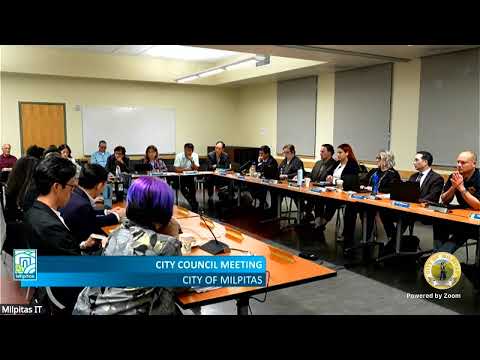
Milpitas council advances FY25–26 budget; staff to pursue contract reviews, fee studies and business tax modernization
Summary
At a May 13 special meeting the Milpitas City Council received a proposed FY25–26 operating budget designed to close a $3.1 million gap this year and reduce a five‑year structural shortfall. Council gave staff consensus direction to move the budget toward adoption on June 3 and approved several small ongoing priorities by consensus.
The Milpitas City Council reviewed a proposed FY2025–26 operating budget on May 13 and gave staff consensus direction to move the plan toward adoption on June 3, while authorizing a set of follow‑up work streams intended to shrink a multiyear structural deficit.
City Manager (unnamed) opened the special meeting presentation by describing the immediate budget picture and the longer‑term challenge, saying, "We have a problem, but we have a plan, which is the best case scenario that we can be in." Finance staff presented a package of onetime and recurring reductions that together eliminate a $3.1 million shortfall in FY25–26 and reduce the projected five‑year structural deficit from about $28.5 million to roughly $14.8 million.
Why it matters: council members and staff repeatedly stressed that the one‑year balancing does not erase a larger multiyear shortfall. The meeting advanced a multipronged approach that combines (1) immediate recurring savings and reallocation of costs to non‑general funds, (2) a set of one‑time investments to audit contracts and fees and to stabilize operations, and (3) a strategy to modernize the city's business tax as a potential recurring revenue source.
Most important decisions and staff direction
- Council provided consensus to proceed toward adoption of the FY25–26 operating budget and the fiscal‑strategy framework at the June 3 meeting. The budget as presented includes recurring reductions and one‑time proposals the city manager and finance director characterized as preserving service levels for now.
- Council also gave consensus approval to several prioritized items the staff will incorporate into the proposed budget: ongoing funding for the annual Black April event (staff said the likely amount is $5,000), ongoing support for the Milpitas Community Concert Choir (amount not specified), creation of a Milpitas Summer College Internship Program (MSCIP) to expand internship opportunities (scope and funding not specified), and direction to consider increasing annual MAP (Milpitas Assistance Program) household support (amounts to be determined). Each of those items passed by unanimous voice consensus of the five council members present.
Key elements of staff's fiscal plan
- Reductions and reclassifications: Finance staff led by Luz (Finance Director) and Alice Birch (Budget Manager) described a mix of recurring cuts and cost‑allocation corrections. Examples include defunding vacant positions (building inspector and fire prevention inspector) tied to low development activity, freezing a vacant police recruit position for FY25–26 because of recruitment challenges, reducing a part‑time economic development special projects position, and identifying approximately $1 million in general‑fund relief through better cost allocations to other funds.
- One‑time investments: Staff proposed a set of limited, onetime expenditures to support the fiscal strategy, including a contract due‑diligence review of roughly 1,600 contracts, a comprehensive fee study to assess full cost recovery, organizational assessment/operations review, condition assessments for 27 diesel storage tanks, and limited duration support for technology and incident/disaster management tools.
- Business tax modernization: Staff said Milpitas' business tax has not been modernized in decades and currently yields about $300,000 a year. The city will study options (for example, gross receipts or square footage approaches) and plans to return in the fall with analysis and options. Staff described preliminary costs for that effort (communications, outreach, consultant analysis and ballot placement) as a one‑time expense; if pursued as a ballot measure the revenue outcome would depend on voter approval.
What council asked staff to do next
City Manager and staff were directed throughout the meeting to accelerate several work streams and return with specific deliverables and timing: a contract due‑diligence work plan (staff described phases to identify contracts not in use, contracts that can be renegotiated or slowed, and “nice to have” contracts), a fee study broken into phases, an organizational assessment, and a 60‑day plan to model one‑time revenue opportunities tied to major events such as the FIFA matches and the Super Bowl. Staff said they will present the full proposed operating budget and capital improvement program for adoption on June 3 and that they will report interim results to the council and finance committee as the work streams produce savings or revenue.
Quotes from staff and council
"We have a problem, but we have a plan," City Manager (unnamed) said while introducing the proposed framework. Budget Manager Alice Birch summarized the fiscal concept plainly: "Structural deficit... It's spending money you don't have. It's overspending." Finance Director Luz summarized progress: staff produced a FY25–26 package that eliminates the immediate $3.1 million gap and reduces the five‑year structural deficit nearly in half.
Votes at a glance
- FY25–26 operating budget and fiscal strategy framework: council gave consensus direction to advance the proposed budget and framework toward adoption on June 3 (consensus recorded; formal adoption scheduled for the June 3 meeting).
- Ongoing funding for Black April event: consensus to add ongoing funding (staff noted an estimated $5,000); outcome: consensus (5 ayes).
- Milpitas Community Concert Choir: consensus to provide ongoing support (amount not specified); outcome: consensus (5 ayes).
- Milpitas Summer College Internship Program (MSCIP): consensus to create and fund an expanded internship program (scope/funding not specified); outcome: consensus (5 ayes).
- Increase MAP (Milpitas Assistance Program) funding/household support: council consensus to direct staff to develop options to increase MAP funding (amounts to be defined); outcome: consensus (5 ayes).
What was not decided or remains to be resolved
- Staff and council repeatedly noted that major questions remain: how much recurring revenue (if any) a business‑tax measure could produce; what the contract due‑diligence and fee studies will identify; and whether the one‑time event‑related revenue from large regional sporting events will materially change the five‑year outlook. Several council members urged urgency and said they do not want to wait to begin implementing the work streams; staff said the work will be staged and reported back while meeting legal deadlines (including the state requirement to adopt a balanced budget by June 30).
Background and context
Finance staff showed the earlier February forecast that had a $3.1 million FY25–26 shortfall and a projected $28.5 million five‑year structural deficit. The revised package of reallocations and recurring reductions produced a roughly $1.2 million surplus for FY25–26 in staff's recalculation and an estimated 43% reduction in the five‑year structural deficit. Staff emphasized that many savings came from correcting cost allocation (charging non‑general funds for work appropriately performed for those funds) rather than service reductions.
Ending
Staff will return June 3 with formal adoption items. In the weeks before then staff said they will begin the contract reviews, fee study and organizational assessment and bring periodic updates to the council and the finance committee. Councilmembers urged staff to deliver measurable results quickly but cautioned that some steps — particularly any ballot measure for additional recurring revenue — will take months of outreach and analysis.