Get Full Government Meeting Transcripts, Videos, & Alerts Forever!
Get email alerts on the Housing topic
No spam. Unsubscribe anytime.
Kern County board adopts 2024–2031 housing element after state sign-off
Summary
The Kern County Board of Supervisors voted to adopt the county's 2024'through'2031 housing element, a state-required plan that allocates land and programs to accommodate 9,243 housing units in unincorporated Kern, after the California Department of Housing and Community Development (HCD) found the draft substantially complies with state law.
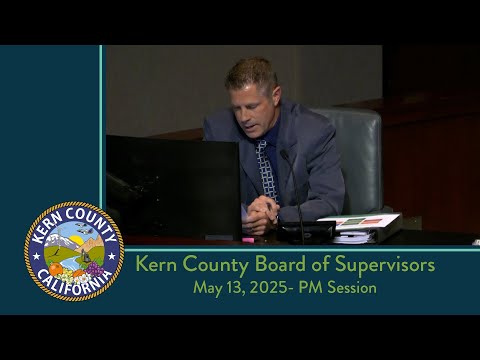
The Kern County Board of Supervisors voted to adopt the 2024 through 2031 housing element on May 13, approving staff recommendations after the county's planning department said the draft substantially meets state requirements.
The adoption follows a technical review by the California Department of Housing and Community Development. Craig Murphy, assistant director of Kern County Planning and Natural Resources, told the board that "on April thirtieth of this year, staff received correspondence from HCD indicating that the housing element before your board today meets all of the statutory requirements and will substantially comply with housing element law when adopted and submitted to the state." The board approved the staff recommendation by recorded vote: 4 ayes, 1 absent.
The housing element is one of seven state-mandated elements of the county general plan and quantifies existing and projected housing needs for the 2024'2031 planning cycle. For unincorporated Kern the plan must accommodate a Regional Housing Needs Allocation (RHNA) totaling 9,243 units: 776 extremely low, 775 very low, 987 low, 1,853 moderate and 4,852 above-moderate units, Murphy said. The element emphasizes conserving aging housing stock, increasing multifamily capacity, streamlining review for affordable projects and maintaining a vacant land inventory for residential, commercial and industrial sites.
Board and staff described several specific implementation programs in the housing plan. Among them: creation of a dedicated housing unit within Planning and Natural Resources; use of enhanced infrastructure financing districts to offset capital costs; raising density allowances in medium-density (R-2) zones from a maximum of 16 to 20 dwelling units per acre; removing the precise development (PD) overlay for multifamily so some projects can be processed over the counter; expedited review for projects that commit to affordable units; pursuing a state "pro housing" designation to improve grant competitiveness; and development of public guidance on accessory dwelling units (ADUs).
Staff also summarized letters and requests received during the public review period and explained why it is not recommending several proposals at this time, including rent control or inclusionary zoning, a rental registry, community land trusts, a commercial linkage fee, county-sponsored legal representation for tenants, and several weatherization or farmworker housing expansions. Murphy said many services are provided by other organizations and that requirements of infrastructure and utility availability in unincorporated areas could push development into incorporated cities if the county imposed some of the requested mandates. He said staff will study those options further under program 3.3 and return to the board with a cost-benefit analysis.
Public commenters and community groups were both in support and opposed to aspects of the element. Planning staff reported receiving support from the Home Builders Association of Kern County, the Greater Bakersfield Chamber and the Associated Builders and Contractors Central California chapter; the Leadership Council for Justice and Accountability submitted multiple requests for additional programs. After a Planning Commission hearing on June 13, 2024, the commission recommended the board approve the document as presented.
County staff and members of the board also highlighted rehabilitation work included in the county's housing strategy. A staff speaker noted an $8 million revenue bond approved on the same agenda to buy and rehabilitate senior affordable apartments in Lake Isabella, and cited a $60 million Housing Authority environmental/rehabilitation initiative to bring more than 300 substandard units up to modern standards.
Board direction: Supervisor Parlier moved the staff recommendation; the motion passed 4-1 (one supervisor absent). Staff will implement the programs in the adopted element, continue coordination with the county administrative office and pursue the state submittal required for final compliance.
What happens next: the county will post final, clean versions of the housing element on the Planning Department website and pursue grant and implementation programs identified in the housing plan. Staff committed to further study of requested policies not included in this adoption and return with analyses in later reports.