Get Full Government Meeting Transcripts, Videos, & Alerts Forever!
Get email alerts on the Age Friendly Planning topic
No spam. Unsubscribe anytime.
Long Beach council receives Age Friendly Action Plan to guide services for older residents
Summary
City staff presented a citywide Age Friendly Action Plan—24 goals and 108 actions across nine livability domains—and the City Council voted to receive and file the plan. Presenters and many community groups urged prompt implementation and clearer benchmarks; staff said the plan does not itself commit agencies to specific spending.
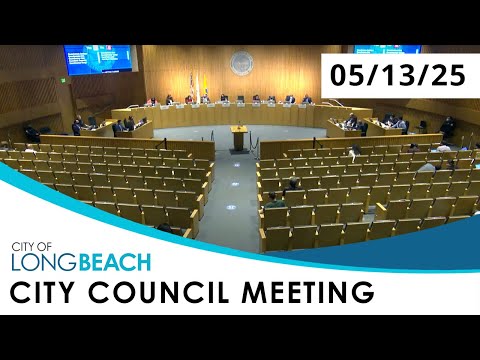
The Long Beach City Council on May 13 received and filed the Long Beach Age Friendly Action Plan, a citywide blueprint that lays out 24 goals and 108 action items to prepare Long Beach for a rapidly aging population.
City staff said the plan organizes strategies across nine livability domains — including the built, social and service environments — and is intended as a communitywide roadmap for local government, nonprofits, business partners and residents.
"The Age Friendly movement began as a global effort to prepare local leaders and communities for rapid demographic shifts," said Sofia Hojat, manager of the city’s Healthy Aging Center. "Today there are over 940 recognized age friendly communities across the United States." Hojat and Lisonbee King, the city’s director of human services, led the staff presentation.
Why it matters: Long Beach and the U.S. are aging rapidly, staff said. The plan emphasizes investments — from safer sidewalks and accessible transportation to expanded community programming and caregiver supports — that officials say will benefit older adults and other groups such as parents with strollers and people with disabilities.
Key details from the plan and presentation: - The plan is organized into 9 domains, 24 goals and 108 action items developed with public and expert input. Staff said work groups and 10 community engagement sessions included more than 110 subject-matter participants and feedback from 62 older residents. - Long Beach Parks, Recreation and Marine staff report six older-adult programming centers and said older-adult center visits were more than 200,000 in 2024. - The plan calls for a mix of built-environment changes, social participation programs and service improvements; examples shown included improving crosswalk timing, digital literacy training and workforce development for age-aware hiring.
Community groups and aging-service providers gave the plan broad support during public comment. Annette Rodriguez, program manager at California State University, Long Beach’s Center for Successful Aging, said the center "will continue to support the plan by providing student interns to implement various initiatives." Representatives from Scan Independence at Home, WISE & Healthy Aging and other nonprofit providers said the plan aligns with existing programs and could help coordinate services.
Speakers at the hearing pressed staff and the council for implementation details, measurable benchmarks and sustainable funding. Research consultant and longtime evaluators in the public comments urged that the plan include measurable outcomes and regular checks to ensure action items do not languish.
City staff repeatedly emphasized that the document is a roadmap, not an appropriation. "While the plan does not commit any agency to any specific project, action, or investment," staff said, it is intended to guide future budgets, partnerships and advocacy for state and federal resources. Staff said the plan will be made available online for agencies and community groups to use and to align future work.
Council discussion focused on: how to integrate the plan with existing commissions and partnerships, whether to make the equity and aging lenses explicit in departmental project reviews, and whether to require periodic updates (some public commenters recommended reviews every five years instead of ten).
Next steps noted by staff include recommending that the city: adopt the plan as a guiding document; invite the Advisory Commission on Older Adults and partners to help set implementation priorities; and return with reporting mechanisms and potential budget requests for year‑one actions.
The council vote was a routine "receive and file" vote; the action carried. Staff and speakers said they will work with the advisory bodies and community partners to define measurable benchmarks and funding pathways.