Get Full Government Meeting Transcripts, Videos, & Alerts Forever!
Get email alerts on the Road Safety Audits topic
No spam. Unsubscribe anytime.
Middlesex County releases road‑safety audit findings for five county corridors; recommends short‑term fixes and grant pursuit
Summary
Consultant team presented road safety audits for five Middlesex County corridors as part of the county's Vision Zero initiative, recommending re‑striping, sidewalk infill, signal timing changes, bike lanes and rapid‑flashing beacons; staff said they will pursue USDOT Safe Streets for All funding and wrap the study at the end of June.
Joseph (Joe), a traffic engineering lead with the project consultant Stamtec, presented findings May 13 from road safety audits (RSAs) carried out on five Middlesex County corridors as part of the county’s Vision Zero action plan.
The audits were selected from an initial list of 20 corridors using a scoring approach that combined crash frequency, crash severity, equity and prior work. The consultant team narrowed that list to five corridors and completed public and stakeholder outreach, field walk audits and video collection. The team said it is at step 7 of the RSA process, with the final report under internal review and the study scheduled to wrap up at the end of June.
The five corridors reviewed included sections identified in the presentation as County Route 529 (South Road/Plainfield Avenue segments), Riders Lane (County Route 617), Amboy Avenue, County Route 673 (Princeton/Washington Road corridor) and a corridor on County Route 653 (Amoy/Amboy Avenue segments). Auditors documented recurring issues such as high vehicle speeds, long crossing distances, poor sight lines, gaps in sidewalks, utility poles in curb ramps, broken sidewalk surfaces and multiple driveways that create pedestrian conflicts.
For the corridor segments, the consultants proposed near‑term, low‑cost measures and longer‑term design changes. Typical short‑term recommendations included re‑striping, edge lines to calm traffic, improved signal timing that gives pedestrians a walk interval before turning vehicles, filling sidewalk gaps and daylighting at intersections (prohibiting curbside parking to improve sight lines). Longer‑term suggestions included bike lanes where right‑of‑way allows (or shared‑use markings), consolidation of driveway access points, left‑turn phasing to separate pedestrian and vehicle movements, and curve‑radius reductions to shorten crosswalks.
The team used camera footage and automated analysis to capture “near‑miss” interactions not recorded in police crash data. Presenters said they collected about seven days of continuous video at each site and applied algorithms to quantify close‑call events so those observations inform recommendations in addition to reported crashes.
Public engagement included open houses, on‑site outreach and targeted outreach to residents and local stakeholders. The project team said short‑term recommendations will move into an implementation pipeline when funding is available; the county noted the audits position corridors for further design and grant applications. Staff said they are preparing a USDOT Safe Streets for All grant application to advance Riders Lane work and will submit that application in the coming month.
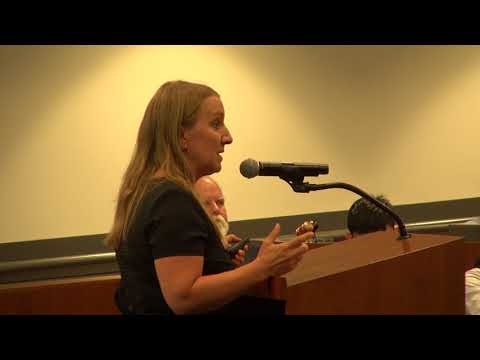
During public comment, Charlie Bradeville, editor of New Brunswick Today, urged follow‑up after the report to track which recommendations are implemented. County staff and the consultant said the RSA work is intended to lead to design, engineering and then construction phases as funding is identified. The planning board did not take any formal vote on the RSA report at the meeting.