Get Full Government Meeting Transcripts, Videos, & Alerts Forever!
Get email alerts on the Governance topic
No spam. Unsubscribe anytime.
Board debates new committee 'board operating guidelines' and limits on committee authority
Summary
Directors spent an extended portion of the meeting reviewing a proposed Policy 5 and associated Board Operating Guidelines (BOGs). Discussion focused on committee authority, public-comment rules for committees, the Sunshine Act, and appropriate board involvement with special-education program oversight and comprehensive-plan work.
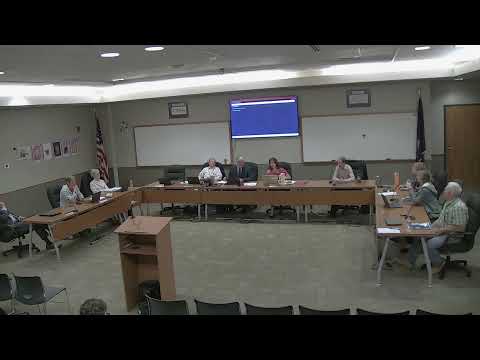
The Dover Area School District board devoted substantial time May 20 to a first reading of a revised Policy 5 and attached Board Operating Guidelines (BOGs) that would formalize standing committees, their charge and the public-comment rules that apply to committee meetings.
Central points of debate - Authority and Sunshine Act compliance: policy language would permit the board to authorize a committee to take official action, but otherwise prohibits committees from voting or acting for the full board. Board members discussed that any committee given action authority would have to operate under the Sunshine Act (open meetings law). - Public comment at committee meetings: staff and the solicitor noted committees are not required by law to run a public-comment period identical to the full board meeting; committees may allow public comment at the chair’s discretion. The solicitor pointed out commenters can always address the full board at the public-comment periods during the business meeting if they cannot speak at a committee meeting. - Special-education oversight: an Educational Excellence Committee draft line suggested committees could “monitor and consult on individualized education programs.” Directors and administration agreed that committees cannot review or discuss individual IEP records (confidential student educational records). The final drafting direction was to replace “individualized education programs” with the term “special education programs” so the committee could review program design, staffing and costs without accessing confidential student records. - Strategic planning vs. comprehensive plan: board members debated whether a standing strategic-planning committee should set or periodically reaffirm mission, vision and core values (the comprehensive plan is a three-year PDE-mandated process). The board agreed to strike language that would allow the committee to “set” mission and vision and instead limited the role to periodically reviewing or evaluating adherence to the district’s adopted mission/vision and recommending changes to the full board as needed.
Why it matters: the policy and BOGs define how board committees operate and how the public participates in committee deliberations. The committee rules affect transparency, workload management and how the board and administration coordinate long-range planning.
Next steps: revisions discussed at the May 20 meeting will be incorporated and the policy and BOGs will return for a subsequent reading and a formal vote.
Ending: the solicitor and administration emphasized that committee deliberations should support — not substitute for — the comprehensive planning process and that legal constraints on student records and open-meetings law limit committee actions.