Get Full Government Meeting Transcripts, Videos, & Alerts Forever!
Get email alerts on the Local Government Leadership topic
No spam. Unsubscribe anytime.
Jacksonville council members and residents debate leadership process; Borland introduces ordinance to reserve top posts for at-large seats
Summary
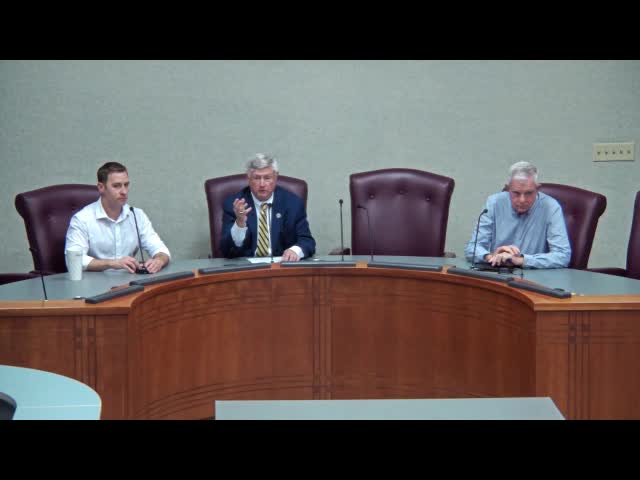
Councilman Matt Carlucci, a city council member at-large (Group 4), opened a public "sunshine" meeting on council leadership on the afternoon of May 12, saying he wanted a transparent conversation about how the council selects its president and vice president.
Councilman Matt Carlucci, a city council member at-large (Group 4), opened a public "sunshine" meeting on council leadership on the afternoon of May 12, saying he wanted a transparent conversation about how the council selects its president and vice president.
"Competition makes for better leadership," Carlucci said, urging colleagues to bring leadership contests into public view rather than behind closed-doors pledge arrangements. He said the meeting was intended "to see if anybody else has a similar concern as I do." Carlucci also tied the topic to broader governance, saying effective leadership requires a working relationship with the mayor's office.
Why it matters: Council leadership controls committee assignments and can shape which members gain influential committee chairs. Multiple council members at the meeting said they feared informal pledge commitments and behind-the-scenes agreements were predetermining leadership outcomes, a practice they argued undercuts transparency and the council's public accountability.
Councilman Michael Borland, a district member who said he introduced a similar measure five years ago, presented an ordinance concept that he said would limit eligibility for council presidency and vice presidency to at-large members and place leadership selection on a rotation among at-large seats. "My bill ... it puts the qualifications to serve as council leadership, is applied only to at large members," Borland said, adding the change would let citywide voters have a clearer voice about who might serve in future leadership roles. He said the proposal would not affect the immediate cycle and that the rotation was designed to make leadership selection more predictable to voters.
Carrying details: Meeting participants explained the existing local practice that council members who intend to run for leadership must notify the council secretary in March and may distribute pledge-commitment forms shortly thereafter; those pledge cards then shape how members cast their May leadership votes. Carlucci told the public the formal leadership vote is scheduled for May 20 at an early council meeting, and that the vote will likely occur at 4 p.m.
No formal action: Borland described his ordinance and fielded questions, but the council did not take a motion or vote on the proposal during the meeting. Council members who spoke emphasized the conversation was an effort to surface concerns in public rather than advance an immediate procedural change.
Public comment: Dozens of residents attended and spoke. Macy O'George, first vice president of the North Florida Central Labor Council, asked the date and time of the leadership vote; Carlucci responded, "May 20 ... 4 PM." Resident Denise Scott told the council, "When I come before that podium, that's the time I wanna be heard," and criticized members who appear distracted during public comment. Roselle, another commenter, urged the council to "read the room," saying residents are struggling with basic needs. Wells Todd said national political trends have "trickled down to the local level" and criticized behavior he described as consolidation of power.
Context and history: Several speakers recalled past council practices and said the pledge/pledge-card process has shaped leadership outcomes in recent years. Borland said he first introduced a version of his ordinance five years ago after experiencing what he described as divisiveness tied to leadership contests. Council members at the meeting praised outgoing council president Randy White's fairness while still warning that future leadership could follow a more partisan course.
Next steps: The meeting was a forum for airing concerns; Borland said his ordinance is intended to prompt discussion and said he did not expect immediate unanimous support. No committee referral, formal introduction on the council floor, or vote was recorded at the meeting. Carlucci invited further public engagement and said he would remain available to speak with attendees after the meeting.