Get Full Government Meeting Transcripts, Videos, & Alerts Forever!
Get email alerts on the Regulatory Updates topic
No spam. Unsubscribe anytime.
Commission continues update to standard subdivision conditions for more vetting with developers and staff
Summary
The Planning Commission held a public hearing on updated standard subdivision conditions intended to align city practice with the General Plan EIR, state law and current construction standards, and continued the item to allow staff to meet with local builders and engineers to clarify which provisions are mandatory and which are procedural.
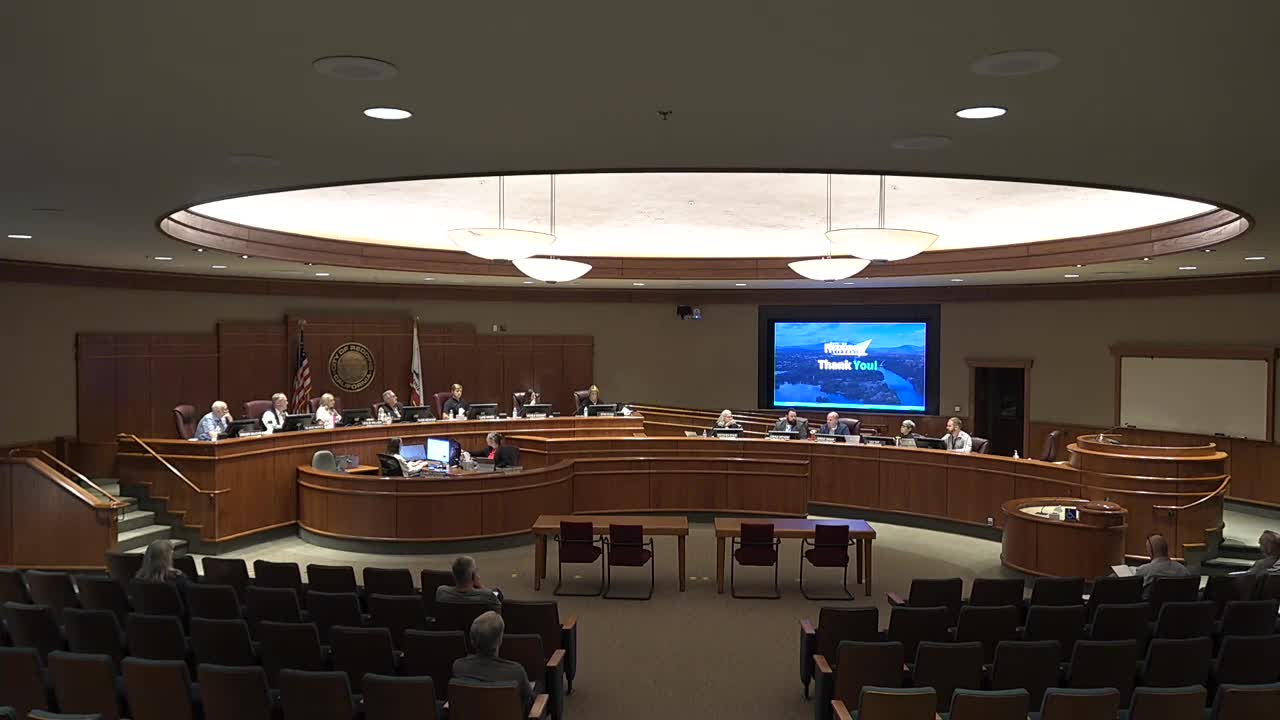
The Planning Commission opened a public hearing May 13 on proposed updates to Redding’s standard subdivision conditions of approval and continued the item after public comment and commissioner feedback requesting additional review with local developers and engineers.
Staff described the update as a consolidation of changes made since the last substantial update (2010–2011), incorporating new references to state and federal requirements, the recently adopted General Plan and General Plan EIR mitigation measures, updated municipal standards for stormwater (MS4), building and fire codes, and recommended standard mitigation for biological, cultural, geologic, noise, hazardous‑materials and wildfire issues.
Why it mattered: scope and sources
Staff said the updates are intended to standardize conditions that will be attached to future subdivision approvals and to improve consistency with laws and the General Plan EIR. "We want to make sure that all the laws are followed when, human remains or whatever is discovered on site," staff said, describing cultural resources procedures and CEQA‑related protections. The draft also adds wildfire‑related standards such as required fuel‑reduction zones (a 100‑foot zone and a second 100‑foot zone) and Landscape Maintenance District requirements for subdivisions in the very‑high fire severity areas.
Public comment and industry concerns
Several local design and development professionals requested more time to review the proposed language and to meet with staff, arguing the update includes many technical details that may already be required elsewhere (in code or state law) and that the practical cost and timing implications for builders were not yet fully clear. Joshua Johnson, a local practitioner, asked staff to highlight which items are mandated by law and which are discretionary staff practices, and suggested a dedicated workshop with local developers and engineers.
Commissioner feedback and continuation
Commissioners echoed that request. They said staff should identify where language reflects existing state or federal mandates, where conditions implement General Plan EIR mitigation measures, and where the city is proposing operational practices. Commissioner comments emphasized clarity for project applicants and the need to avoid duplicative or inconsistent wording that could cause delay or misinterpretation during permitting. Several commissioners and local professionals suggested a short, focused workshop to review the draft language.
Outcome
After public comment and commissioner discussion, a commissioner moved and the commission voted to continue the item to a future date so staff can meet with local industry representatives and return with clearer, annotated language that differentiates mandatory legal requirements from standard implementation steps. Staff agreed that a date‑uncertain continuance would allow follow‑up outreach and drafting of a clearer document for the commission’s consideration.
Next steps
Staff will arrange consultations with local builders, engineers and planning professionals and prepare a revised, annotated draft that ties proposed conditions to their legal or policy source (e.g., specific General Plan EIR mitigation, state law, or municipal code), then return to the Planning Commission for action.