Get Full Government Meeting Transcripts, Videos, & Alerts Forever!
Get email alerts on the Landuse Zoning topic
No spam. Unsubscribe anytime.
Council narrows public review of some final development plans, adopts signage and notice rules under HB 443
Summary
After hours of public comment, the Lexington-Fayette Urban County Council voted to adopt several changes to how the city implements new state law on final development plans, including requiring on-site signage, a planning commission notification item and expanded mailed notice for some filings.
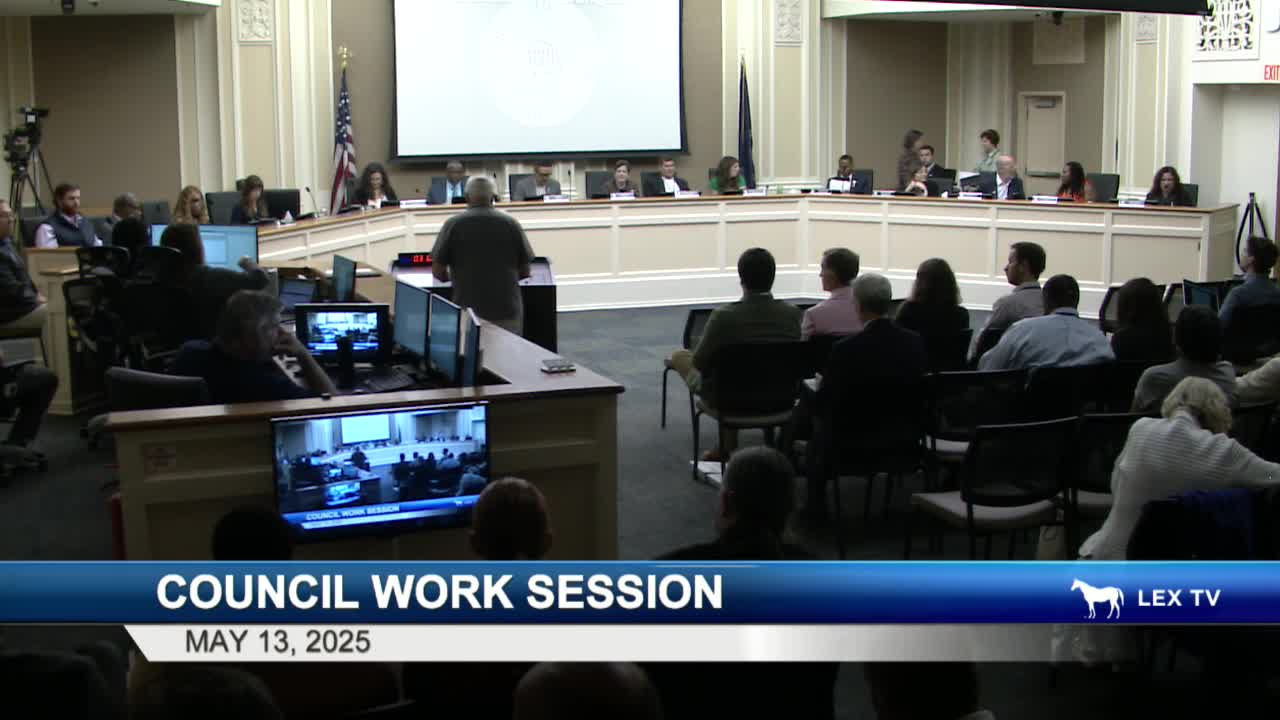
The Lexington-Fayette Urban County Council on May 13 adopted a set of changes to how city staff and applicants will implement House Bill 443, the state law that will make many final development-plan approvals ministerial and governed by objective standards effective July 1.
The move follows more than two hours of public comment from neighborhood leaders and residents who said the state law and the local zoning-ordinance text amendment (ZOTA) under consideration risked reducing meaningful opportunities for neighbors to learn about and weigh in on new developments.
City staff and council members said the package of changes balances the state law’s requirement that objective standards be applied without discretion while trying to preserve avenues for public information and input. Councilmember Brown proposed, and the council approved, a requirement that applicants post visible signage at development sites and that the Planning Commission agenda include a list of recently certified development plans with an opportunity for public comment after that agenda item. Councilmember Brown said the measures were intended to “allow for us to get useful feedback and information from folks in our neighborhood to better inform future policies.”
The council debated many specifics of the ZOTA during the session. Planning staff and the law department repeatedly told the council that HB 443 changes the legal framework: if an application meets objective standards in the ordinance, staff must approve it. Planning Commission discretion remains only when applicants seek waivers or deviate from objective standards or when staff identifies a specific public-health, safety or welfare issue. Commissioner Horn told the council the zone-change process — which includes public hearings — is not changing; the law primarily affects final development plans filed where no zone change is required.
Actions taken and notable amendments included: - Signage and Planning Commission notice: Councilmember Brown’s motion to require applicants to post signage at development sites, include contact information for the Division of Planning on that signage, and place a listed item on the Planning Commission agenda (with opportunity for public comment after the item) passed by voice vote. Brown said the signage would be informational and would “let folks know where they could find the plan, what the process is for the review.” - Mail notification for certified development plans: Councilmember Morton successfully moved that applicants mail notice to property owners and occupants within a 250-foot radius of a property when a development plan is filed; the council later amended the notice language to require the mailed notice to state that a development plan has been filed, give the address of the property, include information on how to view the development plan file and provide Division of Planning contact information. Staff told the council applicants would prepare the mailing as part of the filing and that the notices would create an informational input point rather than a public hearing. - Design standards and targeted changes: Council approved multiple targeted edits to the draft zoning text addressing big-box retail entrances, loading docks and outdoor sales, commercial sidewalks and pedestrian connectivity, bicycle parking allocation, and “box retailer” design provisions; some edits removed or replaced prescriptive language staff had proposed. Several contested amendments failed (for example, a proposed increase to interior landscape widths failed on an electronic vote recorded in the transcript), while others passed after discussion. - Drive-through facilities referred to committee: After debate the council voted to refer the proposed, detailed drive-through standards to the General Government and Planning Committee for further work; councilmembers said the subject had generated many stakeholder comments and deserved more time.
Neighborhood leaders who testified during public comment urged the council to preserve public input. Mike Brower, vice president of the Southern Heights Neighborhood Association, said HB 443 “says absolutely nothing about public engagement,” and urged the council to seek clarification from bill sponsors. Walt Gaffield, president of the Fayette County Neighborhood Council, called removing public engagement “another step away from democracy.” Amy Clark, a resident who spoke during the public-comment period, urged the council to “restore the commission as the approving authority per the plain language and intent of the new statute” so the Planning Commission retains a public-hearing role where appropriate.
Planning staff repeatedly stressed that under HB 443, objective standards must be used for ministerial approvals and that waivers must be asked for and considered where applicants seek deviations. Daniel Crum of Planning Services described the adopted signage and notice measures as informational steps to keep neighbors aware of developments that will otherwise be approved administratively if they meet objective standards.
The council also approved placing the amended ZOTA on the May 29 council docket for formal consideration and continued second-reading steps; councilmember Baxter moved the item onto the docket and the motion passed.
What this means going forward: Starting July 1, the city will apply objective standards in the ZOTA to final development plans; staff will certify plans that meet those standards. If applicants seek waivers or staff raises a health, safety or welfare concern, the Planning Commission will hold hearings where public testimony is possible. The notice and signage actions the council adopted create additional informational touchpoints for neighbors, but they do not restore a universal public-hearing requirement for every final development plan.
Council and staff said they expect to review how the new process works in practice and consider follow-up changes if the waiver filings or certification process reveal gaps. Several councilmembers urged continuing outreach to neighborhood associations and reminded residents that planning staff can be contacted about pending filings.
Ending note: The debate at the May 13 work session centered on how to reconcile a state law that narrows discretionary local review with local demands for transparency. Council actions on signage and expanded notice aim to preserve information and targeted opportunities for input while keeping the city within the legal constraints of HB 443.