Get Full Government Meeting Transcripts, Videos, & Alerts Forever!
Get email alerts on the Municipal Utility Districts topic
No spam. Unsubscribe anytime.
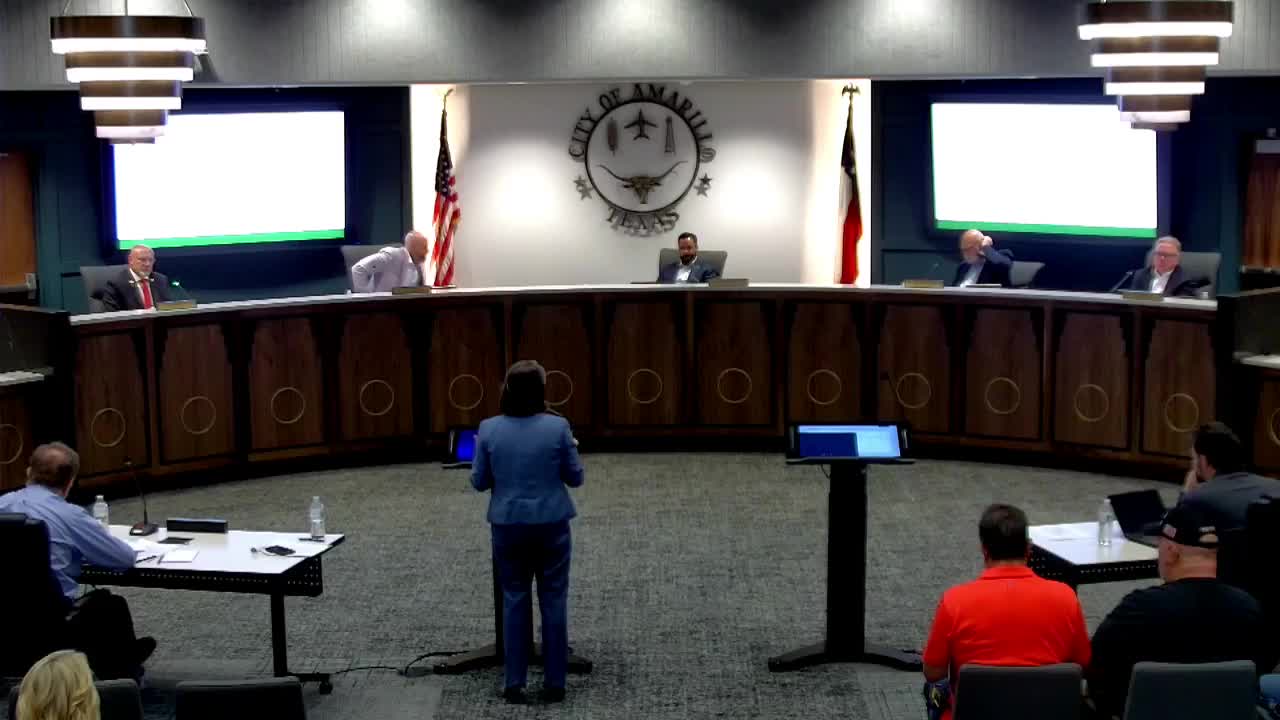
Council hears detailed briefing on municipal utility districts and city consent policy for ETJ
Summary
Amarillo City Council members heard a detailed presentation on municipal utility districts (MUDs) and the council's ETJ-focused consent policy, which staff said is intended to let the city negotiate infrastructure and annexation terms when developers seek MUDs in Amarillo's one-mile extraterritorial jurisdiction.
Amarillo City Council members heard a detailed presentation on municipal utility districts (MUDs) and the city's policy for handling MUD petitions in the city's extraterritorial jurisdiction (ETJ).
City attorney and policy staff explained that a MUD is a political subdivision of Texas that can issue tax-exempt bonds to build water, sewer, drainage, roads and other infrastructure. Aaliyah Vincent, who led the briefing, said the policy adopted April 22 applies only to MUDs in Amarillo's one-mile ETJ and creates a standard consent-and-negotiation pathway so the city can require infrastructure to meet city standards if developers seek consent. "The policy that was adopted relates to MUDs being created in the extraterritorial jurisdiction only," Vincent said during the presentation.
Why it matters: Under recent state changes, landowners can opt out of an ETJ; absent a negotiated consent, a developer could proceed to the Texas Commission on Environmental Quality (TCEQ) or the legislature without city oversight. Vincent and staff argued the city's consent pathway allows Amarillo to negotiate development agreements, utility agreements and strategic partnership agreements up front so infrastructure is built to city standards and future annexation terms can be set.
How MUDs work: Presenters described MUD powers and limits. A MUD can levy taxes and fees, hire consultants (engineers, auditors, attorneys), contract for services and issue bonds; TCEQ feasibility rules and the attorney general's review generally require a conservative ratio of taxable value to debt before bonds can be issued. Vincent said MUDs may provide supplemental services such as contracted police or sheriff patrols, but the city's policy does not commit Amarillo to provide firefighting or police services unless the city separately chooses to contract for them. The policy does allow a consistent approach to trash service at a 1.5x rate when the city provides refuse service within a district, she said.
Council questions and context: Council members pressed staff on whether the city can block a MUD. Vincent and staff replied that the city cannot unilaterally create a MUD; developers petition the TCEQ or legislature. If the land is in the ETJ and the developer does not include city consent in its TCEQ application, the application is considered incomplete. Staff emphasized the policy is intended to create a predictable, level playing field rather than approve any specific developer proposal.
Staff emphasized controls the city can require in consent negotiations: reimbursement agreements that obligate developers to advance infrastructure costs and meet competitive-bid rules, limits on maximum authorized bonds, and conditions on future annexation. Vincent said annexation by the city is optional and would be handled under any strategic partnership agreement; the city would not be forced to annex districts and could wait until debt is paid or other conditions are met.
Council members said the policy is meant to protect residents and preserve the city's ability to set standards while still allowing developers a financing tool that can reduce up-front housing costs. City staff said the policy is a living document that can be amended and that each MUD petition would return to council for separate consent.
Vincent closed by noting the application process remains developer-driven and that the policy simply sets the terms by which the city will engage. "By choosing to engage in this and set out a policy . . . it does give the city the ability to have a lot more control, whereas otherwise you could have no control," she said.