Highlands County schools warn of $2.6 million shortfall as enrollment falls; fund balance may drop below state minimum
Loading...
Summary
Superintendent and finance staff told the school board the district faces declining student counts, rising FES scholarship outflows and higher insurance costs that together create a projected $2.615 million shortfall and a fund balance near 2.1%, below the 3% statutory floor.
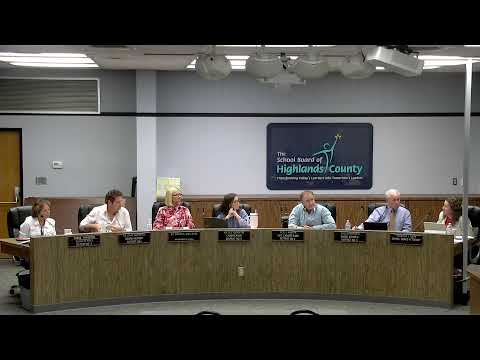
Superintendent Dr. Longshore and district finance staff told the Highlands County School Board at a budget workshop that declining enrollment, growing outflows to Florida Empowerment Scholarship (FES) vouchers and rising health insurance costs have combined to create multi‑million dollar shortfalls in the district’s general fund.
Angelica Tenajero, director of business operations, said the district expects a $1.7 million budget gap tied to projected loss of 200 full‑time‑equivalent (FTE) students for 2025‑26 and reported that, between the start of the fiscal year and the district’s latest state calculation, FES diversions to vouchers rose from about $9.6 million to about $11.2 million. “There’s been more than $11,000,000 diverted to FES scholarships as of today,” Tenajero said.
The report to the board said Highlands lost roughly 112 FTE in 2024‑25 (the district’s third‑count enrollment) and is projecting another 200 FTE loss for 2025‑26 under the state model the district chose. Using the district’s base student allocation, the presentation tied that 200‑FTE projection to roughly a $1.7 million budget deficit; the materials and presenters then combined that with other drivers to arrive at a $2,615,000 total impact covering 2024‑25 and 2025‑26.
Why it matters: Tenajero told the board the district is projected to end the 2024‑25 fiscal year with a roughly $4.0 million fund balance, equal to about 2.1% of expenditures. State statute requires school districts to maintain at least a 3% fund balance; board policy calls for 4%. Tenajero said a fund balance below 3% would require the district to submit a financial recovery plan to the state.
Budget drivers and district response
Tenajero outlined three principal drivers of the shortfall: enrollment decline (partly from new eligibility for FES vouchers that shifted some students away from district schools), health insurance cost increases, and limits on how the district may use capital funds. She summarized the general fund as the district’s primary flexible revenue for operations and explained that capital funds cannot be used to pay salaries except for narrow statutory transfers allowed through the local capital improvement fund.
The district said health insurance expenditures have risen by about $5 million over the past four years. Tenajero also said nearly 80% of the general fund is spent on salaries and benefits: “80% of our budget is salaries and benefits,” she told the board.
To reduce costs the district said it has begun hiring freezes for vacant positions, implemented overtime restrictions (halting additional 8‑hour assignments that were not part of an employee’s contracted time), asked administrators to hold positions while evaluating consolidations and is reviewing insurance benefit changes for open enrollment. Tenajero said the district has already identified roughly $6 million in reductions to date and that the personnel allocation draft presented to the board reduces positions by 61.5 units overall.
Uncertainty around federal and categorical dollars
Tenajero and board members repeatedly noted uncertainty in federal grant dollars and in the state budget process. The district said Title I and other federal grant allocations depend on direct‑certification and other data that the state and federal agencies had not finalized; Tenajero said she had held back 10% of Title I allocations pending final awards. The lack of final federal and state numbers was cited by multiple board members as a reason to hesitate before finalizing personnel decisions.
Special‑education legal costs and other categories
Melissa Blackman, director of student services and ESE, told the board that special‑education legal expenses have risen in the current year after three due‑process hearings and a federal court filing; although the district said it prevailed, Blackman said legal work pushed the ESE legal line close to six figures. “We have had three due process hearings...all of those rulings have been in favor of the district,” Blackman said, and she told the board those hearings nonetheless drove legal spending higher.
The board also aired questions about dual‑enrollment costs tied to college textbooks and about declines in Title I allocations at schools that lost students. Tenajero told the board that the state determines Title I dollars by direct certification counts and that the district does not control that allocation process.
Board reaction and next steps
Board members voiced concern about the human effects of cuts and urged caution. One member asked whether the board could delay final approval until after additional state or federal budget information was available; Tenajero and staff said the workshop produced a first‑draft personnel allocation that the board would consider for approval at a future meeting (staff proposed June 3 as a target date). The superintendent and presenters urged continued review but warned that contract and staffing timelines begin July 1.
The materials presented at the workshop and staff remarks indicate the district is prioritizing short‑term cost reductions while reserving the option to adjust allocations as state and federal funding becomes clearer.
Ending: Staff said they will bring a second draft of allocations to the board when more state and federal numbers are available and that the district will seek board approval in a forthcoming meeting so personnel and contract changes can be implemented in time for the new fiscal year.