Get Full Government Meeting Transcripts, Videos, & Alerts Forever!
Get email alerts on the Employee Benefits topic
No spam. Unsubscribe anytime.
County officials defend self-funded health plan and highlight savings from clinic and PT partnerships
Summary
Human Resources Director Tony Hoefelder told the board the county's self-funded plan remains preferable to full insurance, reported 2024 losses offset by transfers, and described partnerships—Reform Medicine and Doctors of PT—that produced cost savings and member engagement; he also flagged administrative issues with Aletheus care navigation.
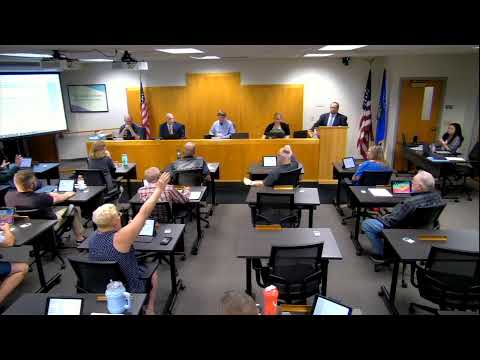
Human Resources Director Tony Hoefelder gave the Chippewa County Board a detailed update on the county’s self-funded health insurance program, saying the county has changed stop-loss carriers, tracked high-cost claimants, and used alternative care partnerships to restrain costs.
Hoefelder said the county moved from a captive stop-loss arrangement to a traditional stop-loss carrier, QBE, and that the change helped lower the county’s renewal from a broker estimate of 15.5% to about 15% in 2025. He reviewed fund-balance history: the county opened self-funding with about $1.4 million in reserve and built it up thereafter; 2024 showed large claims that reduced the variance, and the county administrator transferred $2.3 million into the health fund at year-end to maintain a healthy balance.
“We went ahead and did that in May,” Hoefelder said of recent broker briefings, and he summarized that high-cost claimants drove most of the 2024 increase — the number of claimants above certain high-cost thresholds rose substantially in 2024 compared with prior years.
Hoefelder described the county’s partnerships aimed at lowering costs. Reform Medicine (a near-site primary-care partner) has generated increased usage and lab-savings, he said; county slides showed 847 unique Reform Medicine utilizers since the program began and projected a large return on investment from avoided higher-cost visits and outside lab charges. Hoefelder presented a calculated return on investment from those partnerships and other programs and said the county had seen a roughly $1.3 million net benefit associated with the alternative-care initiatives.
He also described problems with Aletheus, a care-navigation partner: turnover in the Aletheus care-navigation team, slow callbacks, and billing promises that did not always hold, which created member experience complaints. Hoefelder said the county was exploring other options for navigation services.
Hoefelder reviewed a newer partnership with Doctors of PT (physical therapy). The county pays a fixed amount for initial PT visits and Hoefelder said early indicators suggest savings and some members avoiding surgery after PT. He said the county had explored adding chiropractic services but the broker did not recommend it because local pricing did not produce savings compared to existing options.
Asked by a board member whether the county should return to a fully insured plan, Hoefelder said, “We're gonna pay more,” and that, based on the county’s size and engagement, brokers recommended continuing self-funding while pursuing targeted plan changes and eligibility audits in future years.
Hoefelder said options for 2026 under consideration included modest premium-sharing for the first time in many years, dependent eligibility audits and exploring additional local partnerships to steer certain services to lower-cost providers.