Get Full Government Meeting Transcripts, Videos, & Alerts Forever!
Get email alerts on the Entertainment Districts topic
No spam. Unsubscribe anytime.
Business group proposes event-based entertainment district; committee directs staff to draft ordinance
Summary
The Waukesha Downtown Business Association proposed exploring an event‑based designated outdoor refreshment area (DORA) with wristbands, one‑drink limits, QR‑mapped footprints and cleanup plans; the committee asked the city attorney to draft a proposed ordinance for future discussion and possible council recommendation.
The Waukesha Downtown Business Association (WDBA) on May 12 asked the Ordinance and Licensing Committee to explore creating event‑based designated outdoor refreshment areas — commonly called DORAs — in downtown Waukesha to let patrons buy alcohol from participating businesses and consume it within mapped, time‑limited footprints.
WDBA presenters said DORAs first expanded after the COVID‑19 pandemic and that other Wisconsin cities — including Neenah, Sheboygan, Ripon, Stevens Point, Oshkosh and Sturgeon Bay — have used event‑based or permanent districts to boost foot traffic and support downtown businesses. The WDBA proposed an event‑based approach for Waukesha so organizers could pilot smaller festivals (for example a Williams Street Festival) and move footprints around the downtown as needed.
Key proposed rules discussed included wristbands for participants, a one‑drink‑per‑service rule, a DORA sticker or branded cup on permitted containers, QR codes linked to a city webpage with a mapped footprint and rules, liability insurance and indemnification from participating businesses, and a required clean‑up plan (additional trash cans and post‑event cleanup paid by organizers). WDBA presenters said they favor starting with “baby steps” and pilot events rather than immediately applying the concept to large events like Friday Night Live. Jeff, representing the WDBA research team, said the association reached out to several peer communities and found few reported major problems; he said common issues were trash and a small number of businesses not following rules.
City Attorney Bridal explained the legal framework: local open‑container prohibitions exist by municipal ordinance, and a DORA functions by temporarily suspending that local prohibition within a defined footprint; state laws remain in force and cannot be suspended (for example, state rules prevent entering a licensed premises with an open intoxicant and still require sealed or tamper‑evident containers when leaving licensed premises in some circumstances). Bridal said other Wisconsin cities have implemented DORAs successfully but warned that monitoring boundaries and preventing exits from a DORA with open containers are practical concerns.
Committee members voiced support for drafting an ordinance and suggested specific drafting directions: require nonprofit event sponsors, require proof of liability insurance from participating businesses, include clear signage and QR mapping for footprints, prohibit glass containers, require one drink per purchase and wristbands for identification, and treat DORA as a rider to existing special event permits with enforcement and revocation language. Alderman Alicia read a proposed set of notes outlining those items and asked city staff to draft ordinance language. Committee members emphasized a pilot/testing approach and quarterly DORA committee–city liaison meetings to monitor outcomes.
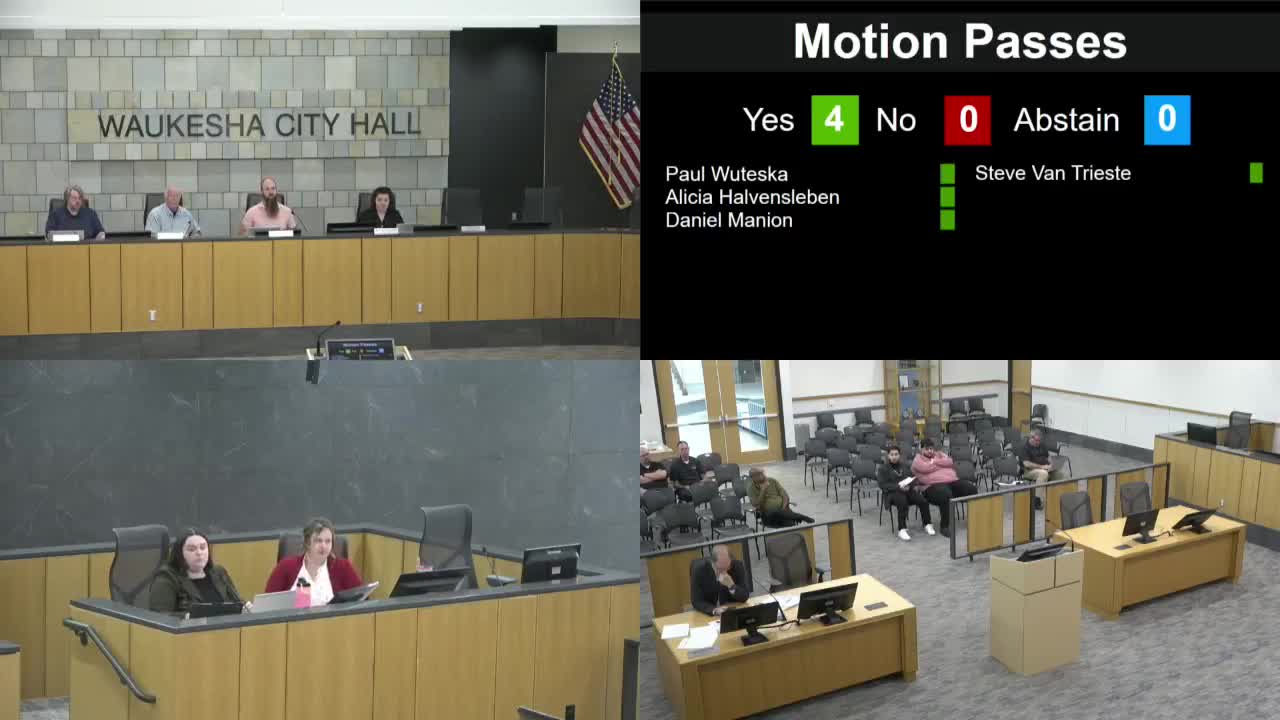
The committee did not adopt ordinance language at the meeting but directed City Attorney Bridal and staff to prepare a draft ordinance and a package for council consideration at a subsequent meeting.