Get Full Government Meeting Transcripts, Videos, & Alerts Forever!
Get email alerts on the Consumer Protection Agency Reorg topic
No spam. Unsubscribe anytime.
California officials back split of consumer licensing from housing to focus regulatory oversight
Summary
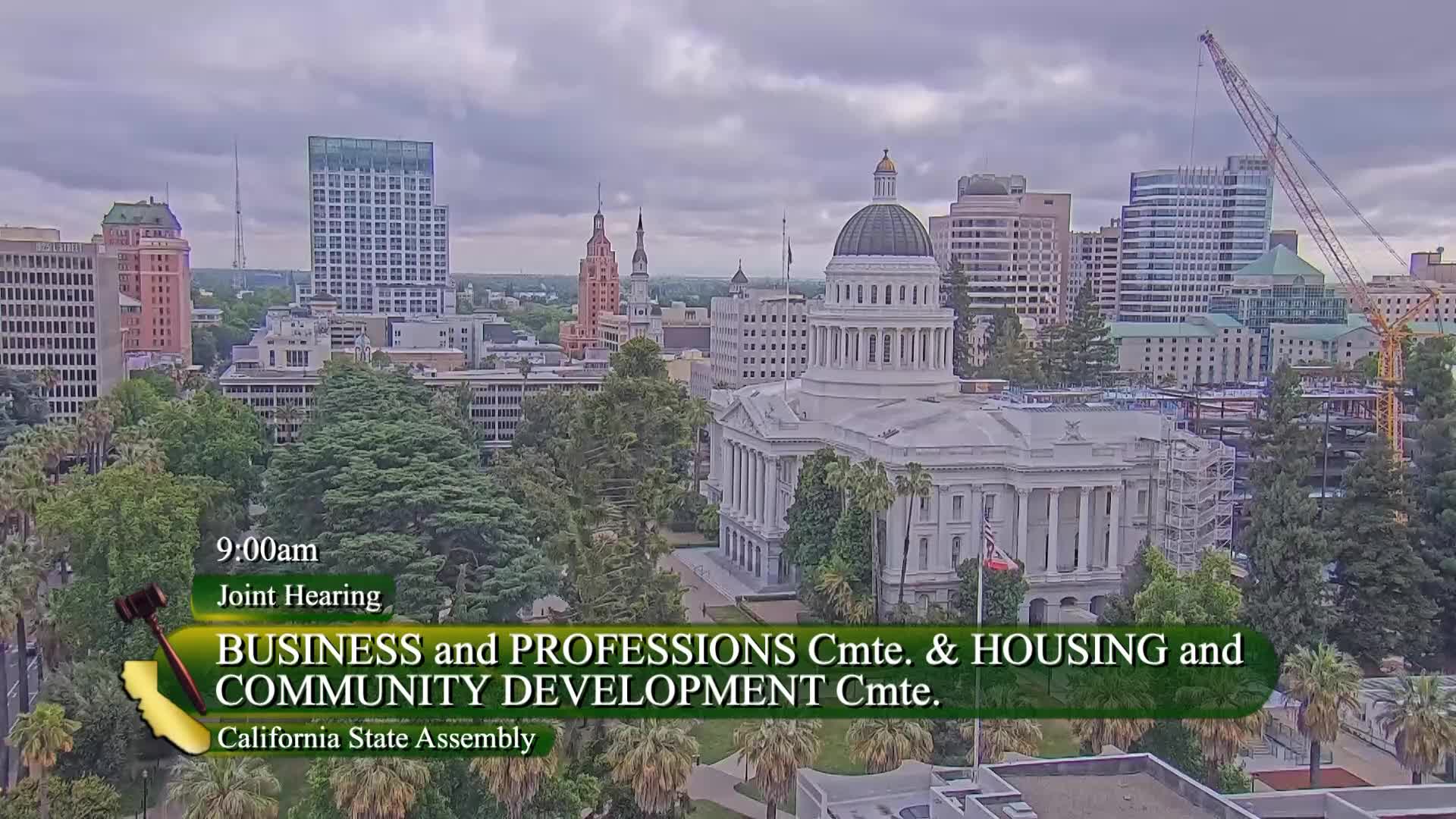
Assembly informational hearings examined the governor's 2025 reorganization plan to split the Business, Consumer Services and Housing Agency into a stand-alone Business and Consumer Services Agency focusing on licensing, enforcement and consumer protection.
Assembly members and state agency leaders on the two Assembly committees heard presentations and public comment on the governor's 2025 reorganization plan that would separate the Business, Consumer Services and Housing Agency into two cabinet-level entities and create a stand-alone Business and Consumer Services Agency focused on licensing, enforcement and consumer protection.
The proposal would move licensing and consumer-protection departments into the new Business and Consumer Services Agency (BCSA). Secretary Tamika Moss, who currently leads the Business, Consumer Services and Housing Agency (BCSH), said the change is intended to give regulators more focused leadership and "allow these departments to quickly adapt to the industry's changes, strengthen our oversight over time, and protect Californians." She said the administration has planned an implementation timeline intended to give staff time to perform necessary administrative work and change management; for the consumer side she said the new agency is expected to come online "next July." (presentation remarks by Tamika Moss)
Why it matters: Proponents argued that separating consumer and business regulation from housing policy will reduce competing priorities inside a single agency and improve responsiveness for licensing entities that regulate millions of Californians.
Key details and claims - Departments identified for the proposed Business and Consumer Services Agency included the Department of Consumer Affairs, the Department of Cannabis Control, the Department of Financial Protection and Innovation, and the Department of Alcoholic Beverage Control. Presenters on the first panel included Tamika Moss (Secretary, BCSH), Kimberly Kirkmire (Director, Department of Consumer Affairs), Nicole Elliott (Director, Department of Cannabis Control), Casey Mosseini (Commissioner, Department of Financial Protection and Innovation), and Frank Robles (Chief Deputy Director, Department of Alcoholic Beverage Control). (panel introductions and testimony) - Kimberly Kirkmire said the Department of Consumer Affairs "is in full support of the reorganization proposal" and described recent department efforts to expand hybrid public participation, publish licensing best-practice guidance and expand online services for applications, renewals and complaints. (testimony by Kimberly Kirkmire) - Nicole Elliott said separating consumer regulation from housing "will result in stronger consumer protections, more streamlined oversight, and greater agility" to address market complexities in licensed cannabis. (testimony by Nicole Elliott) - On fees: committee members raised concerns that a new agency could increase pro rata assessments on departments and lead to higher license fees. Secretary Moss replied that the administration does "not anticipate any of our departments raising fees as a result of this reorganization" and said leadership has been "intentional" about keeping pro rata assessments steady and seeking ways to reduce burdens on licensees. (exchange with committee) - Legal and regulatory functions: Moss and panelists said agency legal units and the interdepartmental legal processes will remain intact to avoid disruption of rulemaking and regulatory packages. (testimony)
Public comment and stakeholder reaction Trade associations representing beverage distributors, craft brewers, the Wine Institute, mortgage lenders and housing organizations offered on-the-record support for the reorganization during the public comment period, saying a focused business and consumer agency would improve regulatory clarity.
Meeting context, limitations and next steps This was an informational hearing rather than a vote on the reorganization plan. Several legislators pressed the administration for fiscal and timing details; Moss and staff said the full fiscal analysis and implementation details would be included in the governor's May revision and that the Little Hoover Commission had held hearings and will provide a recommendation. The administration said it does not anticipate additional office space costs and plans to house related programs together where feasible, but noted some programs (for example, HCD and CalHFA) currently sit in separate buildings and major relocations are not anticipated.
Ending: The first panel closed with committee members and stakeholders expressing conditional support while reserving judgment pending the May revise budget details and additional implementation plans.