Get Full Government Meeting Transcripts, Videos, & Alerts Forever!
Get email alerts on the Zoning topic
No spam. Unsubscribe anytime.
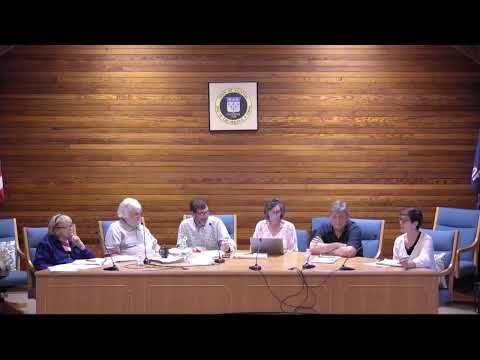
Town board debates limit on small accessory structures in setbacks, keeps public hearing open
Summary
Clinton Town Board discussed proposed zoning changes to Chapter 250 regarding small nonpermanent accessory structures (under 50 sq ft), whether they count toward accessory-structure limits, and whether to set a numeric cap in setbacks; board left public hearing open until June 10 for further comment.
The Town of Clinton board on Tuesday debated how proposed revisions to the zoning code will treat small nonpermanent accessory structures — playhouses, bus shelters, garden tool houses and similar items under 50 square feet — when those items are placed in required setbacks and whether they should count toward a property’s limit of accessory structures.
The discussion focused on draft language in Chapter 250, section 23 (setbacks) and how it interacts with section 22 (accessory-structure limits). Board members and attendees disagreed on whether the draft would permit an unlimited number of small structures in a setback as currently worded, and whether the board should instead explicitly cap how many such structures may be placed in a setback.
Why it matters: the change would affect what homeowners may put close to property lines and could force choices between a small structure (for example, a bus shelter at the end of a driveway) and larger permitted accessory structures such as a detached garage or pool building.
Discussion highlights
Arlene (board member) flagged the drafting problem and said the current phrasing in 250-23 d(6) appears to exclude small nonpermanent items from the maximum number permitted under 250-22, meaning, she warned, “you could have an unlimited number.” Elliot (board member) and others pressed staff and colleagues on where the existing one‑without‑permit allowance is located in the code, noting that 250-22(B) allows one small accessory structure without a permit and otherwise limits total accessory structures on a lot.
Catherine (board member) and Jen (board member) suggested the simplest fix is to keep the exception in 250-23 but add a numeric limit for items in the setback; multiple speakers proposed capping the number at two. Jeff (board member) described the trade-off: if the setback exception does not count against 250-22, homeowners could have multiple small structures in the setback but would effectively lose capacity for another larger accessory structure elsewhere on the lot. Paul (board member) pointed out that eliminating the subsection entirely would move any request to place such a structure in a setback into the area‑variance process.
Board members debated three options: (1) remove the exception so setback items count against the general accessory limit in 250-22; (2) keep the exception and specify a numeric cap (suggested number: two); or (3) delete subsection d(6) and require an area variance for any setback structure. Several members favored retaining an exception for narrow cases (for example, a bus shelter for children at the end of a driveway) while setting a small numeric limit to avoid “a bunch of stuff” appearing at the roadside.
Clarifications offered during the meeting
- Size threshold under discussion: 50 square feet (structures under 50 sq ft were the examples discussed). (source: multiple board comments) - Existing accessory-structure limits discussed: 250-22 was cited as limiting the number of permitted accessory structures (speakers noted a general rule of no more than three permitted accessory structures, and one small accessory structure without a permit, as the existing framework referenced by the board). (source: board discussion) - Suggested resolution in the draft: retain the sentence that excludes small nonpermanent accessory structures from the maximum number in 250-22 but add a numeric cap “no more than two” for items located within the setback. (source: board consensus during discussion)
Process and next steps
The board left the public hearing on the zoning revisions open and voted to continue receiving comments; a motion to keep the public hearing open was approved, with the hearing to remain open until 6 p.m. on Tuesday, June 10, 2025, when the board will again hear public comment on articles 7, 8 and 9 of the revised zoning law. Board members asked staff to draft alternative text that either (a) keeps the exception and sets a numeric limit for setback items, or (b) removes the exception and treats these structures under 250-22, so residents and the board can review specific language before a final vote.
The board also discussed related cleanup to the storage-in-setback language in 250-23(c). Several members recommended removing the enumerated examples (merchandise, equipment, building materials, junk, vehicles) and replacing them with a shorter rule such as “setbacks shall not be used for storage except as otherwise specifically permitted,” to avoid overbroad interpretations that could, for example, prohibit temporary items such as ladders.
Board members said they will circulate proposed alternate wording by email and will take further action after public comment at the continued hearing.