Get Full Government Meeting Transcripts, Videos, & Alerts Forever!
Get email alerts on the Board Governance topic
No spam. Unsubscribe anytime.
Kansas State Board declines member amendment to minutes; policy committee to review appeal procedure
Summary
Board chair resisted a request to add extended board discussion to the April minutes; the board later approved the April minutes as drafted. The policy committee reviewed the procedural complaint and will be asked to return recommended wording for how members appeal a chair ruling.
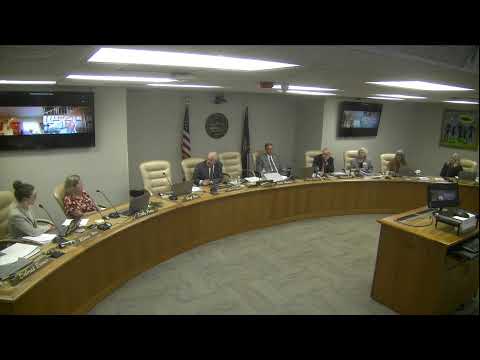
Kathy Hopkins, chair of the Kansas State Board of Education, pressed ahead with approval of the board’s April minutes on May 13 after a prolonged exchange in which board member Debbie Potter sought to add detailed board discussion to the record. Potter asked the full board to “appeal” the chair’s ruling to refuse the addition; no motion or second followed in the meeting and the chair moved forward with the minutes as written. The board later approved the April minutes as drafted by a recorded vote of 7 yes, 1 no and 2 present-not-voting.
The request by Potter and the way the chair handled it prompted the board’s policy committee to convene an emergency review of the incident and the related board policies. The policy committee reviewed the text of board policy that governs “boardmanship expectations” and the process for challenging a chair ruling; the committee’s initial reading found no policy violation by the chair but identified ambiguity in the procedural language about how an appeal should be handled in an open meeting.
The committee and several board members said the governing language should be clarified so that future disagreements are resolved in an orderly and predictable way. Chair Hopkins said she had asked the full board whether it wanted to address Potter’s request immediately and, hearing no response from members at the table, directed staff to ask the policy committee to examine the matter and return recommended wording. Several members suggested a narrowly focused rewrite that would specify whether an appeal requires a motion and second and how the board will record or vote on an appeal.
The episode also renewed discussion of how the board and staff coordinate public communications. Potter’s original complaint arose in part from a KSDE (department) press release and subsequent public statements and she asked for clearer separation between statements made by the agency and statements that should be interpreted as representing the elected board. Board members and counsel said board chairs and the agency communications team routinely coordinate on messaging, but added that the process should be transparent to avoid public confusion.
The policy committee said it will prepare proposed language clarifying the “appeal to the board” pathway and related meeting procedures for the board’s review at a future meeting. The committee’s work is intended to produce a single, specific revision that the full board can vote on at a subsequent meeting, rather than leave the procedure to ad-hoc practice.
The board also took a formal vote on the April minutes during the May session; those minutes were approved 7–1–2. Potter’s requested amendment to add a detailed account of April’s board discussion was called for a vote earlier in the meeting and failed.