Lifetime Citizen Portal Access — AI Briefings, Alerts & Unlimited Follows
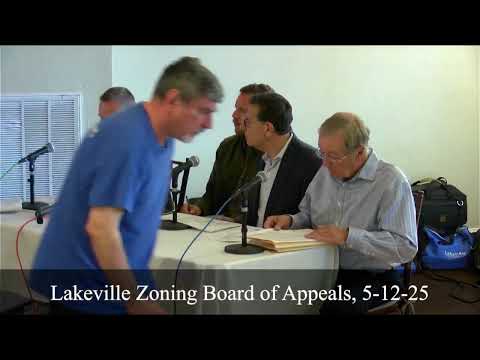
Lakeville ZBA continues Simmons Hill (Rocky Woods) 40B hearing after developer presents revised 176‑unit plan
Loading...
Summary
The Town of Lakeville Zoning Board of Appeals on May 12 continued the comprehensive permit hearing for the Simmons Hill ("Rocky Woods") 40B application after the developer presented a revised concept reducing the project from 200 to 176 units and proposing individual wells and a centralized wastewater treatment plant.
The Town of Lakeville Zoning Board of Appeals on May 12 continued the public hearing on the Simmons Hill (also called Rocky Woods) comprehensive permit under Massachusetts General Laws Chapter 40B after the applicant presented a revised plan that reduced the total units to 176 and expanded the project area.
The hearing matters because the Chapter 40B process can allow state review when a municipality lacks its required percentage of affordable housing; neighbors, town officials and tribal representatives urged the board to press the developer for more engineering, water‑supply and archaeological detail before the board advances the application.
Attorney Robert Mather, representing Simmons Hill LLC, told the board the applicant agreed the statutory 180‑day review period would “begin today.” He summarized the major revisions from the application the board first heard: the original submission covered about 184.6 acres and proposed 200 units composed of 44 single‑family homes, 46 age‑restricted duplexes and 110 condominium units. The revised concept reduces the total to 176 single‑family homes and enlarges the project boundary to about 238.5 acres.
Project engineer Jason Youngquist of Outback Engineering said the current conceptual layout leaves roughly 152 acres as open space — described during the hearing as about 97 acres of upland and 55 acres of wetlands — while the development footprint would disturb roughly 52 acres. Youngquist also said the team submitted a wetland delineation that the Lakeville Conservation Commission approved in an ORAD issued in January. “The wetland lines have been approved, by the Lakeville Conservation Commission in an ORAD that was issued in January of this year,” he said.
Mohammed Aitani, a member of Simmons Hill LLC, described housing set‑backs and lot sizes: minimum lots would be 15,000 square feet, with an average lot size of about 23,250 square feet and a minimum frontage near 57.5 feet. He said the project team intends to spread rather than cluster the 25 percent affordable units required under MassHousing rules — about 44 units of the proposed 176 — and that those affordable homes are expected in current market calculations to price at roughly $250,000–$260,000.
On water and wastewater the applicant has changed course from the earlier proposal. Because the revised plan removes the condominium buildings, the applicant said it no longer proposes a community well and instead is proposing individual private wells for each lot; tapping public water from New Bedford via Freetown Street remains an option but, the applicant said, with only about a 20 percent chance. The applicant proposes a centralized sewage treatment plant and leaching field to serve the subdivision; Youngquist said the plant would use multi‑stage treatment and be set several hundred feet from nearest lot lines (roughly 300–500 feet to the distances stated by the engineer).
Board members and residents pressed for specific studies and protections. Board member questions focused on bedroom counts (engineers estimated roughly 2.6–2.7 bedrooms per home on average), traffic mitigation at the County Street/Freetown Street intersection (the applicant said previously completed traffic studies for the 200‑unit plan remain the baseline and that the team still intends the previously proposed intersection improvements subject to Massachusetts Department of Transportation approval), and on whether the applicant will provide empirical well‑yield data to demonstrate individual wells would not harm existing neighbors.
Several residents raised groundwater concerns: Cora Purse, deputy tribal historic preservation officer for the Narragansett Indian Tribe, said the project’s scale and the number of bedrooms raised questions about the wastewater load and proximity to wellhead protection areas. She told the board, “we are going from 200 units to a 76 and our bedrooms. If we're having a 76 single family homes with 3 bedrooms, my math says that that's 528 bedrooms, not 420.” The applicant and engineer replied they would perform and present aquifer/well testing and other empirical studies in future filings.
Conservation and natural‑resource questions also drew public attention. The Conservation Commission’s peer review and the applicant’s wetland consultant differ in places; Youngquist said the conservation commission ultimately issued an ORAD and that consultants identified four vernal pools on the property. The board agreed to request a written narrative from the Conservation Commission summarizing its review for the public record.
Residents asked about blasting procedures, fire protection and treatment‑plant operations. The applicants said blasting (if required to install infrastructure) would follow state regulations, including pre‑blast surveys for homes within the regulatory radius and contractor liability for any damage caused by blasting; they said backup and monitoring requirements for the wastewater plant would follow Department of Environmental Protection (DEP) oversight and that an operator would take required samples and monitoring. On fire protection the applicant said hydrants would require a public water supply; absent that, options include underground fire cisterns or home sprinkler systems per the fire chief’s requirements.
The ZBA took one formal action at the meeting: a motion to continue the hearing to June 16 at 6 p.m. at Loon Pond Lodge so the board and the public can review more detailed engineered plans, an archaeological presentation with tribal participation (Public Archaeological Laboratories and tribal representatives were discussed) and peer‑review materials. A board member moved to continue; the motion was seconded and carried without recorded opposition. The board also asked the applicant to return with: full engineered plans, a plan for groundwater testing and well‑impact analysis, a description and site plan for the proposed wastewater facility (including monitoring and pumping schedule for solids), a blasting plan and pre‑blast survey proposal, and a proposal for fire protection measures.
The board announced the continued hearing for June 16 at 6 p.m.; the applicant agreed to return with the requested materials and to explore whether an age‑restricted component is feasible. The board’s staff indicated future submittals and peer reviews will be posted for public access.
The hearing covered technical and policy issues that will determine whether the board recommends the comprehensive permit to move forward or identifies reasons to oppose it at the state level. The public record for this matter remains open until the continued hearing and until materials requested by the board are submitted and reviewed.