Lifetime Citizen Portal Access — AI Briefings, Alerts & Unlimited Follows
House Public Safety panel hears support, calls for protocols on bill to give special investigators role in elder financial-exploitation cases
Loading...
Summary
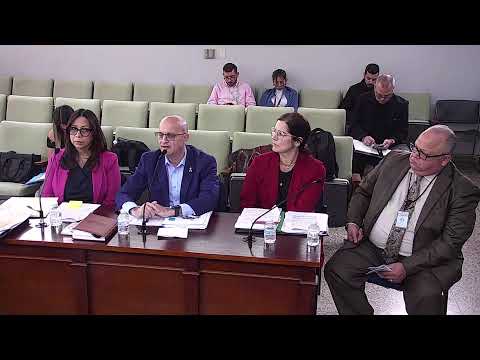
A hearing of the House of Representatives Public Safety Committee on May 13 examined House Project 487, a proposal to amend Article 7.4 of Law 20 (2017) to give the Negociado de Investigaciones Especiales concurrent jurisdiction to investigate cases of financial exploitation of older adults when staff of residential homes, substitute homes or 24‑hour care institutions are involved.
A hearing of the House of Representatives Public Safety Committee on May 13 examined House Project 487, a proposal to amend Article 7.4 of Law 20 (2017) to give the Negociado de Investigaciones Especiales (NIE) concurrent jurisdiction to investigate cases of financial exploitation of older adults when staff of residential homes, substitute homes or 24‑hour care institutions are involved.
The measure drew broad support from the Department of the Family, the Office of the Ombudsperson for Older Adults (Oficina del Procurador de las Personas de Edad Avanzada, OPEA) and the Department of Public Safety, which told the committee the change would strengthen investigations but requires protocols to avoid duplication of effort.
Why it matters: Puerto Rico’s population of adults 60 and older is growing, witnesses said, and complaints of financial exploitation have risen in recent years. Committee members and agency representatives said clearer interagency rules would speed response and reduce overlap between the NIE, the Police Bureau and family‑services investigators.
The Department of the Family presented written comments and said it favors the amendment, arguing the NIE’s investigative capacity would “facilitaría la investigación y los procedimientos” and be “de gran apoyo” to family‑services work. Dr. Eddy García Fuentes, administrator auxiliary for services to older adults and adults with disabilities at the Department of the Family, told the panel the department must continue to validate referrals and, when appropriate, refer cases to police and the Department of Justice for criminal action.
The OPEA provided case counts underscoring the problem. Francis Vidal Rodríguez said OPEA received 8,138 maltreatment and criminal‑complaint referrals in fiscal 2023–24, of which 3,092 were criminal‑type complaints and 2,246 involved financial exploitation. For residents of long‑term care facilities, OPEA reported 147 complaints for fiscal 2023–24 and 54 complaints in the current fiscal year to February. Vidal added that, for the running fiscal year, OPEA referred 239 exploitation cases to police (203 involving community residents and 36 involving institutional residents).
The Department of Public Safety supported the bill but urged codified coordination. Omar Arias Nieves, speaking for the department, recommended adding language that establishes how NIE and the Police Bureau will determine which unit holds primary jurisdiction in a given case and asked the committee to consider related amendments across statutes that govern investigative procedures. The department also proposed the secretary of Public Safety be explicitly authorized to adopt rules and protocols to implement the concurrent jurisdiction and to clarify internal assignments.
Police representatives described ongoing training and operational steps. Teniente José David Marchán Sánchez said the Police Bureau has been training personnel under its general orders on investigations involving older‑adult incidents and that police units distribute and work referrals as incidents arrive; he also reported that, through April, the bureau had handled more than 236 possible exploitation cases this year. Marchán Sánchez told the committee that regions with higher referral numbers include Bayamón and San Juan.
Law and process concerns: witnesses referenced several statutory and regulatory frameworks that shape response and reporting, including the elder‑rights statute referred to in testimony as “Law 100 (2019)” (the island’s charter of rights and policy for older adults), Article 127C of Puerto Rico’s Penal Code (criminalizing financial exploitation), administrative orders of the Police Bureau (cited as chapter 600 / section 6.45 and related general orders) and fraud‑control provisions (Law 154 of 2018 and departmental administrative orders). Panelists repeatedly said protocols are needed so that institutions, financial entities and agencies know how to report suspected exploitation and how agencies will coordinate after a referral.
Committee discussion: lawmakers praised the bill’s goals and raised specific amendment requests. Representative Junior Pérez and Representative Ramón Torres urged creation of an easy, short‑digit hotline for elders to report exploitation and asked that the measure explicitly include persons with functional diversity (adults with disabilities). Torres recommended the text authorize the Public Safety secretary to promulgate regulations and suggested including municipal police in statutory references to “police.” Video participants and committee members also pressed for stronger public‑education and prevention efforts.
No formal vote was taken. Witnesses said they would supply supplemental language and that interagency meetings are planned to develop operational protocols: the Department of the Family and police representatives scheduled coordination meetings for May 29 and a quarterly oversight meeting on Aug. 8, 2025.
What comes next: Committee members said they will consider amendments to clarify definitions (older adult and adults with disabilities), regulatory authority, jurisdictional primacy and how municipal police are referenced. Agencies asked the committee to request follow‑up language to avoid duplication of investigative efforts and to establish implementation timelines.
Quotes (selected)
• Francis Vidal Rodríguez, representing the Office of the Ombudsperson for Older Adults: “La explotación financiera es la mayor modalidad dentro del maltrato de adultos mayores.”
• Dr. Eddy García Fuentes, Department of the Family: “El departamento de la familia debe ser el ente que reciba todos los referidos de explotación financiera... posteriormente... el departamento debería, si lo valida, referir a la policía para la querella.”
• Omar Arias Nieves, Department of Public Safety: “Es menester puntualizar... que debe existir una coordinación entre el negociado de la policía y el NIE, lo que amerita la elaboración de reglamentación o los protocolos correspondientes.”
• Teniente José David Marchán Sánchez, Police Bureau liaison: “En este momento... hemos recibido directamente... 236 casos de posible explotación financiera.”
Ending: The committee closed the hearing without action; members said they will accept supplemental memorials and amendments before any vote and will monitor interagency work to produce the coordination protocols agencies said are needed to operationalize concurrent jurisdiction.