Get Full Government Meeting Transcripts, Videos, & Alerts Forever!
Get email alerts on the Social Media Regulation topic
No spam. Unsubscribe anytime.
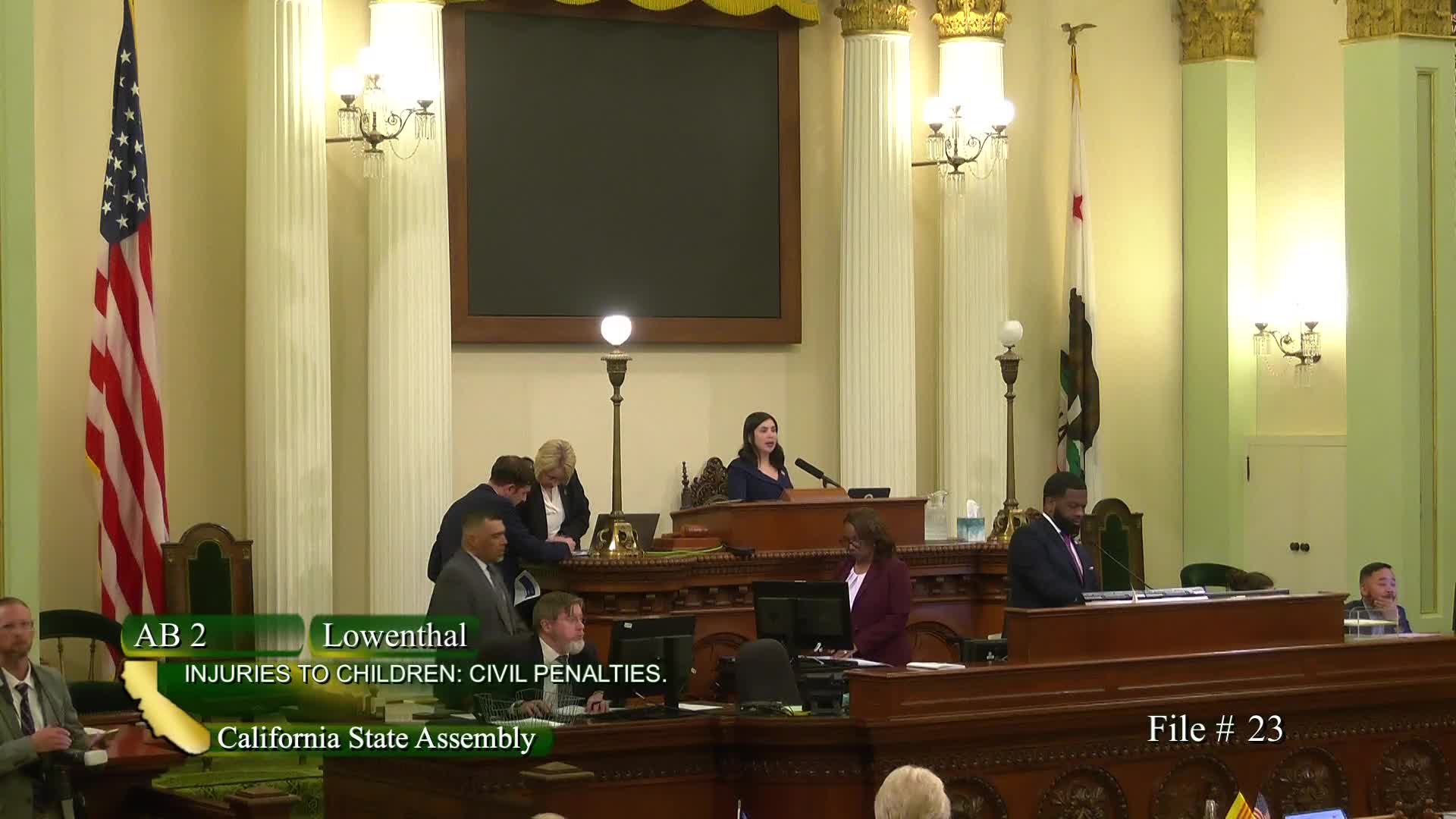
Assembly passes AB 2 to hold social platforms financially liable for harms to minors
Summary
After extended floor debate, the Assembly passed AB 2, a bill intended to create duty‑of‑care standards and potential financial liability for large social media platforms when their negligence harms minors.
The California State Assembly on May 1 passed Assembly Bill 2, legislation authored by Assemblymember Alonzo Lowenthal that seeks to hold large social media companies financially accountable when their platforms cause harm to minors.
Lowenthal, the bill's author, framed AB 2 as imposing a duty of care comparable to standards applied to consumer products and said the measure would enable courts to assess financial damages when companies’ negligence is proven. He argued that social platforms’ design and algorithms have demonstrable, harmful impacts on children's mental health and development and that voluntary measures by platforms have been insufficient.
Several members spoke in support, recounting personal and constituent experiences: Assemblymember Pellerin noted the difficulty of parenting in the social‑media era; Assemblymember Patterson described a neighbor’s death by fentanyl obtained via a social connection on a platform; Assemblymember Bauer‑Kahan and Assemblymember Hoover highlighted rising mental‑health statistics and bipartisan concern. Supporters said the bill does not change burdens of proof in negligence cases but creates financial incentives for platforms to invest in safety.
Debate included references to existing platform efforts to infer user age and to federal actions that, supporters said, could preempt state authority. Lowenthal stressed AB 2 does not automatically impose liability; it creates an avenue for accountability where negligence is proven in court.
The clerk opened the roll and the Assembly recorded 59 ayes, 0 nos; the measure passed.
Proponents said the bill is intended to prompt platform design changes and give parents and regulators additional leverage; critics in prior hearings have argued about potential litigation effects and First Amendment or preemption concerns, though no opposing floor vote was recorded in this session.