Get Full Government Meeting Transcripts, Videos, & Alerts Forever!
Get email alerts on the Consumer Protection Robocalls topic
No spam. Unsubscribe anytime.
Resident urges county action on robocalls targeting schools and households
Summary
At Collin County Commissioners Court, resident Barbara Lyke asked court members to help stop spoofed robocalls she says have targeted Wylie ISD and local households; court staff explained county cannot pass federal law and advised filing police reports and contacting state or federal legislators.
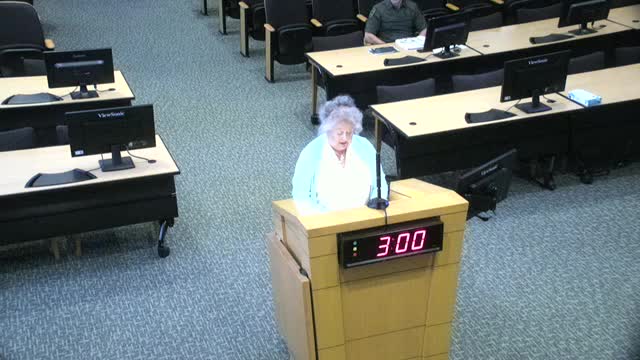
Barbara Lyke, a resident, told the Collin County Commissioners Court during public comment that spoofed robocalls and phone scams are affecting residents and schools and asked the court whether it could help get legislation passed to stop them.
Lyke said she had researched federal legislation she called the "Stop Bad Robocalls Act" and the "Trace Act," and cited a March 17, 2021, letter and vote counts she attributed to 2019. She told the court that, according to that material, robocalls in 2019 numbered “47,800,000,000” and rose by “17,000,000,000” calls over previous years. She said a provision the bills considered had excluded schools and that she had raised the issue with Wylie Independent School District officials, including Scott Wynne, assistant superintendent of student services, and an executive director of communications she identified as Anne Harpryn. Lyke also said she filed a police report, referencing “case 21123994” and work by Lieutenant Robert Longwell of the Collin County Sheriff’s Office.
Presiding official, Collin County Commissioner's Court, told Lyke that county staff can monitor bills the court asks them to track but cannot get a bill passed. The presiding official suggested Lyke contact her state and federal legislators, including Representative Candy Noble at the state level or Representative Keith Self in Congress, and noted a district office or district director may be easier to reach than the member. "Our staff will monitor bills that are germane to the county when we ask them to," the presiding official said.
A commissioner responding to Lyke noted that Texas law already criminalizes spoofing when the intent is to defraud, harass or cause harm and advised filing police reports so local law enforcement can investigate. "That is a violation if the intent is to defraud or harass," the commissioner said.
Lyke asked for direction to someone who could answer whether the bills she cited were state or federal. The presiding official clarified that some of the measures Lyke described were federal and would fall to Congress; state matters would be handled by the state representative. Lyke also told the court she believed parts of the legislation had been sent to the president's desk, and at one point in her remarks she said the measure was signed in February 2024; court officials and Lyke agreed on the distinction between state and federal jurisdictions during the exchange.
Lyke's comments were the only public comment on the court's agenda that day. Court staff also told her local law enforcement (the Collin County Sheriff’s Office) should be used to investigate alleged spoofing incidents and that citizens should follow up after filing reports.
The court did not take formal action on Lyke’s request during the meeting; staff direction was limited to referrals to legislators and local law enforcement and to monitoring bills when the court asks staff to do so.