Get Full Government Meeting Transcripts, Videos, & Alerts Forever!
Get email alerts on the Public Safety Levy topic
No spam. Unsubscribe anytime.
Bellbrook council adopts ordinance to place 2.2-mill public safety levy on November ballot
Summary
The Bellbrook City Council voted unanimously to adopt an ordinance putting a 2.2‑mill levy on the Nov. 4, 2025 ballot. City officials say the measure would raise about $610,000 annually to preserve current police and fire services, including the school resource officer and capital needs such as a replacement ladder truck.
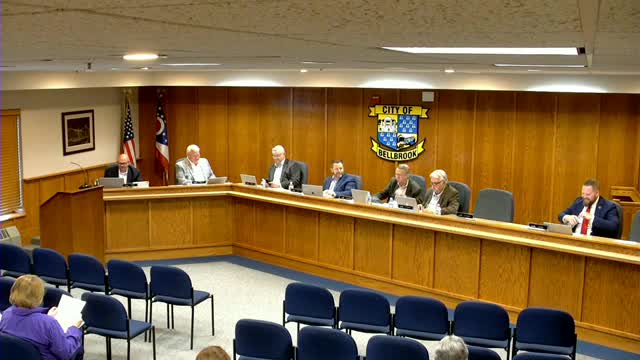
The Bellbrook City Council on Tuesday adopted Ordinance 2025‑O‑08, a proposal to submit a 2.2‑mill levy for public safety to the voters at the Nov. 4, 2025, election.
City officials say the levy, if approved, would generate about $610,000 annually and would be used to maintain current police and fire staffing and equipment levels. The ordinance specifies the levy would fund items including fire apparatus, rescue equipment, lines of fire alarm communications, ambulance equipment, and salaries for permanent or part‑time police and fire personnel.
City Manager Rob, who presented the measure and the city’s accompanying outreach materials, said the levy is a “status quo ask” intended to maintain services rather than expand them. “This is to maintain what we currently have today. There’s not any new growth, new positions, new buildings, new facilities,” Rob said. He told council staff would present two budget scenarios after the election so officials could set the 2026 budget in light of the vote result.
Rob told council the levy ballot language follows Ohio Revised Code Section 5705.19 and related sections. The ordinance notes the county auditor estimates the levy will collect $610,000 annually at a rate not to exceed 2.2 mills, which the ordinance translates to about $77 for each $100,000 of appraised value and first collectable in 2026.
Council members discussed possible cuts if the levy fails. Deputy Mayor Mary Havens said many of the unavoidable cuts would fall to personnel, and she cited the school resource officer as an example. Council members also pointed to capital needs, including a ladder truck more than 30 years old that requires custom parts when it breaks, increasing maintenance costs.
Council members urged residents to consult the city’s “Get the Facts” financial transparency portal and other outreach materials the city has published. Rob said the portal includes multi‑year budget detail and a monthly/annual breakdown so property owners can see the levy’s effect on household taxes.
A public hearing on the ordinance produced no in‑person public testimony at council; the ordinance was moved, seconded and carried on a recorded vote of six‑zero. The roll call recorded “yes” votes from Councilman Ashley, Councilman Greenwood, Councilman Harding, Deputy Mayor Mary Havens, Councilman Hope and Mayor Schweller.
The ordinance contains standard findings that existing levy revenue within the 10‑mill limitation will be insufficient to provide necessary city services and directs the clerk to file the ordinance and county auditor certification with the Greene County Board of Elections.
If voters approve the levy, proceeds would be placed on the 2025 tax list and duplicate and be first available for collection in calendar year 2026.