Get Full Government Meeting Transcripts, Videos, & Alerts Forever!
Get email alerts on the Social Services Indigent Funds topic
No spam. Unsubscribe anytime.
Valley County commissioners consider using indigent fund to seed Ignite Idaho assistance program; legal review requested
Summary
Commissioners discussed a proposal to use surplus county indigent funds to seed a revolving assistance pool managed by Ignite Idaho. Key issues raised included repayment enforcement, liens, cremation funding and whether county funds may be contracted to a nonprofit; the board asked the prosecuting attorney for legal advice.
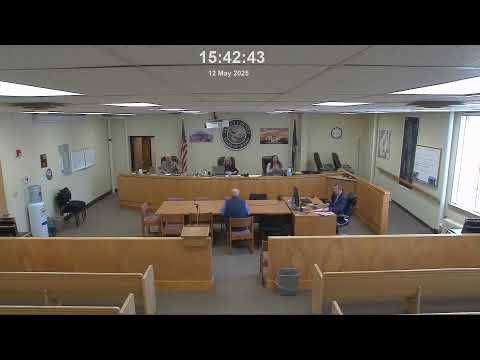
Valley County commissioners on May 12 reviewed a proposal from Ignite Idaho to manage a centralized assistance program for residents and to seed a revolving loan pool using money that the county holds from a defunct county medical indigent program.
Tracy (identified in the meeting as the Ignite Idaho representative) explained Ignite's plan to create a pooled fund to make short‑term loans and grants for housing, rent, food, gas and other urgent needs, with case management and repayment plans intended to sustain the pool. Commissioners and staff discussed legal, administrative and accountability concerns before agreeing to seek a formal legal opinion.
County staff reported the balance held for the county's prior medical indigent program is $224,434.89. Tracy and several commissioners discussed whether some of that money could be used to seed Ignite's pool; commissioners repeatedly said they want legal clarity on permitted uses and on mechanisms to ensure repayment. "We have to make sure that we have an appropriate fund to take care of cremations," one commissioner said; the meeting record shows current cremation cost cited at about $1,700 per case.
Commissioner Thompson (county staff) noted that when the county operated the medical indigent program it issued liens against recipients to secure repayment. Commissioners and staff discussed whether a nonprofit partner would have authority to place liens, and whether an MOU or similar agreement could preserve county enforcement remedies. Clark Miller (county staff) offered to prepare a request for legal advice for the prosecuting attorney, and said a review would likely take three to four weeks.
Participants discussed program safeguards Ignite proposes: intake and eligibility screening, repayment schedules (small monthly amounts), coordination with churches and other local service providers, and creation of an advisory board with representatives from local nonprofits and churches. Ignite characterized the program as a "clearing house" to prevent multiple organizations from separately funding the same household and to centralize case management and accountability.
Financial clarifications recorded in the meeting: the county currently projects about $15,000 annually in indigent repayments/recoveries, has collected about $4,000 so far this year, and staff estimated roughly $300,000 remains as owed debt from historical medical loans. Commissioners asked for details on whether repayments would return to the same fund and whether the county could transfer or restrict the existing balance to a partner organization.
Why it matters: The discussion concerns use of existing county funds for community assistance, the county's fiduciary responsibilities, and the design of a local safety‑net that could change how churches and nonprofits coordinate emergency aid.
Next steps: County staff will request formal legal advice from the prosecuting attorney about permissible uses of the indigent fund, whether funds may be transferred or administered by a nonprofit, and what enforcement mechanisms (including liens) remain available. Commissioners asked Ignite and county staff to continue developing MOU language and an advisory structure and to return after the legal review.