Get Full Government Meeting Transcripts, Videos, & Alerts Forever!
Get email alerts on the Public Safety Fire And Safety topic
No spam. Unsubscribe anytime.
Resident urges more hydrants, building code and staffed fire protection; county explains burn‑ban index
Summary
A St. Paul resident told the Commissioners Court the community has only four fire hydrants, several dilapidated structures and volunteer fire response times she described as eight to nine minutes and urged adoption of a building code and a staffed Sinton fire department.
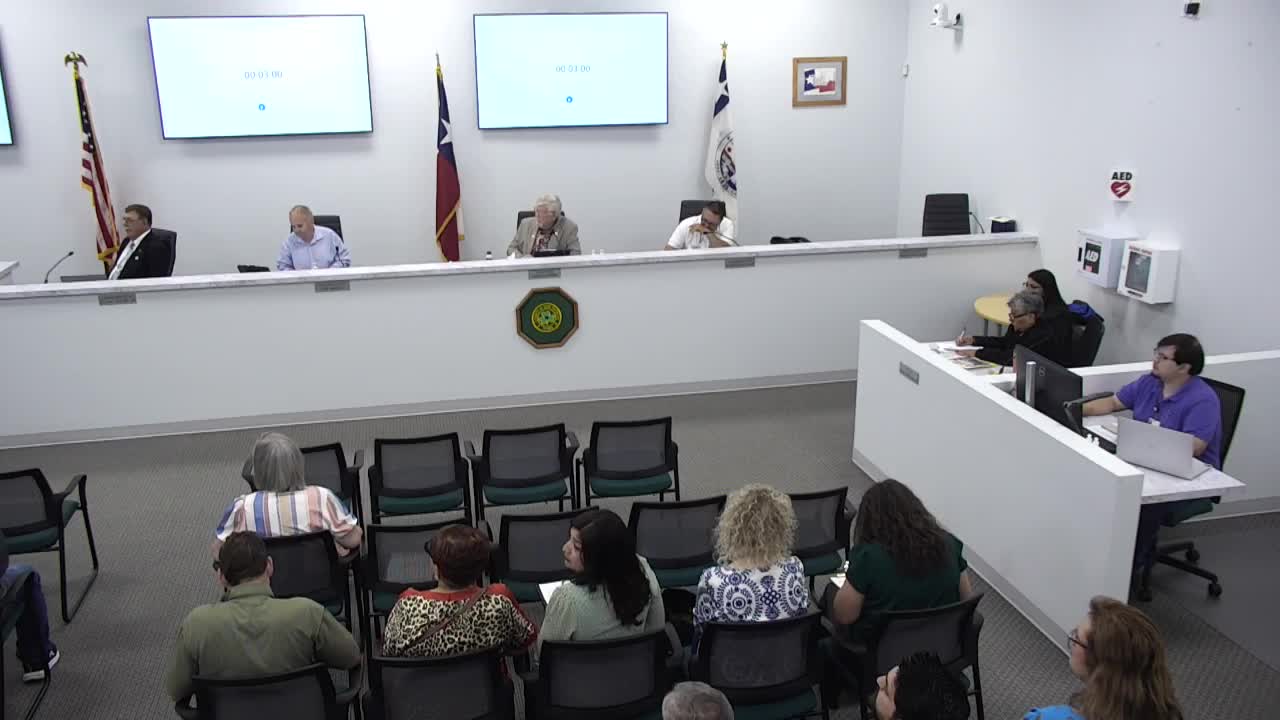
A resident of St. Paul, Edna Cavazos, used the court’s public‑comment period to press for more fire protection and stronger housing standards for her precinct, saying growth has outpaced infrastructure and that her area has “only four fire hydrants” and multiple dilapidated buildings.
“Fun fact number 1 is that we have only four fire hydrants out there,” Cavazos said, and later asked the court for three specific items: a building code for rural areas, additional fire hydrants and a professionally staffed fire department in Sinton that would benefit nearby communities.
Cavazos also said about 15% of St. Paul’s population is over 65 and living alone, and that travel times from the volunteer fire department to some addresses are eight to nine minutes depending on the route.
Why it matters: Cavazos framed her comments as community‑safety concerns; the court’s public record shows county staff later addressed fire‑risk policy and infrastructure variables that affect whether a burn ban can be lifted.
County fire staff (identified in the meeting as Scott) addressed repeated public questions about why a county burn ban remains in effect despite recent rain. Scott said the county uses a quantitative fire‑risk index and that a threshold value of 575 indicates high probability of fire spread. He showed a county map noting areas above the threshold (orange) and areas near it (yellow), and said while parts of the county have received enough rain to lower the index, the central and southern areas remain above the threshold.
“So we can’t take part of the county out of a burn ban and leave part of the county in,” Scott said, explaining that until the index falls below the threshold across the county, the burn ban must remain in place.
Court and staff also noted volunteer fire‑department distances and asked property owners to cooperate with county outreach on hydrants and other safety measures. No formal county action to add a building code, staff a municipal fire department, or add hydrants was taken at the meeting; Cavazos’s requests were preserved in the public record for potential follow up.