Get Full Government Meeting Transcripts, Videos, & Alerts Forever!
Get email alerts on the Child Protection topic
No spam. Unsubscribe anytime.
Blount County commissioners ask Tennessee lawmakers to review child-protection laws after allegations involving former teacher Joseph Dalton
Summary
Blount County commissioners on May 8 unanimously advanced two resolutions asking the Tennessee General Assembly to review state laws on child protection and formally expressing “extreme concern” about how local institutions handled allegations against former teacher Joseph Dalton.
Blount County commissioners on May 8 unanimously advanced two resolutions asking the Tennessee General Assembly to review state laws on child protection and formally expressing “extreme concern” about how local institutions handled allegations against former teacher Joseph Dalton.
The resolutions — identified in the clerk’s reading as Resolution 255014 (requesting a statutory review by the Tennessee General Assembly) and Resolution 255015 (expressing concern with local institutions) — were moved to the full commission after managers and commissioners debated amendments and next steps.
The board’s request to the General Assembly includes several concrete changes described during debate: making offensive physical contact with a child a separate, more serious offense; adding the offense to the list of crimes ineligible for diversion; automatic revocation of a teaching license on conviction or guilty plea; standardized statewide collection and sharing of personnel-complaint data; and mandatory reporting of resignations or separations while an investigation involving a minor is pending.
“If a child is involved, it should be a separate crime with a greater potential sentence and serious jail time,” Commissioner Anderson said while explaining the resolution’s recommended statutory changes.
The meeting opened with multiple public comments urging stronger protections. Amanda Sutherland, who identified herself as a District 7 parent, said the case involving Joseph Dalton “signals a dangerous weakness in our system” and called on the commission to “take a firm public stance and advocate for legislative change.” Shannon Epler, a parent who addressed commissioners during public comment, closed her remarks by urging them to act: “Do what’s right. Bring the truth to light.”
Commissioner Aykard introduced Resolution 255015 to express the board’s displeasure with how institutions handled the case; he also moved an amendment asking the mayor’s office to mail notice and copies of related news coverage to the other 94 county mayors in Tennessee so other districts would be warned. Commissioner Michaels seconded that amendment and supported it on the floor. The amendment passed and was added to the resolution before the board voted.
Commissioner Hannah offered and secured another amendment to change the resolution’s wording from “local justice system” to “local institutions,” broadening the entities named in the board’s expression of concern to include schools and other local organizations. That amendment also passed.
Board members and school leadership described work already under way. Chairman Pass, appearing at the podium to summarize a recently completed HR audit of the school district, said the audit found significant policy and record-keeping gaps. “There are policies that need to be updated,” he said, noting the district will pursue new and revised policies and a centralized digital personnel-records system to ensure investigations and disciplinary records are available where needed.
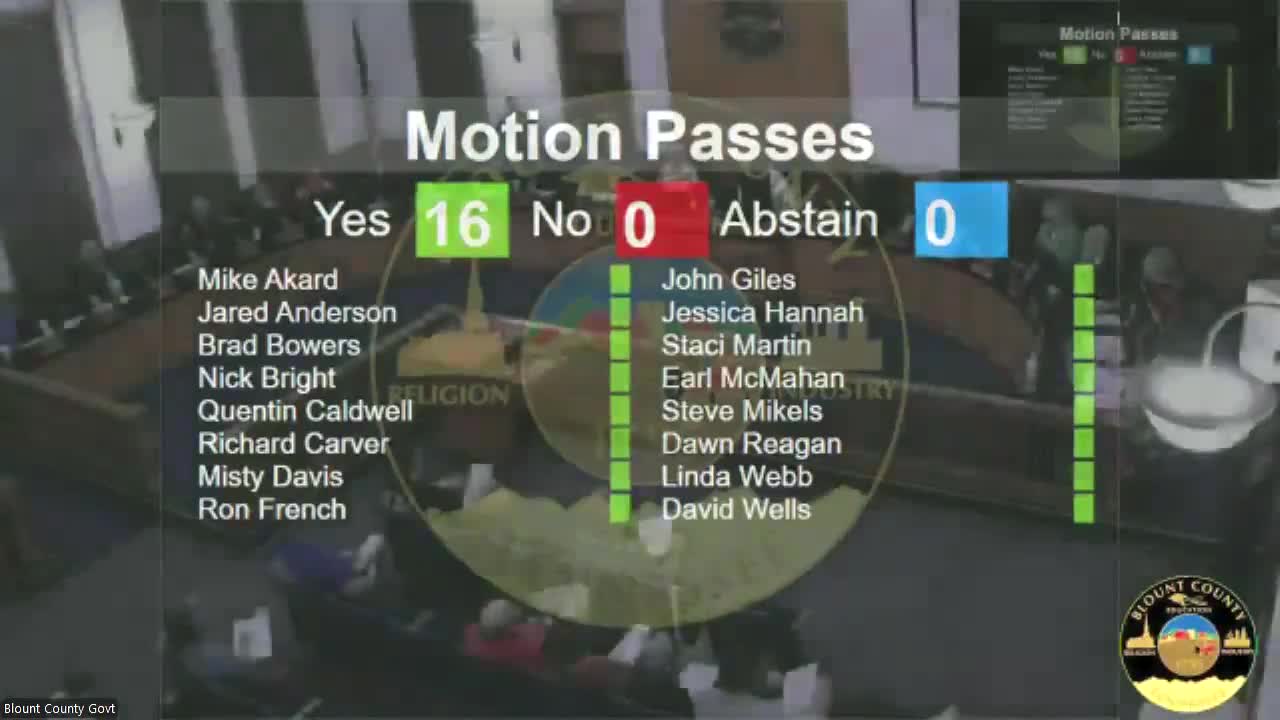
The two resolutions passed through the board’s vote process and were recorded by the clerk as moving forward to the full commission. The clerk announced vote counts in the record for the related motions and amendments (see formal actions below).
What happens next: both measures were moved forward to the full commission for final action; the board’s requests to the Tennessee General Assembly are advisory and would require state lawmakers to act to change criminal statute, licensure procedures and statewide reporting.
The meeting’s public comments and the board debate underscored local demand for statutory change, for stronger personnel reporting and tracking, and for clearer, faster investigative follow-up when allegations involve students.