Get Full Government Meeting Transcripts, Videos, & Alerts Forever!
Get email alerts on the Arts Grants topic
No spam. Unsubscribe anytime.
Adams County Cultural Council questions budgets, attendance and county outreach during SCFD grant study session
Summary
At a study session, the Adams County Cultural Council reviewed more than a dozen SCFD grant applications. Council members praised some program designs but repeatedly pressed applicants for clearer Adams County impact, budget line details and attendance counts.
At a study session of the Adams County Cultural Council (date not specified), council members reviewed applications for Scientific & Cultural Facilities District (SCFD) funding and raised repeated questions about unclear budget line items, attendance figures and how several programs specifically reach Adams County residents.
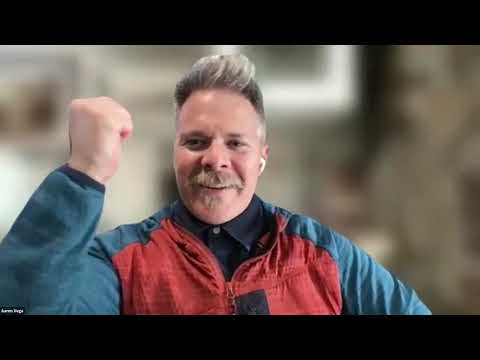
Council members said they valued clearer metrics and county-specific breakdowns while praising well-documented outreach and equity practices in several applications. “I really appreciate them offering metrics, the idea that, you know, 14.7% of attendance that they can actually tell us what the attendance numbers are for Adams County,” Council member Aaron Vega said during the Centimeters Dance discussion.
The session followed the SCFD 2024 rubrics, and staff reminded participants that the study session was for council discussion only and that recordings would be posted to the Adams County Cultural Council website within two business days. No formal votes or grant decisions were taken during the meeting; the council’s next (final) study session is scheduled for the following week, and application materials are due May 19 (as noted at the meeting).
Why it matters
The council allocates Adams County’s share of SCFD tax revenues; clearer descriptions of county-specific outreach, numeric breakdowns and budget categories affect scoring and funding recommendations. Council members said that as county sales-tax receipts tighten, the council needs to distinguish programs with strong, verifiable local impact from those whose work is primarily outside county boundaries.
Key points from the discussion
- Centimeters Dance: Members applauded the applicant for providing a county-specific attendance metric (14.7%) but flagged apparent budget inconsistencies. Council members said the application lists an "other" funding category of about $14,000 that lacks detail, and that the applicant’s list of major contributors appears to conflict with a $100 line entry for individual donations. A council member also noted that Project 2 has no listed end date.
- Young Voices (Young Voices of Colorado): Council members praised the program’s outreach to Eastern Adams County (Bennett/Strasburg) and its free-registration model. Several members noted an apparent discrepancy between two measures of SCFD reliance cited in the application (one line item showed 86.26% reliance on SCFD for contributed income; a different summary line showed 34%). Council members urged diversification of contributed income and welcomed the organization’s frequent strategic planning.
- Bluff Lake Nature Center and OceanFirst Institute: Both organizations drew strong praise for clear, concise applications, community outreach, and accessible staff contact practices. Bluff Lake was noted for creating separate county-specific budgets to show how it serves Adams County. OceanFirst drew admiration for free education programming and microplastics work; members asked for clarification about a contributors total ($72,672.22) that did not match another financial summary line.
- Latino Cultural Arts Center and Denver-area organizations at county borders: Several members said Project 1 from the Latino Cultural Arts Center was difficult to parse in terms of direct Adams County impact, while Project 2 (community installations) read clearer. Multiple applicants that operate near county lines prompted a recurring question: when a program takes place in Denver or at a regional venue, how actively does the organization market to or otherwise bring Adams County residents to the programming? Members asked applicants to state explicitly how many Adams County residents will be reached and by what outreach methods.
- DEVA, Denver Young Artists, Denver Brass and other regional groups: Council members repeatedly raised the project-bundling issue—several applications packaged multiple ongoing activities (family arts, open studios, job training, youth creative action) under a single “project” title. Some members called for a policy clarification at the council’s September retreat about whether multiple ongoing activities may be submitted as one project. DEVA and Denver Young Artists also received praise for bilingual accessibility, EDIA (equity, diversity, inclusion & access) practices, and advisory boards that include parent and student representatives.
- Wow Children’s Museum and museum-style grants: Members flagged confusing attendance numbers (the museum reported roughly 10,958 Adams County visits last year but listed an 11,280 figure under a single project). Discussion noted that museum operations often look like multiple programs bundled under a single project and asked staff and applicants to be explicit about what parts of museum programming are supported by the requested funds.
- Dragon Boat Festival and other large festivals: Members distinguished between two festival projects: a long-established city event (Sloan’s Lake/Denver) and a separate Riverdale Regional Park event located in Adams County. Council members said the Riverdale event demonstrated clear Adams County impact; the Sloan’s Lake event raised questions about county-specific outreach and vendor/attendee breakdowns. Several members asked organizers to list Adams County vendors and performers explicitly in future applications to make local economic impact clearer.
- Platform, Mirror Image and Access Gallery: Platform was singled out for strong EDIA protections and a compact, easy-to-read project budget. Mirror Image’s restorative-theater work drew praise for its focus on youth intervention; council members asked for clearer examples of how theater methods are used in programming. Access Gallery drew positive comments for featuring Adams County artists in upcoming exhibits and for adding a development/marketing coordinator to expand outreach.
Council-level questions and process notes
- Budget line clarity: Multiple members asked applicants to break down “other” and large lump-sum line items (for example, the Centimeters Dance $14,000 “other” entry and multiple discrepancies between contributed-revenue detail lines and summary lines reported across applications).
- Attendance and county-resident metrics: The council repeatedly asked that applicants show how many Adams County residents will be reached and how that count was derived (ticketing, in-park head counts, bus lists, school assembly rosters, vendor lists, etc.).
- Project definition: Several council members said applications sometimes combine distinct, ongoing programs into one project entry, complicating scoring. The council plans to discuss a clearer project definition at its September retreat.
- Deadlines and next steps: Staff reminded the council that recordings of today’s study session will be posted within two business days. The council noted the May 19 application deadline and that the next (final) study session would be held the following week; staff indicated Melvin Wardlow will run that meeting in the chair’s absence.
Ending
Council members praised well-documented outreach, clear EDIA practices and projects showing explicit county benefit while urging applicants to fix arithmetic or categorization errors and to make Adams County impact easier to verify. No funding decisions were made at the study session; feedback will inform scoring and final funding recommendations in later council meetings.