Get Full Government Meeting Transcripts, Videos, & Alerts Forever!
Get email alerts on the Audit topic
No spam. Unsubscribe anytime.
Auditors give Freetown-Lakeville unmodified opinion for FY24 but report material weakness in year‑end monitoring
Summary
Auditors presented an unmodified opinion on the district’s FY2024 financial statements but reported a material weakness tied to untimely monitoring and year‑end closeout; administration said corrective action plans are underway.
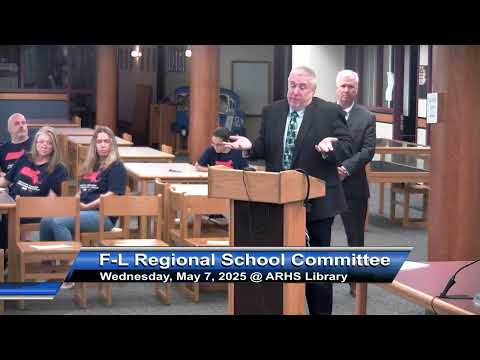
Auditors from Lynch, Meridian and Associates reported to the Freetown-Lakeville Regional School Committee on May 7 that they issued an unmodified opinion on the district’s FY2024 financial statements while also reporting a material weakness in financial reporting related to untimely monitoring and year‑end closeout.
The auditors told the committee that an unmodified opinion means users can rely on the district’s financial statements. At the same time, the auditors reported “a material weakness in financial reporting,” explaining that the condition reflected a reasonable possibility that a material misstatement would not be prevented, detected, and corrected on a timely basis because of late reconciliations and journal entries made at year end.
Auditors noted the district’s unassigned general‑fund balance was about $2,900,000 at June 30, 2024, which presenters described as essentially the maximum permitted under state law. The auditors also reviewed the single audit of federal grants required when an entity expends more than $750,000 in federal funds; for FY24 that review covered grant clusters the auditors described in their presentation, and they reported a finding related to reporting timeliness that dovetailed with the year‑end posting issues.
Director of Finance Jack Higgins told the committee the district has prepared and begun to implement corrective action plans. Higgins said one previously reported material weakness was removed because the district began providing required information in a timelier way; other items remain under remediation. He described corrective steps including regular grant‑management reviews, risk‑management meetings, and improved close‑out procedures, and he said the district submitted its corrective action plan to the state as required.
Committee members asked auditors to clarify the definition of a material weakness. The auditors explained that timing — for example, not reconciling accounts monthly and instead reconciling only at year‑end — meets the professional definition of material weakness even if the year‑end balances ultimately prove correct, because problems could go undetected during the fiscal year.
Why it matters: A material weakness in financial reporting signals risks to timely and transparent financial oversight; administration said corrective work is in progress and that the district has an unmodified audit opinion for FY24. The committee asked that administration circulate the corrective action plan to members.
What’s next: The director of finance said he will forward a copy of the corrective action plan to the committee and continue periodic reporting until the auditors’ concerns are resolved.