
City Year, Tendaji highlight in‑school tutoring and behavior supports; board notes funding uncertainty
Get AI-powered insights, summaries, and transcripts
Sign Up Free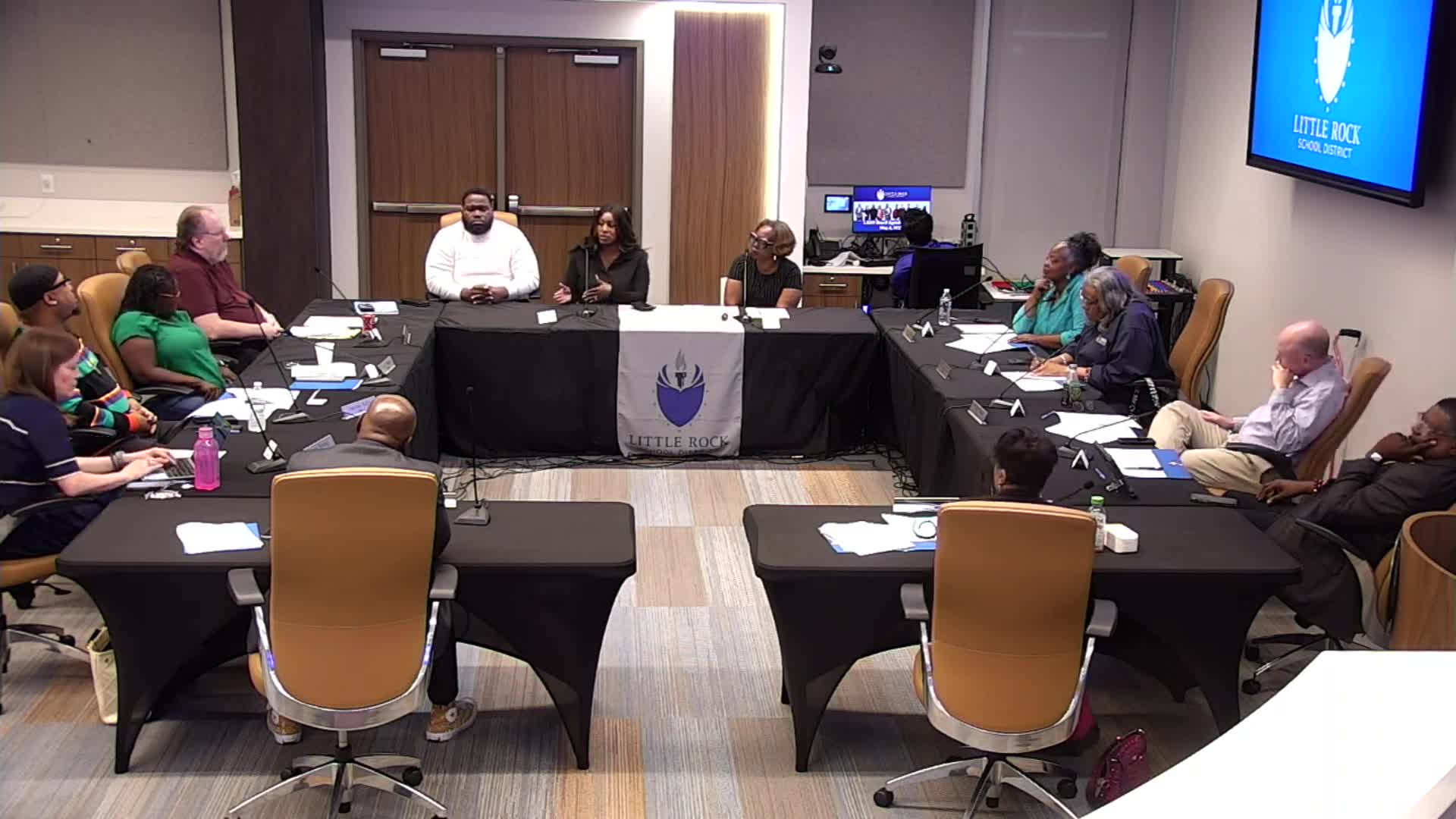
Summary
City Year and Tendaji Reclaiming Scholars presented program results and demand for services; City Year reported gains for focus students, Tendaji described behavior interventions and wraparound work. Board members expressed concern about funding stability and asked staff to pursue grants and coordinate partners.
Two community partners, City Year Little Rock and Tendaji Reclaiming Scholars, presented program outcomes to the board and described plans for next year; board members thanked both organizations and discussed concerns about funding and program continuity.
Jennifer Cobb, executive director of City Year Little Rock, told the board City Year is celebrating 20 years in the region and summarized service metrics: City Year has served in 21 schools over the last two decades and reported it has provided over 918,000 hours of service; in the district this year staff said 91 percent of City Year focus‑list students who began the year with a D or F in math improved to a C or better, and 85 percent of focus‑list students with a D or F in ELA improved to a C or better across the last two years of aggregated site data. Cobb said City Year proposed a three‑year contract to concentrate service on second‑ and third‑grade classrooms at four schools (Chico, Stevens, Lacey and FAIR) and would align staffing accordingly.
City Year staff noted national AmeriCorps funding uncertainty affecting some City Year sites across the country but told the board Little Rock’s federal funding for FY26 remained intact at the time of the meeting. Cobb said City Year is continuing recruitment and anticipated returning core members and some undergraduate teaching fellows to serve in classrooms.
Tendaji Reclaiming Scholars presenters described a behavior‑focused program serving suspension‑alternative programs, mediation and social‑emotional learning. Tendaji staff reported more than 5,000 students served since program inception, 1,061 students receiving direct interventions in the current year, 250 parents and guardians engaged through exit sessions and workshops, and district‑wide classroom wrap sessions reaching approximately 3,000 sixth graders.
Tendaji staff and site leaders gave examples of students whose attendance, behavior and academic engagement improved through mentoring, weekly sessions and wraparound case work. Board members praised the partners for relationship‑building and requested district staff consider how to sustain and potentially expand services. One board member urged staff to look for targeted grants and to align partner work with the district’s climate, culture and MTSS (multi‑tiered system of supports) coordination so the practices are more broadly embedded in district operations.
When asked about district reductions, both partners remarked that program cuts or narrowed contracts were painful choices; the board discussed using grant funds and foundation resources to sustain initiatives where possible. Tendaji and City Year leaders said they would continue fundraising and community engagement to support service continuity.