Get Full Government Meeting Transcripts, Videos, & Alerts Forever!
Get email alerts on the Education Outreach topic
No spam. Unsubscribe anytime.
Flower Mound historical commission unveils traveling trunk, plans participatory oral-history roadshow
Summary
The commission showed a new travelling educational "trunk" of local artifacts and discussed a pilot "roadshow" to collect community photos and oral histories across Denton County, including a proposed Pilot Point pilot and equipment/grant needs.
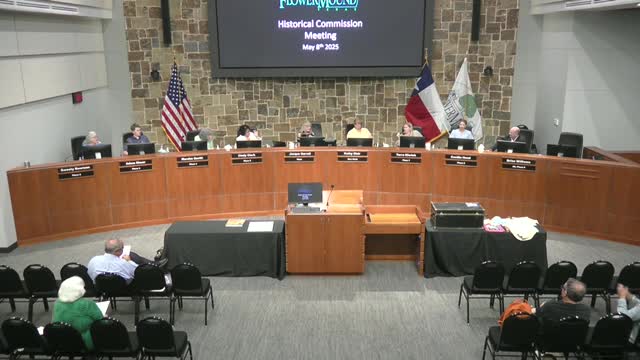
At a meeting of the Flower Mound Historical Commission, commissioners unveiled a donated traveling ‘‘trunk’’ of artifacts for children’s education and discussed launching a participatory oral-history ‘‘roadshow’’ to collect photographs and short memories from residents across Denton County.
The trunk, donated and assembled with contributions from local residents, will be used as a hands-on teaching aid at schools, festivals and commission events. Education Commissioner Tara Clarich described the trunk as “just kind of a sneak peek,” and said the trunk’s contents will evolve as the commission obtains more Flower Mound–specific material.
Why it matters: the trunk and roadshow aim to expand local engagement with the town’s history, create community-curated digital archives and offer interactive programming for children and civic groups.
Commissioners and volunteers described specific trunk items and how they will be used. The trunk contains donated artifacts that commissioners said include a youth T-shirt marked “Black Mark Farms,” early local photographs, leaf fossils that reveal detail when water is applied, a train whistle, cast-iron household items, and a large selection of local history books. Commissioner Jackie Norell invited members to examine the trunk after the meeting; she and others said signed prints and interactive painting activities will appear at the upcoming Art & Kite Festival.
Denton County Historical Commissioner and University of North Texas professor Sarah Wilson presented the commission’s interest in a ‘‘Mass Memories’’ or participatory archives model that she described as a community roadshow. Wilson said the approach pairs short oral histories with scanned family photos and other items; event stations would register participants, scan up to three items per person, capture a three-to-five-minute audio or video recollection, and record a release form to permit archiving. She listed required equipment including scanners, digital cameras, a video webcam, laptop and flash drives and stressed the importance of signed release forms for digitization and public use.
Wilson said funding paths include in-kind donations and small grants; she noted the Texas Historical Commission’s rural-community grant programs and suggested Texas Humanities mini-grants as one potential source of support. She recommended tailoring each event to local needs and starting with a pilot in Pilot Point and a potential Ponder site; she said volunteer staff and an IT person would be needed for digitization stations.
The commission discussed logistics and outreach: holding events at libraries, museums, schools or community centers; offering weekend hours; and projecting scanned images during events so attendees can view material in real time. Fred Vincent, who spoke during public comment to promote the Artfest, urged residents to attend and “come out” to community events where the trunk and other exhibits will be displayed.
The commission agreed to continue planning the trunk and to pursue the participatory archives pilot with Denton County partners and volunteers. Staff and volunteers will follow up on equipment lists, release-form templates and potential grant applications.