Get Full Government Meeting Transcripts, Videos, & Alerts Forever!
Get email alerts on the Mobile Services Regulation topic
No spam. Unsubscribe anytime.
City Council approves restrictions on mobile medical and food services in Kensington after heated public debate
Summary
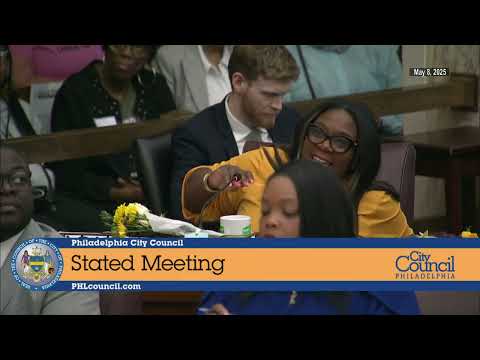
Philadelphia City Council passed an ordinance limiting where and when mobile service providers can operate in Kensington, after hours of public testimony that included both residents and harm-reduction advocates. The measure passed 13–3.
Philadelphia City Council voted to approve an ordinance imposing time, location and permitting limits on vehicular mobile service providers operating in Kensington, a move supporters said will protect residents and schoolchildren and opponents said will restrict lifesaving care.
The ordinance, filed as Bill 240665‑AA and approved by the council after roll call, passed 13–3. Councilmember Ketsi Lozada introduced the measure on behalf of the Kensington caucus; the final roll call recorded Ayes 13, Nays 3.
Councilmember Ketsa Lozada said the legislation aims to balance services and neighborhood quality of life. "This legislation is just the beginning of difficult decisions that we are gonna have to make in order to take our community back," Lozada said during floor remarks, adding that residents had asked the council to act for the safety of children and seniors.
Supporters — including students, neighborhood leaders and business owners — told the council that mobile vendors operating at or near school entrances, porches or yards have left sidewalks cluttered with medical waste and created safety concerns. Raymond Alvarez, chief executive officer of La Liga del Barrio, said the bill "does not criminalize care. It brings order to chaos" and called for medical outreach to be run with "proper equipment, medical oversight, and respect" for neighbors.
Opponents and providers warned the ordinance will make it harder to reach people in crisis. Crystal Greenberg, a nurse who works with unhoused residents in Kensington, said mobile units have prevented deaths and that restricting their movement "is tantamount to criminalizing health care." Harm-reduction advocate Kelsey Leon said, "My fear is that this bill will make conditions worse. It will make them worse." Several public-health and outreach workers described scenarios where mobile teams provided emergency response before first responders arrived.
Council debate reflected the split among members. Councilmember Anthony Phillips, while praising Lozada's work, framed the ordinance as aimed at protecting residents: "All the residents of Kensington are asking for is for a sense of serenity and tranquility and just a decent quality of life," Phillips said on the floor. Councilmember Rue Landau voted No; Councilmember Kendra Brooks and Councilmember Nicholas O'Rourke were the other Nays.
The ordinance amends Title 10 of the Philadelphia Code (regulation of individual conduct and activity) to add a new chapter governing vehicular mobile service providers. The ordinance text as read into the record set permitting and scheduling requirements and created enforcement penalties; the clerk read the bill title on the floor prior to the final vote.
Implementation details — including the permitting process, the precise hours and the sites designated for mobile services — were not fully specified on the council floor and will be set by relevant city departments under terms of the ordinance. Supporters said the measure allows mobile providers to continue operating if they follow new rules; opponents said the new restrictions may force some services to stop operating in the places where their clients most need them.
The council accepted extensive public comment before the vote. Dozens of speakers addressed the chamber, including students from neighborhood schools, health-care workers, local business owners, faith leaders and outreach volunteers. The council also approved a companion resolution to charge a special committee on Kensington with a hearing to examine the impact of opioid-related trauma on children's emotional and behavioral health.
Councilmember Lozada said the ordinance is the first step toward longer-term neighborhood recovery: "If we don't respond to what is happening in the Kensington community, those children will become a part of the systems that we say are negative," she said. The ordinance takes effect under the terms stated in the final enacted text.