Get Full Government Meeting Transcripts, Videos, & Alerts Forever!
Get email alerts on the Cdbg Annual Action Plan topic
No spam. Unsubscribe anytime.
San Mateo CRC recommends 2025–26 draft CDBG annual action plan to City Council
Summary
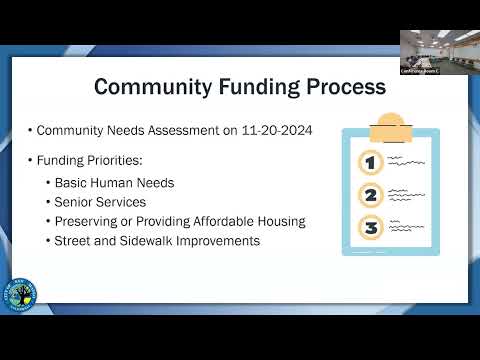
The City of San Mateo Community Relations Commission voted to recommend the city’s 2025–26 draft annual action plan for the federal Community Development Block Grant program to the City Council.
The City of San Mateo Community Relations Commission voted to recommend the city’s 2025–26 draft annual action plan for the federal Community Development Block Grant (CDBG) program to the City Council.
The recommendation, made during the commission’s regular meeting and advanced by motion and second, follows staff presentations and public comment on funding priorities and proposed awards for the upcoming program year.
The plan outlines about $1,320,000 in available CDBG resources, composed of entitlement funds, program income and unspent prior-year funds. Staff presented the proposed allocations and applicant awards and described contingency rules for higher- or lower-than-expected federal funding.
Jennifer Mora, housing staff for the City of San Mateo, told the commission that the draft plan is year four of the city’s consolidated plan cycle and “highlights grants and programs that we’ll be funding in the next program year.” Mora said the city is accepting public comments on the draft from April 15 through May 15 and is scheduled to present the plan to the City Council on May 19.
Under the draft budget presented to the commission, staff proposed the following allocations: $85,000 for CDBG administration; $113,000 for public services; $107,000 for minor home repair; $80,000 for economic development; $200,000 for public facility improvements; and $447,850 for street and sidewalk improvements. Staff also reported $8,000 in program income credited to the program.
Mora described planned awards to returning applicants in the public services category: each returning public-service applicant would receive $14,100 (the same amount as the prior year) because all applicants in that category were renewals. For housing services, Project Sentinel would receive $25,000 (funded from the administration line) to serve an estimated six individuals. Rebuilding Together Peninsula would receive two awards for minor home rehabilitation: $32,000 for the Safe at Home program (estimated to serve four households) and $75,000 for National Rebuilding Day (estimated to serve six households). In the economic development category, Renaissance would receive $40,000 to support microbusiness assistance (proposed to serve 50 individuals) and Upwards would receive $40,000 to support childcare providers (proposed to serve 11 individuals). For public facilities, the draft plan proposes $150,000 for HIP Housing to replace a broken elevator and $50,000 for Cora to replace an HVAC system and remodel a breezeway.
Staff described contingency language the commission recommended: if the city receives more federal funds than expected, the commission directed staff to increase awards to public-service applicants equally while keeping the public-services cap in place, maintain awards for minor home repair and economic development, increase administration up to the 20% regulatory cap, and use remaining funds for public-facility and street/sidewalk work. If the city receives less than estimated, staff would reduce public-service awards (consulting with applicants if awards fall below $10,000), retain amounts for minor home repair and economic development where possible, reduce city-led capital and street projects, and reduce administration to remain under the 20% cap.
During public comment, Laurie Watanuki, a member of the Central Neighborhood Association board, urged the commission to direct CDBG-funded street and sidewalk improvements toward the Central neighborhood’s East Side, citing trip hazards from tree-root-lifted sidewalks and recommending green street lamps for pedestrian and bicycle safety. “We would support street improvements in the form of sidewalk repairs and green street lamps for pedestrian and bike safety,” Watanuki said, calling out Fifth Avenue between Delaware and South Amfelt and adjacent blocks as high priority.
Commissioners asked staff how the process would work if total entitlement funding were lower than estimated; staff said they would contact applicants for input and return to the commission before making significant changes, which could affect the timeline to City Council and might require an extra meeting.
A commissioner moved to recommend the draft 2025–26 annual action plan to City Council; a second was made and a roll-call vote followed. Named votes recorded on the roll call in the meeting transcript include Commissioner Shay Bowles (yes) and Adviser Fitzgerald (yes); the motion carried.
The commission also heard non-CDBG items and announcements, including an update that Andrea Chow from the city manager’s office is expected to brief the commission at its May meeting on building electrification and equity implications, a reminder about an April 21 study session on tenant protections and anti-displacement measures, and notice of a San Mateo County ADU resource fair on May 10.
The commission’s recommendation takes the draft plan to the City Council for final approval; staff said the council hearing is scheduled for May 19 and public comments on the draft are open through May 15.