Get Full Government Meeting Transcripts, Videos, & Alerts Forever!
Get email alerts on the Department Organization topic
No spam. Unsubscribe anytime.
California civil rights director says no perfect home for agency, defends move to housing amid staffing limits
Summary
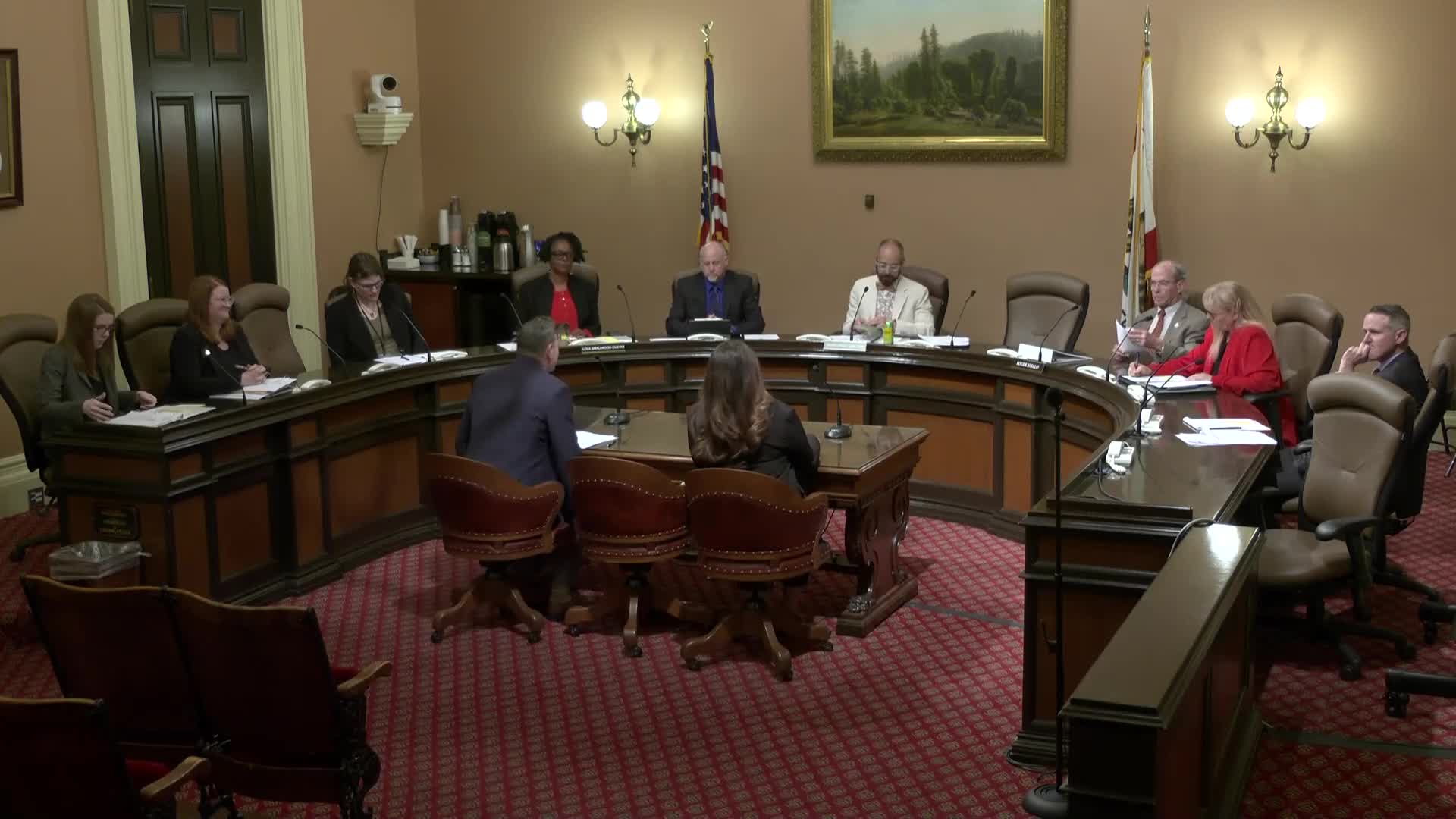
Director Kevin Kish of the California Civil Rights Department told Subcommittee 4 of the Senate Budget and Fiscal Review Committee that no single placement in state government is perfect for the department’s wide jurisdiction and defended the proposed move to a housing and homelessness agency because housing cases drive a large share of CRD’s litigation.
Director Kevin Kish of the California Civil Rights Department told Subcommittee 4 of the Senate Budget and Fiscal Review Committee that the agency’s responsibilities extend across employment, housing, contracting and hate-violence response, and that no single state agency is a perfect administrative home for the department.
Kish said the department receives “thousands of complaints of civil rights disputes” each year and that “we have a statutory obligation to investigate every single one of them that is jurisdictional under the laws that we enforce.” He told senators the department prosecutes selected cases in court and operates programs such as the California Pay Data Collection Program and the California versus Hate resource line and network.
Kish defended the governor’s proposed reorganization that would place the civil rights department within a housing and homelessness agency, saying housing complaints represent about 30% of complaints filed with CRD but account for roughly half the department’s litigation docket because of statutory mandates requiring litigation in fair-housing cases.
“The statute formally requires of our department … that we sue somebody in housing if we believe that there's been a violation of the law,” Kish said, explaining the difference between the department’s mandatory litigation role in housing and its discretionary approach to employment cases.
Senators on the subcommittee pressed Kish about enforcement capacity under the proposed reorganization and whether the department would gain investigators or other staff. Kish said the proposed reorganization does not change CRD’s staffing or structure: “We would be exactly as we are today.” He told the panel the department currently has 337 authorized positions and that its education and outreach team has grown to 10 positions since a 2018 pilot program was expanded.
Kish outlined the department’s history: originating in 1959, moving through commission and department structures, and shifting in 2012 from administrative adjudication to filing its own cases in court. He said CRD maintains formal memoranda of understanding with other state agencies — for example, the Labor Commissioner’s Office for some Equal Pay Act matters and a consumer-services office for appraisal-discrimination referrals — but noted statutory and structural differences limit some kinds of field enforcement partnerships (for example, the Labor Commissioner’s Bureau of Field Enforcement can issue penalties on the spot while CRD operates as a public prosecutor that assembles evidence and files court cases).
Senators raised geographical equity concerns. Kish said some services the department connects people to, such as mental-health care after hate incidents, are scarce in rural areas; that lack of providers shapes program design and is among the reasons CRD developed remote-service approaches through the California versus Hate effort.
Kish cautioned there is no “perfect” organizational placement for civil-rights enforcement and described trade-offs from different models — including the federal model of an independent commission, housing placement, or being housed within an attorney general’s office. He urged lawmakers to weigh those trade-offs when considering future structural changes.
Kish also noted that CRD’s contract‑compliance authority — a proactive audit function that historically existed at the state level and was staffed until 1993 — has not been funded or restored, so the department currently monitors state-contractor discrimination primarily through individual complaint intake rather than a proactive auditing unit.
The subcommittee did not take formal action on the reorganization during the hearing; members said the discussion aids oversight and future budget decisions.
Ending: Senators thanked Kish and other witnesses and said they will consider the department’s budget change proposals and reorganization questions in the weeks ahead as the May revision and final budget decisions approach.