Get Full Government Meeting Transcripts, Videos, & Alerts Forever!
Get email alerts on the Corrections Staffing topic
No spam. Unsubscribe anytime.
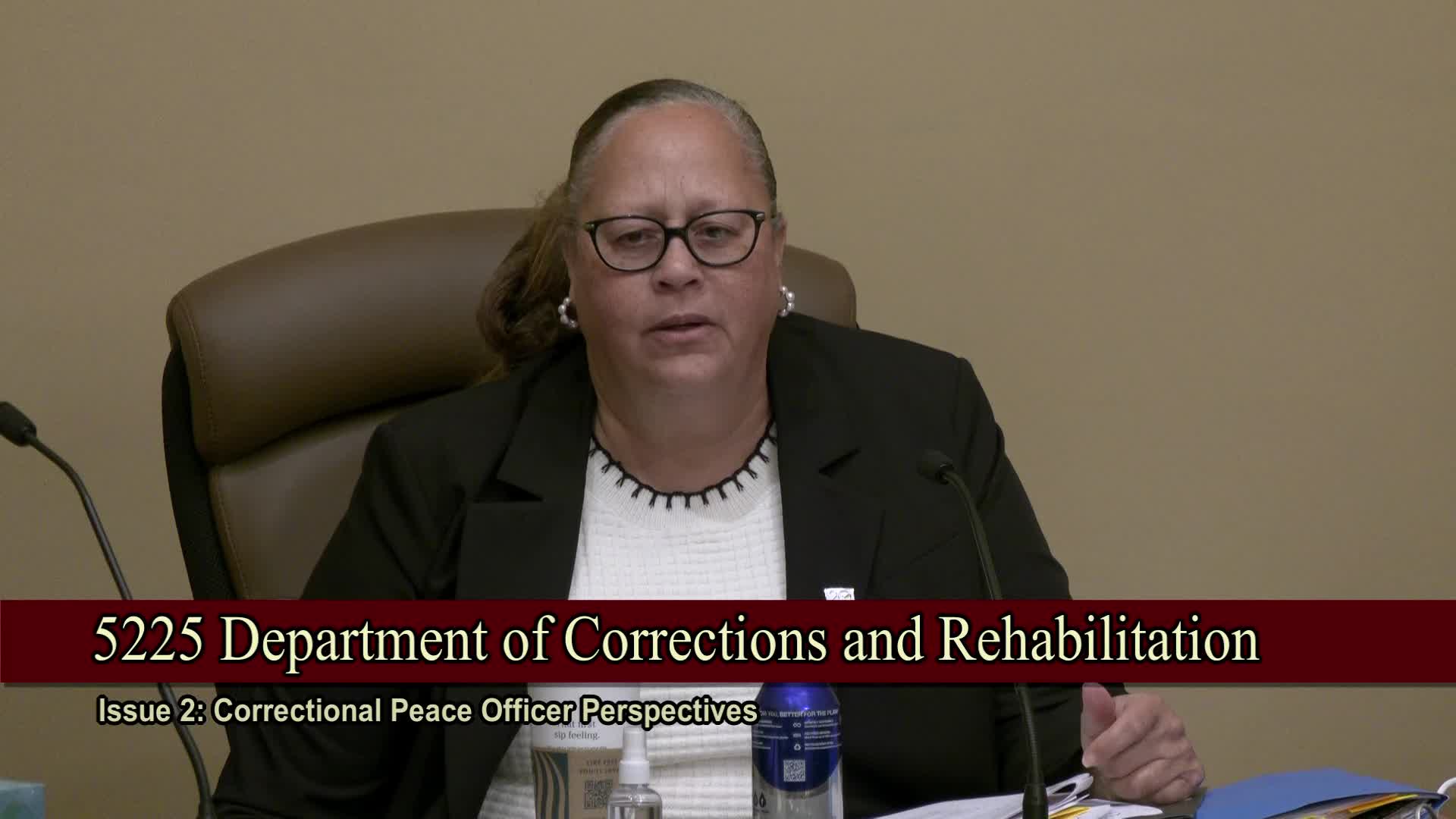
Correctional officer testifies staff cuts, safety and training harming prison operations
Summary
A 23‑year correctional officer told the Senate subcommittee staffing reductions, restricted disciplinary authority and increased inmate aggression are eroding safety and the ability of staff to implement rehabilitative programs, and urged lawmakers to restore staffing, hands‑on training and meaningful consequences for violent behavior.
Joseph Cisneros, a correctional officer and member of the California Correctional Peace Officers Association, testified to the Senate Budget Subcommittee No. 5 that staffing cuts and policy changes have left many institutions short‑staffed and constrained officers' ability to respond to aggression inside prisons.
"Staff reductions are not just budgetary line items. They are lives," Cisneros said, describing assaults on staff as "becoming routine almost daily." He told the committee that reductions in custody staff and limits on disciplinary tools have, in his view, weakened officers' options to keep housing units and programs safe.
Why it matters
Cisneros framed staffing and training as core public safety concerns for both staff and incarcerated people. He said programs intended to rehabilitate people in custody depend on adequate custody supervision to protect participants and staff; without supervision, he said, educational and treatment efforts can fail because disruptive behavior undermines programming.
Testimony highlights
- Staffing and partners: Cisneros said that in some areas he now works alone after losing a partner due to realignment and that having partners prevents escalation and provides witness corroboration for difficult interactions. - Training: He urged more in‑person, scenario‑based training rather than computer‑based modules, saying the job requires hands‑on instruction. - Mental health services for staff: Cisneros described new department programs for employee mental health but said services appear overloaded and sometimes slow to meet demand. - Workplace risk and incidents: He said assaults on staff and large disturbances occur regularly and described a recent rise in incidents he associated with synthetic drugs that create short, intense episodes of altered behavior.
Committee interaction and context
Committee members asked whether officers feel empowered to report colleagues who engage in misconduct. Cisneros said staff can call a whistleblower hotline and that he personally would remove officers from duty if he observed inappropriate relationships with incarcerated people. The committee also asked about communications equipment, and Cisneros said radio coverage varies by building and yard but is generally functional on his facility.
"We have officers who put the stab proof vest on, raise their hand and go to work every single day knowing that they're gonna fight," Cisneros said, urging lawmakers to view correctional officers as "protectors of public safety."
Discussion vs. decision
The session recorded extensive first‑hand testimony and questions but produced no formal committee action. Members asked that Cisneros and others remain for the next panel on staff misconduct and offered to request follow‑up testimony on which programs reduce violence and support rehabilitation.
Clarifying details and local context
- Cisneros said he has 23 years of experience working inside state prisons and identified violence, staffing levels and the availability of program supervision as key factors in program success. - He described shift lengths and overtime pressures, noting officers commonly work beyond scheduled shifts on busy days and that medical or other urgent calls can repeatedly interrupt routine duties.
Ending
Senators thanked Cisneros for his testimony and asked him to stay for the next panels on staff misconduct so the committee could compare perspectives across staff and oversight bodies. Lawmakers requested additional briefings on which rehabilitative programs reduce violence and which staffing models allow programs to operate safely.