Get Full Government Meeting Transcripts, Videos, & Alerts Forever!
Get email alerts on the Cap And Trade Reauthorization topic
No spam. Unsubscribe anytime.
CARB chair urges reauthorization of cap-and-trade, stresses portfolio approach and market stability
Summary
California Air Resources Board Chair Leon Randolph told a joint Senate hearing that cap-and-trade must be extended to meet statutory climate targets, describing the program as cost‑effective and cautioning that changes ripple across a tightly linked system.
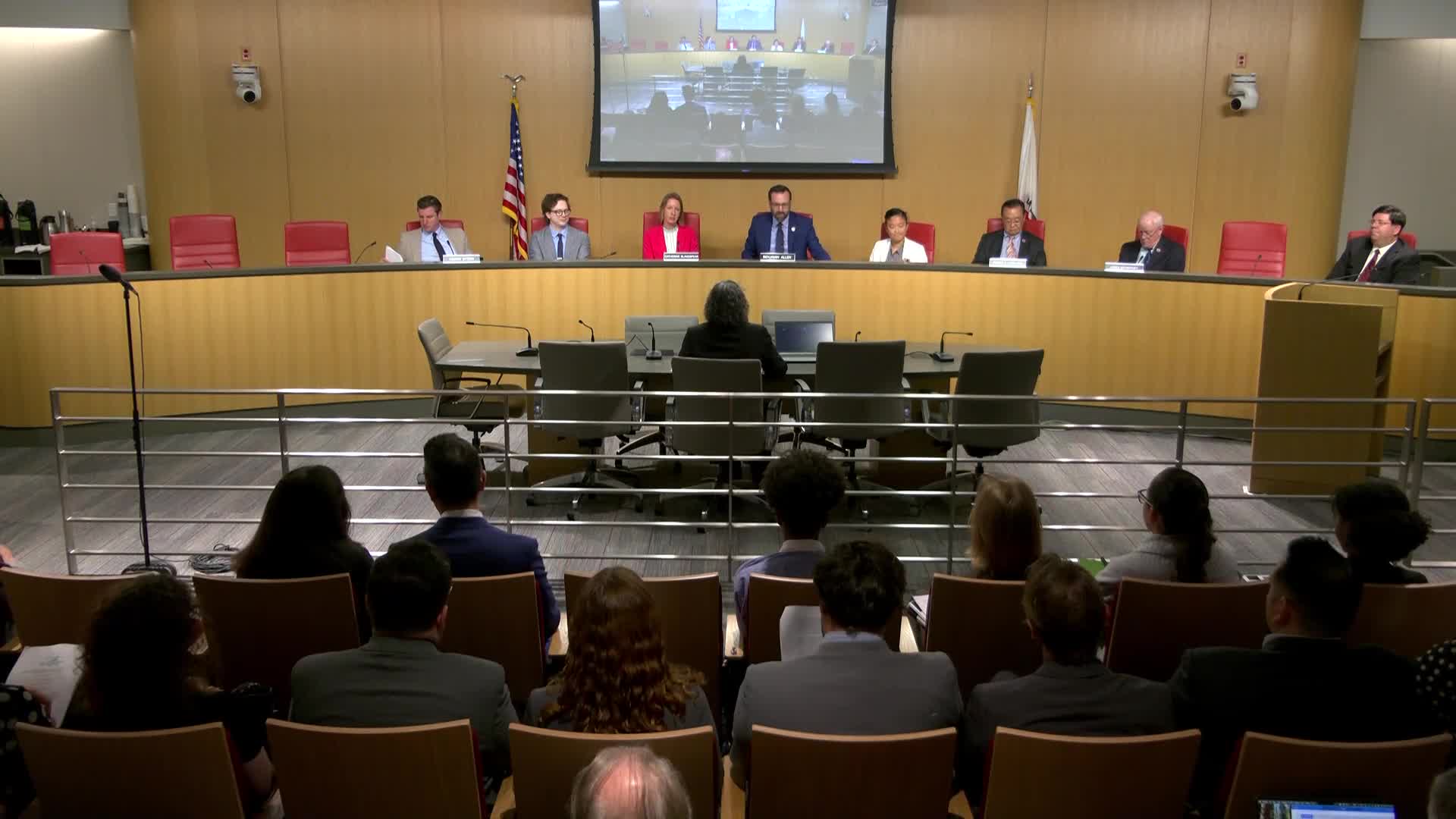
Leon Randolph, chair of the California Air Resources Board, told a joint oversight hearing of the state Senate that cap-and-trade is a “foundational part of California's climate policy portfolio” and needs reauthorization to keep the state on track to meet statutory climate targets.
Randolph said the program covers the state’s largest polluters — including ‘‘large factories, energy companies, oil and gas suppliers’’ — and that it has helped California meet prior goals while funding billions in climate investments. ‘‘Cap and trade establishes a declining limit on major sources of climate pollution throughout California,’’ he said.
The chair framed the program as one tool in a “portfolio approach” that also includes performance standards and incentives. He said cap-and-trade has generated substantial funding: ‘‘including $28,000,000,000 in climate investments, delivering more than half a million projects across the state and $15,000,000,000 in bill credits back to utility customers,’’ and cited $1,500,000,000 in verified offsets issued to tribal projects.
Randolph and senators at the hearing repeatedly noted that any regulatory changes will ‘‘ripple across the system’’ because the program is a closed market. He warned that tightening features such as removing hedging or offsets could raise costs and might require adjustments elsewhere to avoid leakage or abrupt market impacts.
Randolph also said CARB is balancing environmental ambition with affordability concerns. ‘‘We are acutely aware of how Californians are feeling price squeezes across our economy, and are committed to ensuring that our actions deliver net benefits,’’ he said, calling for attention to projects that provide both climate benefits and tangible affordability improvements for communities.
Senators and witnesses at the hearing pressed CARB on a number of specific topics, including: how the agency will set an updated allowance trajectory consistent with the 2022 Scoping Plan; the role of carbon capture and removal and offsets; enforcement of offset projects; and how auction revenues and allowance allocations should be used to address rate affordability and community benefits.
Randolph declined to comment on some auction‑sensitive topics for market integrity reasons but said CARB is preparing regulatory updates aligned with the 2022 Scoping Plan. He urged rapid, coordinated action between CARB and the legislature to provide clarity to markets and investors.
The hearing continued with a second panel of technical witnesses and many public commenters focused on competing proposals for how to spend cap-and-trade proceeds and how to change program design.
Ending: The hearing concluded with senators urging a prompt joint effort between the legislature and CARB to define both program ambition and how revenues should be allocated, with senators warning that delay would add further uncertainty for markets and funded programs.