Get Full Government Meeting Transcripts, Videos, & Alerts Forever!
Get email alerts on the Transit Fare Policy topic
No spam. Unsubscribe anytime.
Yamhill County weighs hybrid transit fare plan; asks for revenue modeling before public outreach
Summary
County staff and consultants presented a hybrid fare proposal that would reintroduce fares after a COVID-era fareless period. Commissioners asked staff for detailed revenue modeling and two scenario options before the proposal goes to the public.
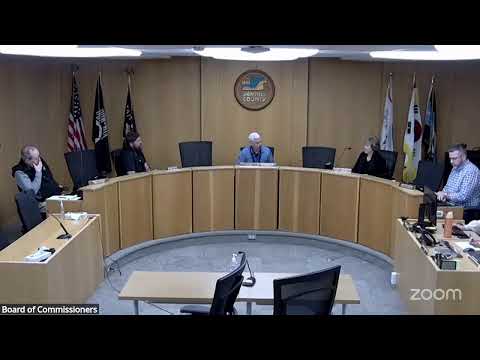
Yamhill County commissioners spent the work session portion of their May 8 meeting discussing a proposed return to paid transit fares and a hybrid fare structure designed to balance rider access with revenue generation.
County transit staff and outside consultants presented a proposal that would reintroduce fares after the COVID-era fareless policy and roll out a mix of single-ride, day-rate and monthly options, plus partnership passes and targeted discounts for low-income and ADA riders. Cynthia, a county transit staff member leading the project, told the board, "we want to approve a new fair structure for public review, and we want to know what information you need from the public to help you make your decision." (Transcript: 383.18–394.35)
The proposal the technical advisory committee recommended is a hybrid of two higher-tier options and would include separate local and out-of-county pricing. Under the outline presented by consultant Patricia Fink, a local in‑county weekday flat day ticket would cost $4 and a one-way local trip $2; an out‑of‑county weekday flat day ticket would cost $10 and a one‑way $5. The committee also recommended discounted monthly passes for frequent riders (a $20 local monthly pass and a $75 out‑of‑county monthly pass), an ADA dial‑a‑ride monthly option priced at $75, and a general public dial‑a‑ride monthly pass at $125 with one‑way general dial‑a‑ride trips priced as a premium (the consultants discussed a one‑way general dial‑a‑ride fare in the $15 range). Fink said the committee favored a phased implementation to protect low‑income riders and rely on partner organizations for enrollment and distribution.
Consultants described a partnership-pass approach in which employers, colleges and social‑service agencies could buy reduced-price passes for their clients or employees. "Partnership programs allow reduced prices for local employers, universities, social‑service agencies and senior services," Fink said, adding that many partner agencies already vet eligibility and could administer reduced or free passes for qualifying riders. The consultants also discussed linking the system to a third‑party program referred to in the presentation as the FairPass partnership.
Commissioners focused on two related issues: how much new fare revenue could reasonably be expected and how city contributions (the small cities that currently pay varying amounts toward service) should affect the public presentation. Commissioner Johnson repeatedly requested baseline revenue modeling and two scenarios: (1) projected revenue and costs with current city contributions and proposed fares, and (2) projected revenue and costs without additional city contributions so the public can see the difference. Johnson said the board needed "some base numbers" before taking the proposal to the public so commissioners could answer questions about where figures came from and how the county general fund would be affected. (Transcript: 2712.515–2740.115; 3191.07–3215.944)
Consultant Chris Wache of Kajito, who will help design outreach, recommended separating the city budget conversations from general public outreach to avoid turning city budget decisions into political campaigns during the public comment process. "I would caution against mixing those two and having... 'if your city doesn't kick in, this is how much it's going to cost,' because that becomes kind of a political campaign," Wache said. (Transcript: 3689.875–3734.32)
Board discussion also touched on service design items that could change demand and fare effectiveness: planned service changes in an upcoming request for proposals, use of fixed routes to reduce reliance on premium dial‑a‑ride trips, and veteran and medical shuttle needs. Commissioners asked staff to examine vanpool/shuttle options and how federal or coordinated care organization (CCO) reimbursements might support longer trips to medical centers.
What commissioners asked staff to do next: prepare revenue estimates and a short cost model using current ridership data; produce two scenario packets (with and without city contributions) to show likely impacts on fares and the county general fund; and return to the board for review of the outreach materials before the county moves into public engagement. Cynthia and the consultants agreed to refine the proposals and the outreach plan and to return with modeled revenue estimates and an implementation cost estimate for running the fare collection system.
The board did not vote on a fare policy at this meeting; the discussion resulted in direction to staff and consultants to produce the requested modeling and to return to the board before launching formal public outreach and the required public hearing.
Ending: Staff said they will prepare a public outreach plan once the board confirms the metrics the public should weigh; commissioners asked for clear dollar estimates, the annual operating cost of a fare system (collection technology and staffing), and scenario modeling about how much user fees could offset current county contributions.