Get Full Government Meeting Transcripts, Videos, & Alerts Forever!
Get email alerts on the Property Assessments topic
No spam. Unsubscribe anytime.
Milwaukee assessors explain 2025 value increases, urge residents to use open‑book review
Summary
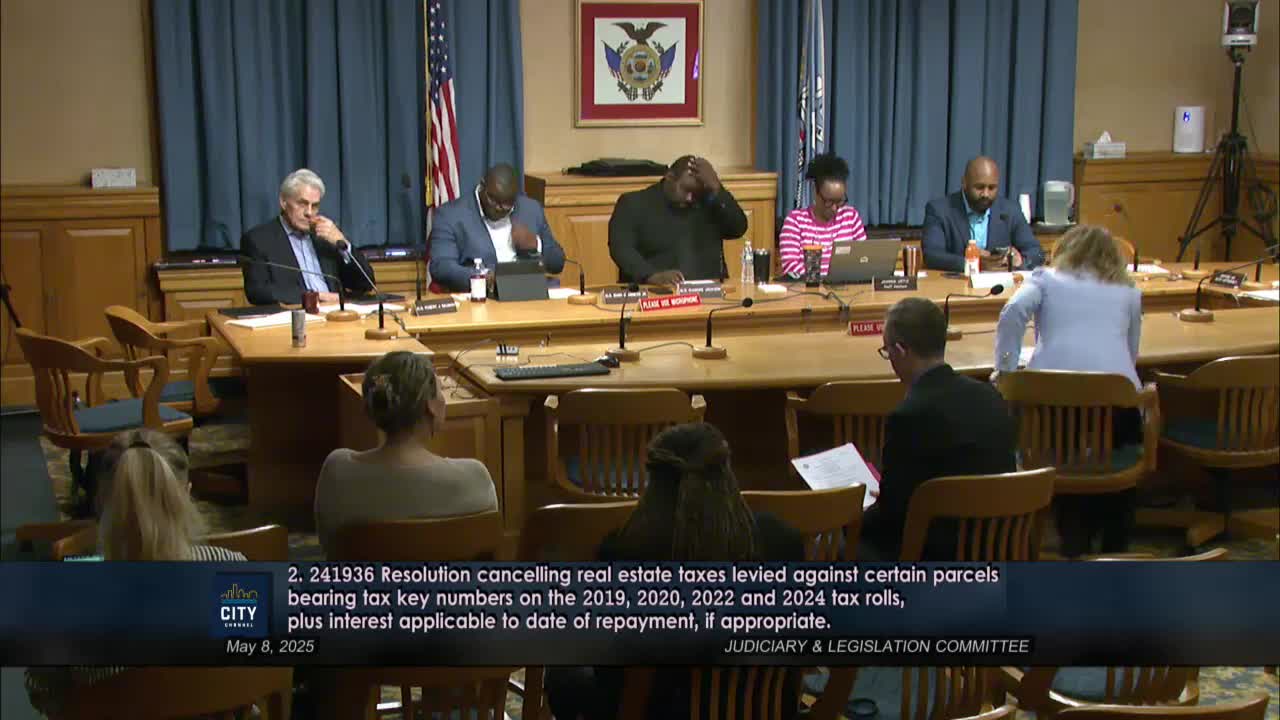
Nicole Larson, the City of Milwaukee commissioner of assessments, told the Judiciary & Legislation Committee the city’s 2025 revaluation raised assessed values roughly 15.43% and urged property owners to use the open‑book period and file formal objections by the statutory May 19 deadline.
Nicole Larson, the City of Milwaukee commissioner of assessments, told the Common Council’s Judiciary and Legislation Committee that the city’s 2025 revaluation produced an overall increase in assessed value of about 15.43% and that the increases reflect market sales rather than arbitrary changes by staff.
"State law also requires that every major class of property be assessed within 10% of full value at least once every 5 years," Larson said, explaining the office’s statutory duties and the methodology used to reach full market value for residential and commercial classes.
Why it matters: The reassessment changes how total value is split between land and improvements and in some neighborhoods produced much larger percentage changes than in others. Committee members and residents asked why some properties show dramatic land‑value increases and why homeowners must file objections to correct apparent classification or data errors.
What the assessor said
Larson said the assessor’s office relies on arm’s‑length sales, permit data, MLS (residential) and CoStar (commercial) data, and a computer‑aided mass appraisal model (Grama). Deputy Commissioner Bill Bowers and real‑estate modeler Colin Williams walked the committee through the adjustments. Larson said the city saw a 14.39% residential increase and a 17.11% commercial increase, with district changes ranging from roughly 8% to more than 24% depending on neighborhood sales patterns.
Larson defended the methodology but acknowledged the shift in land allocation was a technical change that can look alarming to owners: "That allocation within the total value does not affect the tax bill," she said, adding the tax bill is based on total assessed value. She said the office updated the way it separates land from improvements because a lack of recent vacant‑land sales made prior land allocations outdated.
Homeowner concerns and reclassifications
Several aldermen and residents pressed the assessors on reclassifications and large single‑property jumps. One alderman described a property that moved from roughly $430,000 to $700,000 after a 2025 classification as a modern two‑story. Larson and Bowers said the department created a new "contemporary/modern" classification that can produce outsized model differences the first year it is used; they said the open‑book and formal objection process exist so property owners can present evidence and the office can review individual cases.
"The homeowner is our last safety valve that says, 'Hey, this is out of whack,'" Deputy Commissioner Bill Bowers said, describing the office’s procedure for pulling properties out of the mass model for individual review.
How to object and next steps
Larson and staff repeatedly told the committee that property owners should use the open‑book period and, if needed, file a formal objection by the statutory deadline. The office identified the third Monday in May (May 19) as the statutory deadline to file objections for the current year and encouraged owners to submit supporting documentation where possible. Larson said staff operate a hotline (414‑286‑6565) staffed by appraisal technicians and that property record cards and many details are available online at assessments.milwaukee.gov.
Process and operational notes
- The assessor’s office said it reviews roughly 14,000 conveyances and thousands of permits each year and uses that transaction and permitting data to calibrate models. - The office updated rent studies and some commercial data to better reflect apartment and commercial trends, which helped raise commercial valuations. - Colin Williams was identified as the staff member who leads modeling work.
What the council asked for
Aldermen asked why the assessor’s office had not proactively alerted neighborhoods where the land allocation changed substantially; Larson apologized for underestimating how alarming the line‑item land figures would look and said the office added explanatory information to its web page and issued a press release in cooperation with the Department of Neighborhood Services.
Committee reaction and follow‑up
Alderpersons asked for follow‑up meetings with assessors about neighborhood‑level changes (some neighborhoods showed double‑digit jumps above the city average). Council members also raised concerns about displacement and how assessment equity interacts with other tax levies (for example, school district levies), a point assessors said lies outside their statutory role but that they would continue to explain during outreach.
Ending
Larson urged property owners to check their property record cards online, call the assessment hotline to discuss questions and, if still concerned, file a timely objection. She said the office is continuing technical work to refine classifications and allocation methods and will use owner feedback from objections to improve the models.