Get Full Government Meeting Transcripts, Videos, & Alerts Forever!
Get email alerts on the Aging Services topic
No spam. Unsubscribe anytime.
Richmond office reports senior needs assessment: housing, sidewalks and outreach gaps identified
Summary
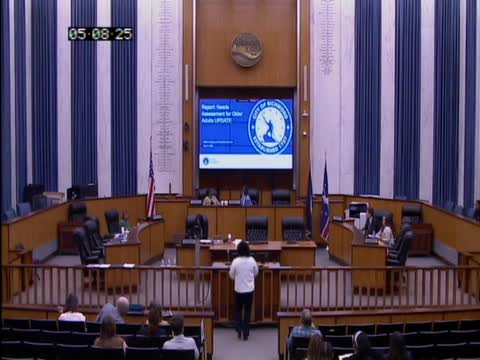
The Richmond City Office of Aging and Disability Services told the City Council’s Education and Human Services Standing Committee on May 13 that its 2023 needs assessment shows a growing older-adult population and multiple service gaps, especially in housing, transportation, built environment and outreach.
The Richmond City Office of Aging and Disability Services told the City Council’s Education and Human Services Standing Committee on May 13 that its 2023 needs assessment shows a growing older-adult population and multiple service gaps, especially in housing, transportation, built environment and outreach.
Natasha Hout, program manager for the Office of Aging and Disability Services, said the office serves residents 55 and older and people 18 and older with physical disabilities and that the city’s older-adult population has risen since the assessment. "As of the time of this survey in 2023, the landscape of older adults was about 57,000 people ... as we've moved into 2025 ... that number has increased to almost 70,000 older adults in the city," Hout said.
Hout summarized five broad findings from the assessment: the most common identified needs are the built environment, housing and technology; older adults want fitness, adult‑education and cultural activities; city and partner services are not easily accessible to many seniors; older adults prefer paper or written communication; and the office compiled a "senior navigator" document listing more than 900 resources. She said the project team produced nine recommendations and presented several the committee could act on now, including asset mapping, a biennial interest survey for seniors, and coordinated outreach with partner agencies.
The office reported several concrete follow-ups already under way. Staff members from the Office of Neighborhood Engagement are validating the senior navigator list to identify active programs, participation costs and capacity. The office is working with the Richmond City Sheriff’s Office to expand participation in the sheriff’s "RU Okay" check‑in program, which currently supports about 32 people; Hout said the offices are trying to move additional residents onto that call list without overwhelming sheriff’s capacity. The office also reported a partnership with the Office of Community Wealth Building, the SPAN Center (formerly Senior Connections) and VCU gerontology to offer a paid personal care aide training program. Hout said the pilot began with nine participants; all nine completed the personal care aide certification and CPR, and, according to program staff, those participants have been placed in positions.
Hout highlighted gaps that require more capacity or funding. She said many older adults live in areas the office called food deserts; the office has launched pop‑up pantries using managed care partners such as Humana and food provided by "Feeding World," and is seeking to push more activity into the next fiscal year. Home‑repair demand is acute: Hout said wait lists in the full report can run "up to two years" and in some cases "three to five years," leaving older adults in unsafe conditions. She also said the office has three total staff members handling the workload and is seeking additional personnel.
Councilwoman Jones thanked the office for the report and urged a holistic approach, noting transportation and safety inside senior housing as recurring concerns. "A lot of them don't have families. A lot of them ... are alone by themselves all the time. I feel like as a city, we should really begin to think about our senior community," Jones said. Several council members offered to help coordinate with Public Works and Parks and Recreation to address sidewalks, ramps and accessible programming.
The office noted a communications gap: older adults prefer paper mailings. Hout said the office is pursuing funding for a minimum twice‑yearly direct mailer and hosts monthly learning sessions and resource fairs to reach residents one‑on‑one.
The committee did not take a formal vote on policy changes at the meeting; members asked the office to follow up with additional detail on funding sources for direct mail and requests for future reporting on home‑repair program capacity and parks programming for seniors.
The presentation included comments from Amy Popovich, the newly introduced deputy chief administrative officer for human services, who said she looks forward to partnering with the office on implementation.