Get Full Government Meeting Transcripts, Videos, & Alerts Forever!
Get email alerts on the Gaza Humanitarian topic
No spam. Unsubscribe anytime.
U.N. warns Gaza humanitarian situation is rapidly worsening as blockade and fuel shortages cut aid
Summary
The U.N. spokesperson said humanitarian deliveries to Gaza have fallen sharply after community kitchens and supply lines were disrupted; partners report fuel shortages, shuttered kitchens and urgent needs for shelter and medical fuel.
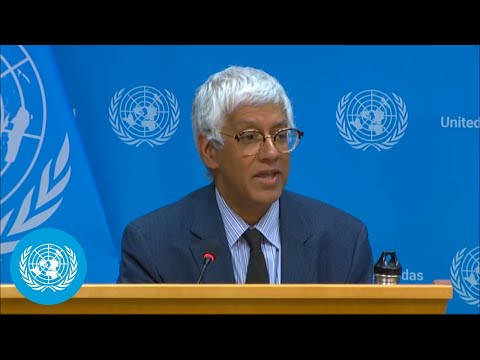
Farhan, U.N. spokesperson, said Wednesday that humanitarian conditions in Gaza are worsening amid a near-complete blockade on commercial and humanitarian imports and ongoing hostilities that are disrupting aid delivery.
The decline has been rapid: partners reported about 454,000 daily meals prepared and delivered through more than 90 community kitchens today, down from about 838,000 meals through nearly 130 community kitchens yesterday — a roughly 46% reduction, or almost 400,000 fewer meals overnight, the spokesperson said. Since late April more than 80 kitchens have been forced to close as supplies ran out.
The reduction in cooked meals is “one of the last remaining lifelines” for people in Gaza, Farhan said, and shelter and non-food items are nearly exhausted. Partners reported there are no tents left for distribution and tarpaulins and other shelter supplies are nearly exhausted. A small delivery of remaining items was described as imminent.
On health, U.N. partners said they have been able to relocate medical equipment from Dura Hospital to Rantisi Hospital in Gaza City to help maintain services but warned that health operations require about 1,330,000 liters of fuel per month. Fuel shortages have led to prioritizing hospitals, field facilities and ambulances, while supplies for primary health centers and medical points have been cut by more than half, Farhan said.
Farhan said an OCHA-led U.N. team retrieved more than 400,000 liters of fuel from a station in Rafah after Israeli authorities facilitated access; he called the quantity a “small fraction” of what is needed. The U.N. and partners continue to press for a full lifting of the blockade and for principled humanitarian operations that adhere to the humanitarian principles of humanity, impartiality, independence and neutrality.
The statement reiterated the U.N. position that any plan for delivering supplies must not reduce humanitarian assistance to “the last calorie” or otherwise restrict relief in a manner that fails to meet these principles.
The U.N. spokesperson also noted partner efforts to distribute shelter repair kits — citing 500 kits in Gaza City and 200 household distributions in Khan Younis — and local work to reduce public-health risks following recent flooding, including emergency repairs to stormwater and sewage systems.
Farhan framed the U.N. concerns as immediate and operational: food preparation capacity, fuel for hospitals and fuel-dependent services, and near-exhaustion of shelter supplies. He said U.N. teams and partners “engage daily with Israeli authorities and anyone with influence over the humanitarian situation in Gaza” to restore access and deliveries.