Get Full Government Meeting Transcripts, Videos, & Alerts Forever!
Get email alerts on the Missing And Murdered Indigenous People topic
No spam. Unsubscribe anytime.
California Assembly designates May 2025 as Missing and Murdered Indigenous Peoples Awareness Month
Summary
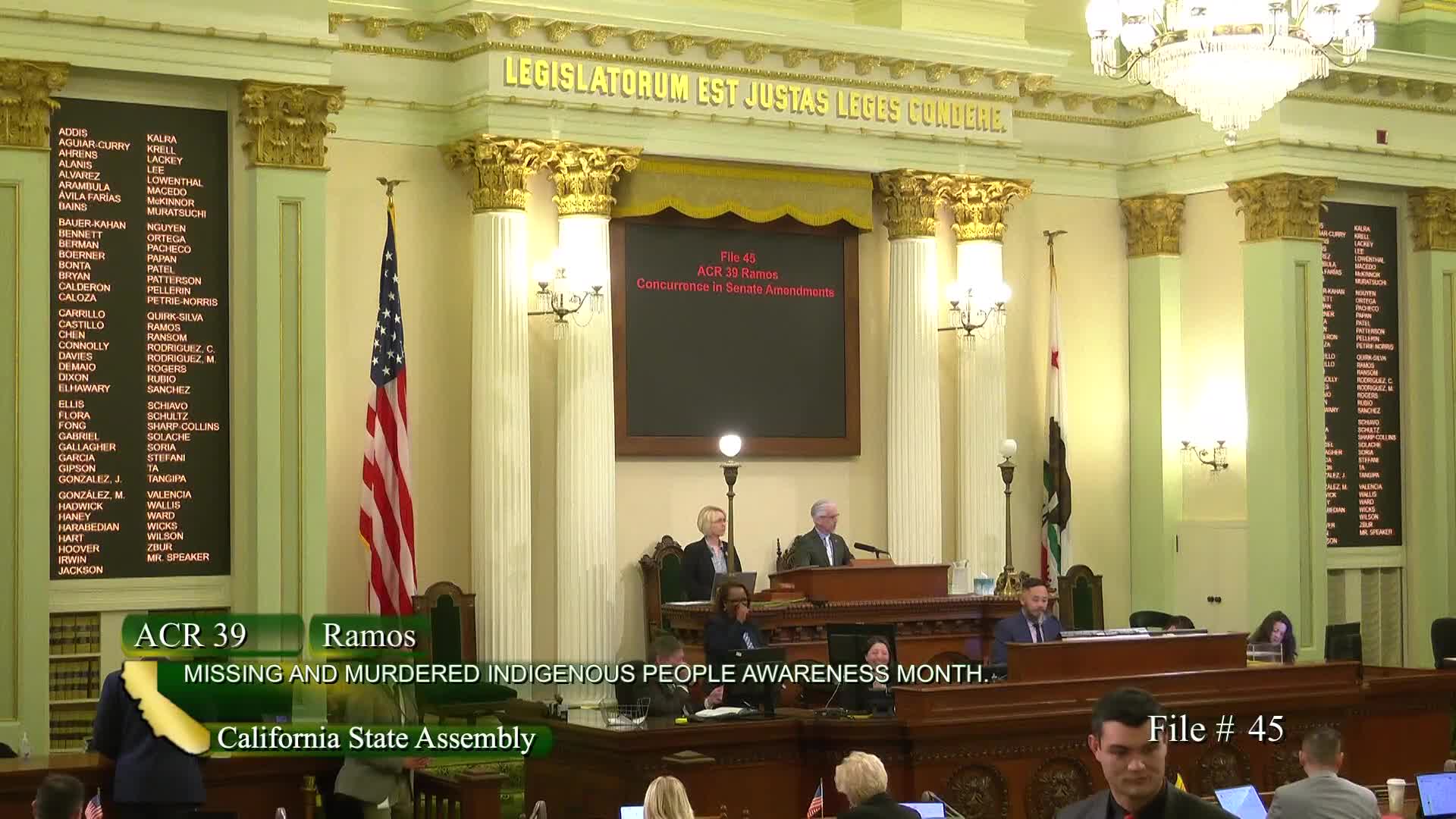
The Assembly adopted ACR 39, sponsored by Assemblymember James Ramos, to designate May 2025 as Missing and Murdered Indigenous Peoples Awareness Month. Supporters called for improved data, interagency coordination and funding; the resolution passed unanimously, 67-0.
The California State Assembly on April 28 adopted Assembly Concurrent Resolution 39, designating May 2025 as Missing and Murdered Indigenous Peoples (MMIP) Awareness Month and urging renewed attention to violence, disappearances and gaps in data for Native American communities.
Assemblymember James Ramos, chair of the Legislative Native American Caucus and the resolution's lead author, said the statistics are alarming and require action. “California is home to the largest Native American population in the United States,” Ramos said, and he cited multiple figures during his remarks, including that “84.3 percent of Native women have experienced violence in their lifetime” and that “over half of the population of the Native American people are suffering these statistics.” He asked colleagues to treat the situation “with the urgency” it deserves.
Support for the resolution came from members of multiple caucuses on both sides of the aisle. Assemblymember Jesse Gabriel, speaking for the California Legislative LGBTQ Caucus, said the caucus stood “united with you and indigenous communities in our commitment to ending the epidemic as well as supporting their family and survivors.” Assemblymember Tasha Boerner (AAPI Caucus), Assemblymember Quirk‑Silva (select committee member), Assemblymember Robert Garcia and others described recent hearings, tribal testimony and grassroots events, and urged improved data collection, interagency coordination and tribal engagement.
Speakers repeatedly pointed to gaps in reporting and classification as part of the problem; Ramos and others referenced Public Law 280 and testimony about repatriation and criminal jurisdiction as areas that require sustained attention. Several members framed the resolution as a step to honor victims while continuing legislative work on funding and policy.
All debate having ceased, the Clerk opened and closed the roll; the tally was Aye 67, No 0. The resolution was adopted.
Votes and next steps: the resolution is nonbinding but the Assembly's sponsors and supporters said they will continue work on related policy and funding requests identified during recent hearings and the Legislature's select committee meetings.