Get Full Government Meeting Transcripts, Videos, & Alerts Forever!
Get email alerts on the Elections Affidavit Identity topic
No spam. Unsubscribe anytime.
Panel considers rule setting seven-day deadlines for challenges to candidate affidavits of identity
Summary
The Joint Committee on Administrative Rules reviewed a Bureau of Elections proposal to add timelines and procedural rules for challenges to a candidate's affidavit of identity, mirroring petition-challenge deadlines and requiring notarized challenges and defined "good cause" exceptions.
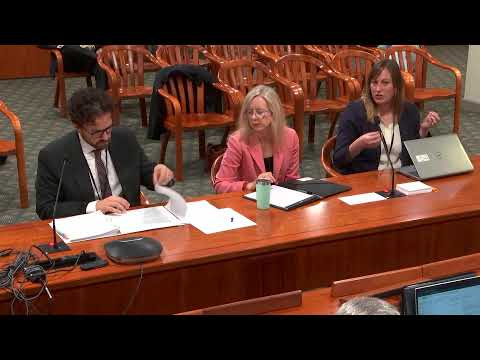
The Joint Committee on Administrative Rules heard testimony on a proposed rule that would set deadlines and procedures for challenges to candidates' affidavits of identity. The department said the rule is intended to align affidavit-of-identity challenges with existing petition-challenge timelines in Michigan election law.
Bureau of Elections staff described the proposed rule as requiring that challenges to an affidavit of identity be filed no later than seven calendar days after the filing deadline, and that a candidate be given seven calendar days to respond after receiving a challenge. The proposed rule would require that challenges be notarized and would allow a filing official discretion to accept a late challenge upon a showing of "good cause," using a definition borrowed from the Campaign Finance Act.
The department said the change responds to an increase in late-filed challenges the office and local clerks have received since Public Act 650 of 2018 added disqualification for false statements on an affidavit of identity and tightened related requirements. Department staff said the statute is silent on affidavit timelines, so the rule borrows the petition-challenge structure already familiar to filing officials.
Committee members raised concerns about the lack of an administrative cure or internal appellate process when an affidavit is found to be false. Committee members noted that the statute uses the word "shall" to require disqualification for a false statement and that, under current law, there is limited opportunity to correct a mistaken or incorrect affidavit before disqualification. One committee member said the only recourse in most cases would be to appeal to court, which can be costly and slow.
Department staff said they are open to discussing statutory changes that would create a mechanism to cure inadvertent errors or to provide clearer appellate avenues, but staff said they do not believe the current statute permits creating such a cure by rule.
No committee vote was taken on the affidavit timeline rule during the hearing.