
Committee hears bill to expand image-dissemination law to cover AI-generated 'deepfake' intimate images
Get AI-powered insights, summaries, and transcripts
Sign Up Free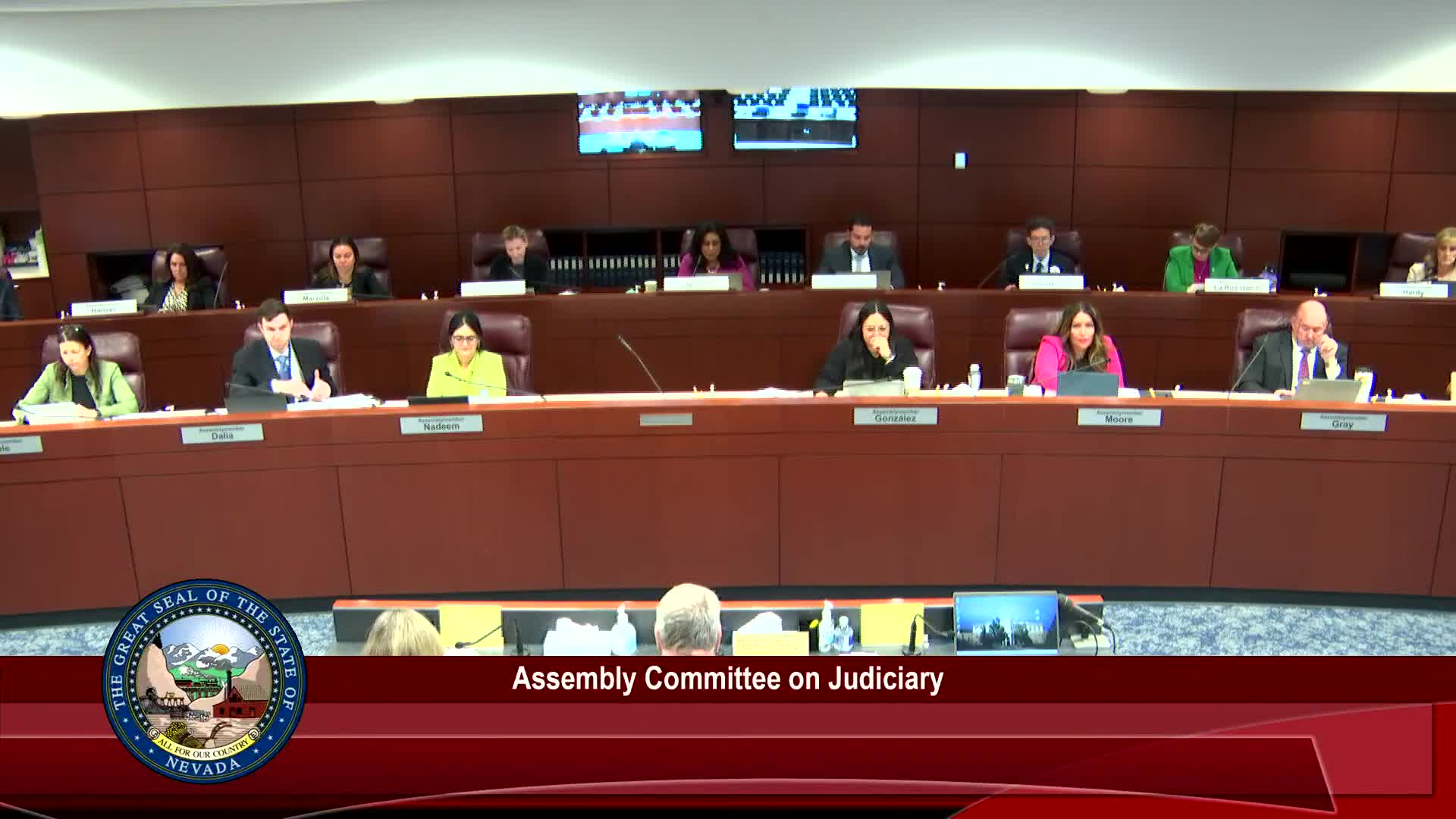
Summary
Sen. Jeff Stone and Jennifer Noble told the Assembly Judiciary Committee that SB213 would amend Nevadalaw to make knowingly sharing photorealistic AI-generated intimate images without consent a criminal offense; bill excludes juveniles and (as drafted) public figures; law enforcement and prosecutors testified in support.
Sen. Jeff Stone presented Senate Bill 213 to the Assembly Judiciary Committee on Oct. 26, saying the measure would expand Nevada's unlawful dissemination statute to cover photorealistic, AI-generated intimate images commonly called "deepfakes." "People in law enforcement can no longer tell the difference between real and AI generated imagery," Stone said. "This bill provides law enforcement with clear guidelines to identify and prosecute offenders."
Jennifer Noble of the Nevada District Attorneys Association outlined the bill's elements: the definition of "intimate image" would be broadened to include photorealistic, digital, or computer-generated images that a reasonable person would believe depict an identifiable person's intimate body part or sexual conduct; to secure a conviction the state must prove the dissemination occurred knowingly and without the victim's consent. Noble said the bill retains an existing juvenile-exemption: "No criminal liability would attach if the person who created and disseminated the image was under 18 years old."
Committee members asked clarifying questions about the scope of the bill. Assemblymember LaRue Hatch asked whether public figures are excluded from protection; Noble said yes, the current draft excludes public figures and the bill is narrowly tailored. Members raised concerns about youth-to-youth conduct; Noble said the juvenile exemption reflects current law and the bill was written to achieve consensus among prosecutors and defenders.
Law enforcement groups and prosecutors filed testimony in support. Jason Woodard of the Nevada Sheriffs and Chiefs Association said the association "appreciates the sponsor bringing this language forward" and that current law leaves enforcement "tied hands" in many cases involving generated images. Other supporters included the Washoe County Sheriff's Office, Las Vegas Metropolitan Police Department, the City of Henderson and TechNet, which filed written support.
The hearing record shows no callers in opposition and no committee vote recorded in the transcript; the sponsor offered no final amendment on the record and did not request a committee vote during the session. The bill text discussed by presenters would make the elements of the offense: knowingly disseminating without consent a photorealistic or computer-generated image that a reasonable person would believe depicts an identifiable person's intimate body part or sexual conduct. The measure as presented is intended to allow prosecutors and law enforcement to pursue nonconsensual AI-enabled sexual-image harms that existing statute does not clearly cover.
Questions remain about how the statute will treat public figures and whether additional definitions or evidentiary rules will be required; sponsors and Noble said they are open to amendments and to working with committee members on scope and wording.