Get Full Government Meeting Transcripts, Videos, & Alerts Forever!
Get email alerts on the Discipline topic
No spam. Unsubscribe anytime.
Board reviews tougher fighting rules, phone policy and renaming of alternative program
Summary
The board reviewed proposed changes to the student code of conduct that would expand long-term removal for fighting, add clearer criteria for expulsions, tighten penalties for students recording or posting fights, and consider renaming the NPTCC to emphasize temporary placement and reentry.
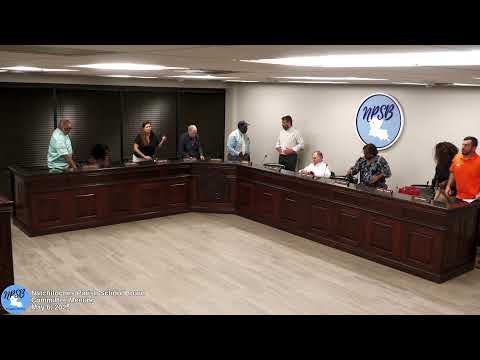
NATCHITOCHES, La. — The Natchitoches Parish School Board committee spent a significant portion of its May 6 meeting on proposed revisions to the district student-code-of-conduct handbook, including tougher penalties for school fights, updated phone rules and a proposed new name for the district’s technical and career center program.
Miss J. Ingram, director of student services, presented recommended language that would increase the automatic removal timeline for middle- and high-school students involved in serious fights. She said: “For the first fight, they're gonna receive 90 days, school days automatic expulsion recommendation to the alternative site. And then, with the reentry review held at 45 days.” The proposal would escalate a second serious fighting incident to a 180‑school‑day recommendation (the equivalent of a semester) and includes a checklist of aggravating factors — premeditation, group attacks, excessive force, injury to staff and other items — that district staff would use to determine whether to recommend expulsion.
Ingram and board members reviewed data the district had compiled showing a sizable increase in fights last year. The superintendent and staff said they had documented roughly 260 fight incidents across K–12 this year to date, with about 202 incidents involving grades 6–12 and 174 distinct students in that cohort.
The proposed handbook language also addresses social-media posting and recording of fights: the current draft recommends a 10‑school‑day automatic long-term suspension for students who record or post fights, and staff discussed whether recording should carry a stronger penalty if it actively encourages group incidents. Several board members urged that bus fights be explicitly covered; one member said fighting on a bus is “more dangerous” and should carry the same consequences as on-campus incidents.
Board members also discussed how alternative‑placement programming (Edgenuity computer-based coursework plus behavioral interventions) will work during removal periods. Staff said alternative placement includes academic coursework and social‑emotional learning supports and that students may complete classes and earn credits while placed off-campus. The board asked staff to add clearer descriptions of the academic, social‑work and reentry components so placements are not purely punitive.
On a separate but related agenda item, the board heard a proposal to rename the Natchitoches Parish Technical and Career Center (NPTCC). Mr. Russell read a staff recommendation from program leader Bobby Benjamin suggesting a name without the word “alternative” and that emphasizes the center as a temporary, reentry-focused program. The staff-recommended working name was presented as the “Natchitoches Provisional Learning Center,” chosen to emphasize temporary placement and reentry to traditional campuses.
Finally, the principals’ group recommended a stricter cellphone rule; staff said incidents tied to phones had fallen from 478 to 322 year-to‑date but remain a major class-time disruption. Principals asked the board to consider a ban on phones on campus, while staff recommended enforceable progressive penalties (documented warning → one day off-campus/alternative → multi-day removal) because an absolute ban could create administrative burdens.
Ending: Staff will redraft the handbook language to clarify bus incidents, the recording/posting clause, the academic/intervention plans for alternative placement and proposed handset/smartwatch language, and return the draft to the board for a final vote after the board reviews suggested edits.