Get Full Government Meeting Transcripts, Videos, & Alerts Forever!
Get email alerts on the Housing Development topic
No spam. Unsubscribe anytime.
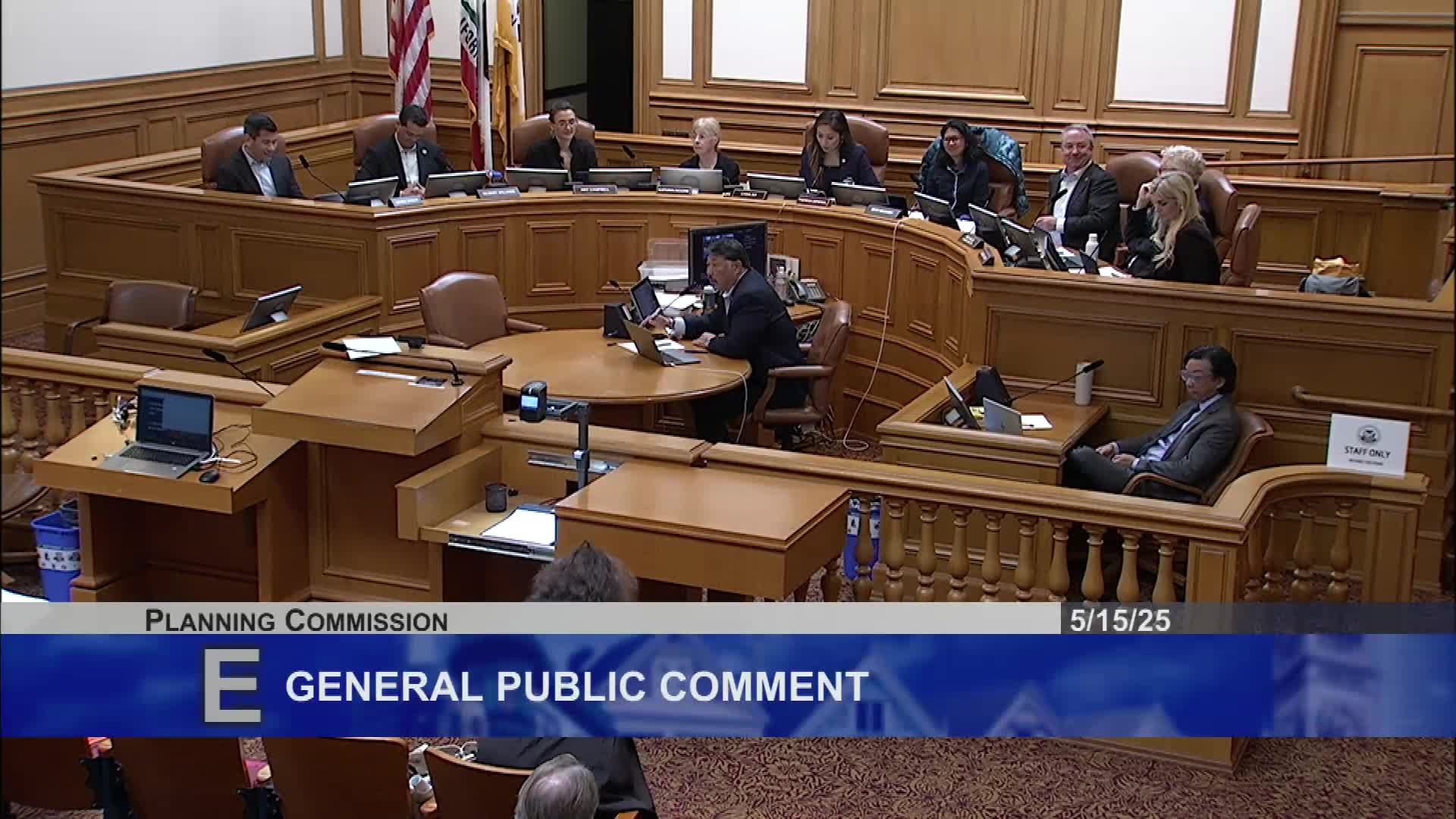
Planning Commission clears 2588 Mission Street project over community objections, 4-3
Summary
After hours of public comment about displacement and a decade-old fire, the San Francisco Planning Commission voted 4-3 to deny discretionary review and adopt findings allowing the developer’s proposal at 2588 Mission Street to proceed under state density bonus rules.
The San Francisco Planning Commission voted 4-3 on May 15 to deny a discretionary review request and adopt findings that allow the proposed mixed-use development at 2588 Mission Street to proceed under state density bonus law.
The 10-story proposal would replace the site with a 100-foot, roughly 173,000-square-foot residential building containing 181 dwelling units, about 4,000 square feet of ground-floor retail, 1,500 square feet of community facility space and on-site parking and bicycle facilities. Staff said the project proposes 17 percent of base density—about 19 on-site affordable units—and requests a 50 percent state density bonus along with several waivers and concessions under state law.
The vote came after a lengthy public comment period in which speakers described long-term displacement in the Mission, urged the city to buy the parcel for community or deeply affordable housing, and cited the 2015 fire on the site that displaced residents and killed a tenant. Larissa Pedroncelli of United to Save the Mission told commissioners the project would “deepen existing disparity in access to sufficient housing,” citing family-size unit shortfalls and the neighborhood’s history of displacement. David Blackwell, attorney for the project sponsor, urged the commission to follow state law and the Housing Accountability Act, saying the hearing’s legal standard requires commissioners to find specific adverse impacts to public health or safety before denying a project.
Why it matters: The Mission is a designated priority equity geography in San Francisco’s housing element. Community groups argued approving market-rate projects there accelerates gentrification and displacement; project supporters and staff said state density bonus and housing-accountability rules limit the commission’s legal authority to block the development if objective standards are met.
Supporters of the discretionary-review request pointed to the site’s history — multiple fires after the 2015 blaze, contested building maintenance, and concerns that long-term tenants and small businesses had not been fully accounted for — and asked the city to use public funds or a negotiated sale to secure the site for deeply affordable housing. Planning staff and the project sponsor responded that the department lacks authority to force deeper affordability on a privately financed project and that the record does not show the high legal threshold required to deny the project under state law.
Commissioners split along those lines. Commissioner Campbell moved to not take the discretionary review and to adopt findings approving the project; the motion passed with Campbell, Commissioner McGarry, Commissioner Braun and the Commission President voting yes. Commissioners Williams, Imperial and Vice President Moore voted no. Several commissioners who opposed the motion said they were troubled by the site’s history and the project’s likely displacement impacts but felt restricted by state statutes and precedent.
Commissioners and staff described several parallel efforts community members had requested: city outreach on whether the city could acquire the site, referrals from the mayor’s office and searches for public or philanthropic funding to pursue acquisition. Staff said they had convened the mayor’s office of housing and community development and Supervisor Fewer’s office to explore options; contact was made with private affordable-housing developers, but no acquisition deal had been reached.
What’s next: The project sponsor will move forward through the entitlement and permitting process. Staff noted that plaintiffs or appellants could raise further legal challenges. Several commissioners urged ongoing community consultation and said they expect the developer and the city to continue efforts to increase affordable housing off-site or through other negotiated community benefits.
Ending: The decision drew audible protest from the public in the hearing room. Commissioners who opposed the vote said they will continue to pursue policy and legislative avenues to better protect priority equity areas in future actions.