Get Full Government Meeting Transcripts, Videos, & Alerts Forever!
Get email alerts on the Property Taxes topic
No spam. Unsubscribe anytime.
Dorchester County budget hearing draws widespread opposition to proposed property tax increase and elimination of Cambridge and Hurlock differential
Summary
At a public hearing on Ordinance 2025-4, residents and local officials urged the Dorchester County Council to preserve a long-standing tax differential for Cambridge and Hurlock and asked the council to find fairer revenue alternatives; council members asked staff to return with revised options next week.
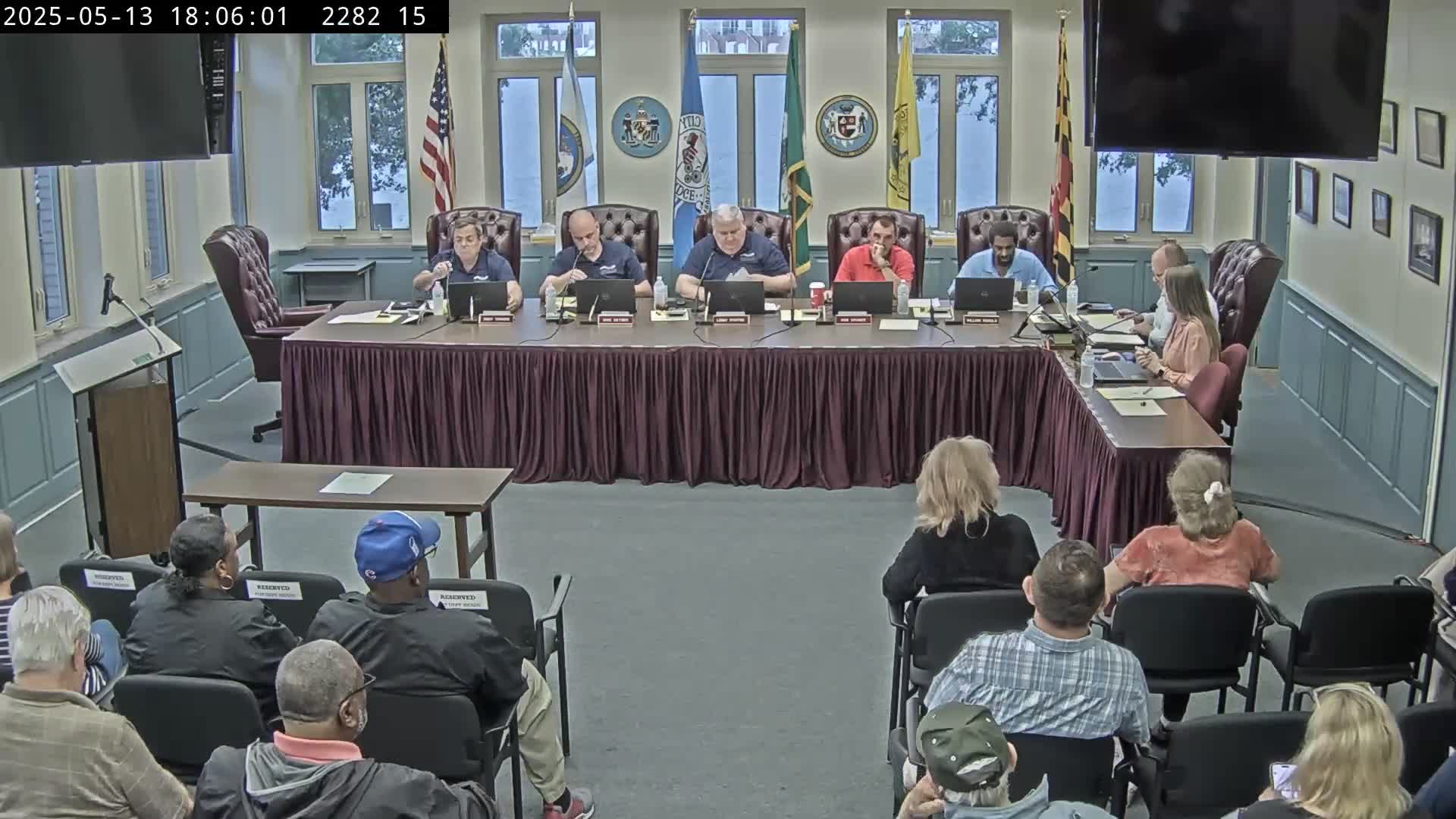
Dorchester County opened a public hearing on Ordinance 2025-4, the FY26 annual budget and appropriation ordinance, during which dozens of residents, municipal leaders and nonprofit representatives urged the County Council not to eliminate the longtime tax differential for the cities of Cambridge and Hurlock and questioned a proposed property tax increase.
The hearing, opened by the council as part of its legislative session, featured repeated appeals from Cambridge officials and residents who said removing the differential and raising rates would deepen housing unaffordability and could trigger foreclosures. LaJanne Cephas, mayor of Cambridge, told the council, "I just plead, with the the council, to to continue the differential." She also urged creation of a financial-task-force-style committee to explore alternatives and left the council a copy of a letter from the Midshore Board of Realtors expressing concern about the proposed changes.
Why it matters: The budget draft presented to the council shows several revenue increases and spending changes that proponents say are necessary to close shortfalls. Opponents say the timing — following a statewide reassessment that raised many homeowners' assessments — would be disproportionately harmful to retirees, low-income homeowners and renters in Cambridge and Hurlock.
Key figures cited at the hearing included the county's reported general fund cash on hand of $29,723,264.42; proposed increases in general fund revenue of roughly $8 million total (about $3 million from real property taxes and $4 million from income taxes, as described by speakers); a proposed $2.6 million increase in board of education funding; and an approximately 20% increase in employee expenses noted by public commenters. A letter submitted by the Midshore Board of Realtors, read into the record, estimated Cambridge homeowners would pay an average of $4,847 annually under the proposed rate and calculated an approximate $925,000 annual cost to Cambridge from eliminating the differential.
Residents and nonprofit leaders offered specific concerns. Tara Feltz, a housing-sector worker in Cambridge, said, "there's already a struggle for housing affordability... removing the tax differential is going to further burden those homes, those homeowners and or renters." Adrienne Holmes, executive director of AlphaGenesis Community Development Corporation, described grassroots preservation and affordable-housing efforts and asked the council to consider the mayor's alternatives.
Several speakers raised questions about tax-sale notices and senior protections. One resident described a recent experience with late fees and a threatened tax sale; county finance staff responded in the hearing that some audits remain delayed because the county is "at the mercy of an independent audit company." County staff and a member of the public clarified existing senior and homestead credits: the council's finance office confirmed a senior credit of 10% for homeowners over age 67, and staff explained that the county’s homeowners tax credit uses an assessable-base cap of $300,000 and an income limit of $60,000 as eligibility thresholds.
Council response and next steps: After public comment closed, council members said they had heard the concerns and instructed staff to pursue a fairer option for the revenue side of the budget. A council member told the room, "we have to give staff some direction for this upcoming week," and several members indicated they expected staff to return with revised revenue estimates and options when the council votes on the ordinance the following week. No final vote on Ordinance 2025-4 occurred at the hearing.
Formal actions recorded during the meeting included approval of the consent agenda and motions to enter and exit legislative session; the council did not adopt the FY26 budget at this session and directed staff to produce alternatives for consideration at next week's meeting.
The council is scheduled to consider the budget ordinance at a future meeting; residents and municipal leaders said they plan to continue engagement through letters, meetings and the council's upcoming vote.