Get Full Government Meeting Transcripts, Videos, & Alerts Forever!
Get email alerts on the K12 Education topic
No spam. Unsubscribe anytime.
Bloomfield reports modest reading gains, outlines plan to cut chronic absenteeism
Summary
At the May 12 Russell Westbrook School Board meeting, Bloomfield staff reported small proficiency gains on state assessments, detailed successful special-education professional development, and outlined a plan to reduce chronic absenteeism by 10 percentage points and raise average daily attendance to 97%.
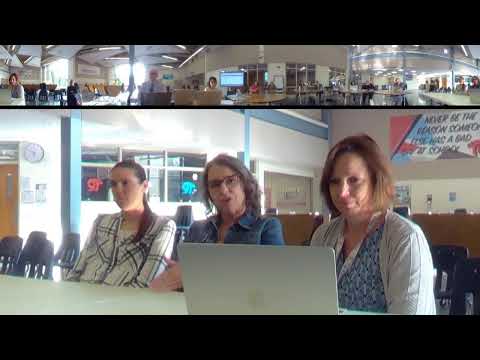
Bloomfield school staff presented results from this year's reading and attendance initiatives to the Russell Westbrook School Board on May 12, 2025, reporting modest gains on state assessments while saying chronic absenteeism remains a problem.
The presentation said Bloomfield's reading goal is to improve NSCAS summative results to at-or-above the state proficiency average. Presenters reported that, in spring testing, 33% of students were "on track" and 14% were "college- and career-ready," combining for roughly 47% total proficiency. The school also reported that many students showed year-to-year score growth: 70% of returning fourth‑graders improved their scores compared with the prior year, and similar percentages were reported for fifth‑ and sixth‑grade cohorts.
Bloomfield staff placed much of the school's improvement on a yearlong push to integrate special-education staff into tier‑1 instruction and on targeted professional development delivered in partnership with a vendor identified in the presentation as Special Ed Strategies. Staff said they added five special-education teachers this year and ran six to seven training sessions. In pre‑ and post‑surveys of teachers, staff reported increases in teacher confidence: the share of teachers who said they felt prepared to increase access for students with disabilities rose from 54% before the work to 95% after; confidence using data to make decisions rose from 35% to 90%; and collaborative planning readiness rose from 35% to 95%.
Presenters cautioned that changes in state testing participation affected reported proficiency. They said the state has reduced use of the NSCAS alternate assessment and some students previously taking the alternate exam were now taking the general assessment; staff estimated that change reduced the school's proficiency rate by about two percentage points.
On attendance, Bloomfield staff said the school set a goal to reduce chronic absenteeism by 10% and raise average daily attendance to 97%. The presentation described a number of interventions: weekly teacher notifications on tiered attendance risk (low, moderate, chronic); a five‑day call protocol with scripts for teachers; monthly leadership assemblies celebrating attendance; short, recurring incentives such as "hot ticket" weeks; and a planned schedule of 25‑day check‑ins with families. Staff also said the school will provide families a calendar marking recommended learning days and suggested vacation windows, and that the school will bring in consultant Dwayne Chisholm next year for equity-focused staff training.
Board members pressed for clarity about which students were included in the attendance and special-education figures. Presenters said the special-education count includes a birth‑to‑3 program, preschool services and alternative curriculum programs and that Bloomfield's special-education population is about 30% of enrollment, which they described as roughly double the state average. Presenters also confirmed the attendance figures exclude preschool.
The presenters described the school's approach as shifting from reactive to proactive outreach, including targeting kindergarten families and others who enter the chronic list early. They said some chronic absences appear related to poverty, language barriers and differing cultural expectations about school attendance among families newly arrived in the district; staff said they rely on bilingual employees and a language line for outreach.
Board members thanked staff for the work and asked whether any districtwide scaling of the special-education professional development is planned; presenters said some elements have been used at other elementary schools and that the vendor and Bloomfield will share results.
Bloomfield staff characterized next steps as continuing the MTSS (multi-tiered systems of support) and inclusion work while shifting more direct time and training toward behavior supports so teachers can sustain rigorous reading instruction.