Get Full Government Meeting Transcripts, Videos, & Alerts Forever!
Get email alerts on the City Budget topic
No spam. Unsubscribe anytime.
Victorville presents draft $387 million citywide budget; Measure P, public safety and capital projects drive spending
Summary
Victorville City staff on May 22 presented a draft fiscal year 2025–26 budget that proposes about $376.3 million in citywide revenue and roughly $387.7 million in expenditures, including $45 million in capital improvements and continued investments in public safety and city infrastructure.
Victorville City staff on May 22 presented a draft fiscal year 2025–26 budget that proposes about $376.3 million in citywide revenue and roughly $387.7 million in expenditures, including $45 million in capital improvements and continued investments in public safety and city infrastructure.
The presentation, given at a council budget workshop, emphasized that the proposed budget would rely in part on unencumbered fund balances and carryover project funds to cover a small deficit in the general fund while preserving reserve targets. City staff also outlined planned capital projects, rate-plan-driven increases for enterprise utilities and personnel changes that together aim to sustain expanded public-safety staffing funded in part by Measure P.
City Manager (presenter) summarized the package as “a living document” prepared from the city’s multiyear strategic plan and designed to be updated during the fiscal year as conditions change. He told the council the budget shows a modest year-to-year increase in both revenues and spending and described how capital project carryovers and accounting for prior-year receipts create the appearance of a deficit that is routinely managed with the city’s unencumbered fund balance.
Key numbers and context
- Citywide: staff proposed $376,296,000 in revenues and $387,669,000 in expenditures, including $45,000,000 for capital improvements. Staff said those totals represent slight increases over the current fiscal year.
- General fund: proposed revenues of $108,939,000 against proposed expenditures of $110,497,000, a projected single-year deficit of about $1.51 million. Staff said a planned transfer from a utility-related fund (identified in the presentation as a VEMAS/VEMUS adjustment) would reduce the near-term general fund deficit to about $707,000.
- Measure P: staff reported about $44 million in cash on hand, projected Measure P revenue of $31,578,000 in 2025–26 and planned Measure P capital spending and reserves (including a $4 million annual police-station reserve deposit and a $775,000 fire apparatus replacement reserve).
- Enterprise and special funds: the sewer fund is budgeted for about $32.9 million in revenue (with a multi‑year rate plan that includes a scheduled 6.85% step in the adopted sewer rate plan); solid waste revenue is projected at about $33.6 million (with a residential rate increase of about 6.1% factored in); the Victorville Water District is shown at roughly $61.2 million in revenue with a year-5 plan that includes a 3% increase.
Public safety, staffing and benefits
Public safety (police, fire, code compliance and animal services) accounts for the largest share of general‑fund operating costs. Staff presented public-safety spending increases made possible in part by Measure P revenue and said police, fire and code compliance together consume roughly 57% of general‑fund outlays.
Staff described planned police funding large enough to hold room for an anticipated negotiated increase under the county sheriff contract (a placeholder of $40 million was included to accommodate the ultimate negotiated outcome). The city’s contract with the county provides about 103 sworn deputies for Victorville under the current projection, plus more than 43 civilian positions in dispatch and support roles. Staff also said deputies who were assigned to Victor Valley High School District schools will return to city patrol when the district begins its own police department; staff said four deputy positions will be reassigned to fill vacancies.
On the fire side, staff proposed a $27.4 million department budget, including a 75-person frontline floor staff and support, prevention and administration teams. Code compliance and animal services were shown as substantially expanded since the start of Measure P; staff presented a combined code compliance/animal-services budget of about $8.8 million, with 25 full-time equivalents in code compliance and 18 positions in animal services.
Personnel and benefits: the draft budget includes a 3% cost‑of‑living adjustment for all employees (the staff presentation said the budgetary impact is approximately $1.56 million). Staff recommended increasing the monthly Fringe A allowance from $950 to $1,000 and raising the fringe subsidy match from $800 to $1,000; the combined cost of those two benefit increases was listed at roughly $372,000. The budget also proposes a $100 increase to the boot/shoe allowance (to $325/year) and a new mandatory rest‑period policy to require rest and preserve safety when crews are called out for extended incidents.
Staffing changes and organizational realignment
The draft budget proposes a total of 570 full‑time equivalent positions (an increase of 10 over the prior year). Staff described an organizational realignment shifting a traffic/maintenance division from engineering into public works and consolidating some economic development and homelessness‑response staff under the city manager’s economic development deputy. The presentation listed 18 new positions, 1 deleted position, range and title changes, and a continuing classification study and internship program.
Capital projects and development highlights
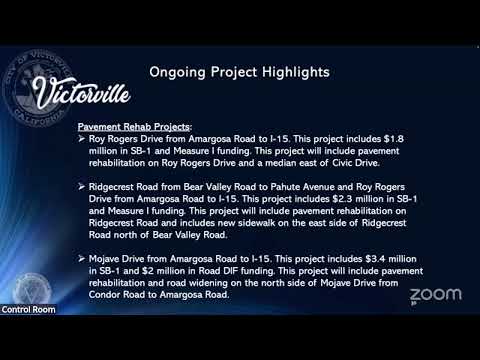
Staff highlighted several carryover and new capital projects: Roy Rogers Drive (Amargosa to I‑15; roughly $1.8 million, SB1 and Measure I funding), Ridgecrest Road (Bear Valley to Paiute; about $2.3 million), Mohave Drive storm‑drain work, the airport’s industrial wastewater treatment expansion (final design estimated at about $3 million to expand capacity to 6.0 million gallons per day), and the new library building (about 17,000–18,000 square feet). Hook Park improvements, animal shelter upgrades, planned Old Town streetscape design work, and continued investment in fire apparatus and radios were also listed.
Staff emphasized active industrial development around Southern California Logistics Airport (SCLA) and Foxborough, including a nearly 239,000‑square‑foot facility for American Jerky Company and other large distribution/industrial projects; staff noted airport occupancy rates near 98% and said new revenue opportunities are under study.
Revenue risks, reserves and next steps
Staff said the city’s approach continues to rely on unencumbered fund balances to bridge single‑year deficits that arise largely from capital project timing and accounting for revenues earned in prior years. The presentation stressed that while budgeted expenditures outpace projected revenue on a long‑term forecast, the city’s projected general‑fund reserve remains above the council’s 17% reserve policy through the forecast horizon.
Staff proposed several near‑term policy and technical follow-ups: updating the cost‑allocation plan, pursuing potential franchise‑fee opportunities, completing utility master plans and tied rate studies (water and sewer), completing a standard‑of‑cover study for fire that could flag future station needs, and preparing the final budget for a public hearing and adoption in late June/early July.
Council feedback and direction
Councilmembers asked for clarifications on the reserve target, rate‑plan timing, feasibility of relocating the Veterans Memorial and details about station and kitchen repairs; staff described planned kitchen and station improvements at Stations 311 and 314 and confirmed planned capital work and appliance orders. Councilmember questions also focused on how sales and property tax timing affect cash flow and why some revenue lines appear lower in preliminary figures (staff said final sales‑tax receipts are often booked later and that pass‑through property tax timing can cause apparent year‑to‑year volatility).
Two procedural items recorded during the workshop:
1) The clerk read that “there is no action required at this time” and that the council was invited to discuss and provide direction to staff regarding the draft budget; staff planned to return with a final proposed budget for adoption in June. (No formal vote was taken on the budget at the workshop.)
2) Mayor Pro Tem Tim Herriman asked the council by consensus to have staff evaluate moving the city’s Veterans Memorial to a Civic Drive location (for consideration as part of the budget and civic‑plaza planning). That request was recorded as a council consensus direction to staff to study feasibility and cost; staff will return findings as part of budgeting and design discussions.
What this means for residents
If adopted in substantially the same form, the budget will preserve funding increases in public safety, continue investments in roads and parks, and begin or continue design and construction for several capital projects listed above. Staff cautioned that some items — including a future police station, expanded roadway programs and storm‑water systems — will require additional funding sources beyond current Measure P and state allocations. Staff also recommended continuing to monitor revenue trends and to update rate plans and reserve policies as information becomes available.
The council did not adopt the budget at the workshop; staff will return the proposed budget for a public hearing and potential adoption in the coming weeks.