Get Full Government Meeting Transcripts, Videos, & Alerts Forever!
Get email alerts on the Street Trees And Bond Compliance topic
No spam. Unsubscribe anytime.
Annecy homeowners press planning commission to block street-tree relocations, cite incomplete subdivision work
Summary
Dozens of Annecy residents urged the Town of Nolensville Planning Commission to delay bond transitions and to deny plans that would move established street trees into private front yards, citing dead trees, exposed irrigation, and other unfinished construction by developers Turnberry and Old Smith.
Leona Kaborev, an Annecy homeowner, told the Town of Nolensville Planning Commission that Turnberry is seeking to move bonds for Annecy phases 2A and 2B into the maintenance phase while many landscape and infrastructure items remain unfinished. "Today, Turnberry is asking to have their bonds, bonds 2A and 2B, moved to the maintenance phase," Kaborev said, describing lists of open punch-list items she compiled for staff and the town engineer.
Why it matters: Residents said the outstanding items include dead and girdled trees in buffer areas, exposed irrigation lines, erosion and tractor tracks in planting buffers, missing mulch and inconsistent plantings along York Road and parkways, and other items they say threaten safety, property values and the neighborhood’s streetscape.
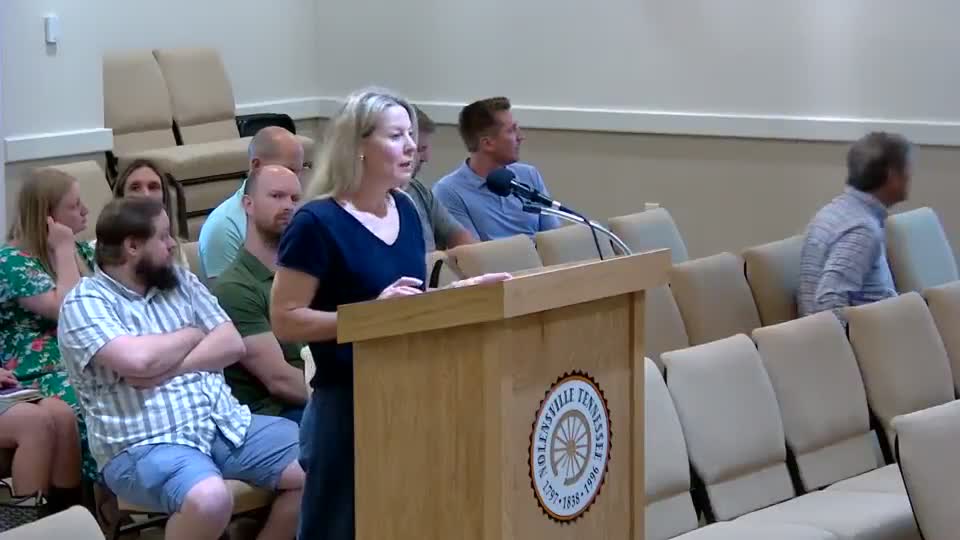
At the meeting on May 13, more than a dozen residents from the Annecy and NSE subdivisions gave public comments and submitted a petition and photos. “We have over 15 large trees that are over 25 feet tall that need to be removed,” resident Kelly Good told the commission, saying the issues are “not just silly aesthetic issues.”
Homeowners described a coordinated petition drive: Emily Coulter, who said she represents 108 impacted homeowners, said neighbors collected 75 signatures opposing a proposal to move existing street trees from the public grass strip into homeowners’ front yards. “Not one single person wanted them in their front yard,” Coulter said.
Staff and developers: Town staff told the commission the Planning Commission in April had denied an earlier applicant request to vary the approved street-tree locations for Annecy phases 1, 3B and 3C, but that implementation raised many conflicts — utility boxes and public-utility/drainage easements, driveways, retaining walls, stormwater slopes and survivability of trees if transplanted. Staff summarized several possible technical fixes in a staff report: allow existing healthy trees in the right-of-way to remain (with root barriers installed where species are not on the approved list), replace missing trees in available open space and extend irrigation to late-season plantings.
Developer and consultants said they want to cooperate. Emily Guthrie, legal counsel for Old Smith, said her client seeks “a way to move forward and get this finalized in a way that's legally permissible and the preference of the homeowners.” Jay Easter of Reagan Smith, the landscape consultant, said multiple remedies remain available, including installing root barriers: “All of those are options. All of those we're 100% on board.”
Homeowner concerns on relocation: Residents said moving trees into front yards would interfere with private irrigation, retainment walls and utilities, could trigger warranty issues with recent home construction, and could shift maintenance costs to homeowners. Hannah Madison cited a nearby gas line and irrigation lines, saying digging to remove or transplant trees could risk damage.
Commission discussion and next steps: Commissioners and staff debated options on-site versus garden easements, whether the town or developer would be liable if trees were planted without an easement, and how to meet the commission's earlier direction to require the approved plan. Commissioners repeatedly said they want a single, agreed plan in writing rather than ad-hoc work.
A number of commissioners urged staff to work with the developer and homeowner representatives to prepare a revised landscape submittal (an “as-built” plus any corrections) for the commission to review. Commissioner comments noted the June 30 bond expiration and asked for a plan to be prepared for the next meeting so staff and the commission can evaluate next steps. Staff said it will coordinate with the applicant and homeowners and return with a plan for commission consideration.
What was not decided: The commission did not vote to change the April decision denying the requested location changes. The commission did not call the bonds at this meeting; staff and several commissioners said the alternatives remain to require the developer to bring a new plan, to levy penalties (legal counsel to research), or to call the bond and have the town complete the work.
Ending: Residents left the meeting having placed their petition and photo documentation on the record; staff next will work with the developer and homeowner representatives and return revised plans and legal guidance to the commission at a future meeting, with the bond deadline looming in June.