Get Full Government Meeting Transcripts, Videos, & Alerts Forever!
Get email alerts on the Financial Empowerment Center topic
No spam. Unsubscribe anytime.
City staff and partners present results, partnerships and $150,000 gap request for Financial Empowerment Center
Summary
City officials and FEC providers described program outcomes — debt reduction, savings and credit improvements — and asked the committee for a $150,000 city contribution to help sustain Goodwill's FEC contract through a fund balance period while staff pursue additional grants and private support.
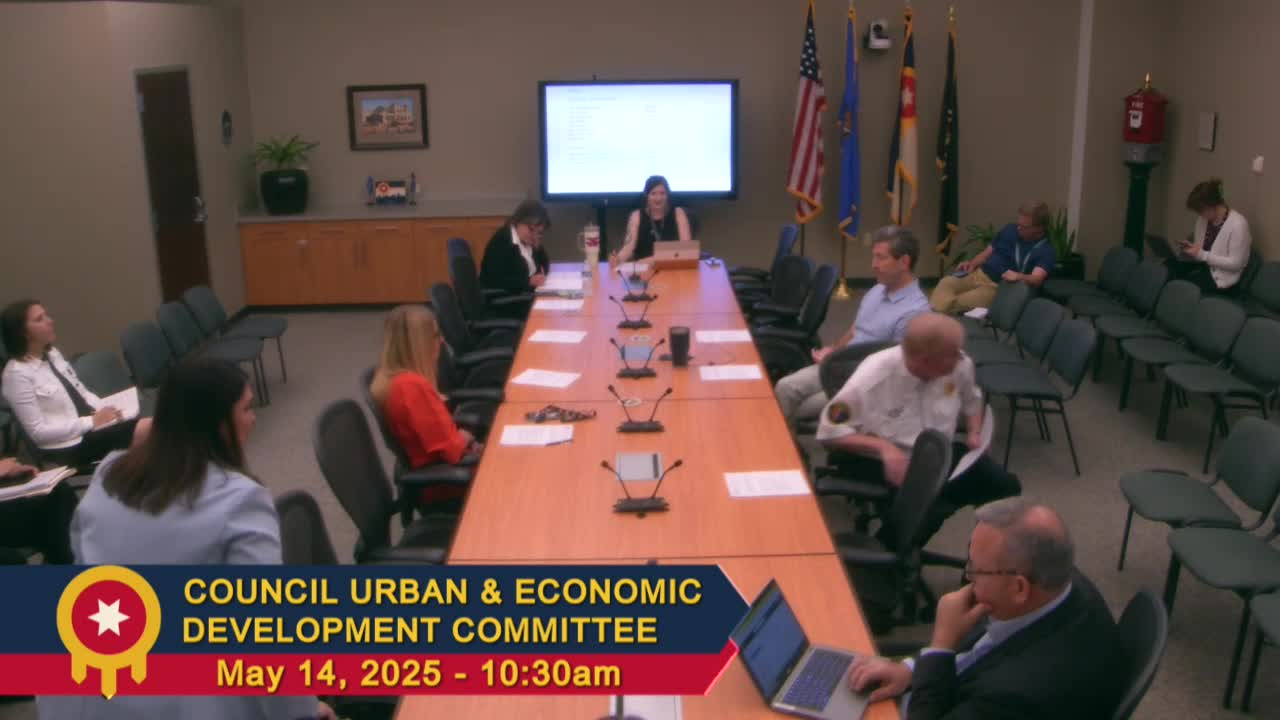
Deputy Mayor Chris Sorbet and officials from the Office of Financial Empowerment (OFE) and Resilience and Equity presented program outcomes and a supplemental funding request for the Financial Empowerment Center (FEC) at the May 14 committee meeting.
Amber Dittins, director of OFE, gave topline results: over the program's history FEC counseling has helped clients reduce non‑mortgage debt by approximately $2,060,000, enable savings totaling about $664,000, and support 425 clients who increased credit scores by at least 31 points. Dittins said the program has provided credit reports to 978 people and has an average client income of about $28,000, with roughly 70% of clients identifying as women. "The average savings for the program is about $3,178 per person," she said, and noted most clients attend two or more sessions.
Deputy Mayor Deandre Hayes and Dittins said the program launched in 2020 with Goodwill as the initial partner after national seed funding. In 2023 the city issued an RFP that brought Tulsa Response on as a second provider roughly eight months before the meeting. Program costs were described as roughly $300,000 per FEC provider annually; the presenters said the program has not been solely city‑funded and has relied heavily on private grants and ARPA dollars.
Crystal, the city's budget summary included the following specifics: Goodwill began a contract with a little over $230,000 in fall 2024; Tulsa Response began under a $300,000 ARPA contract and has an additional $300,000 in grant funding that the presenters said carries them to December 2026. The city requested a $150,000 supplemental allocation to extend Goodwill's contract for six additional months and to demonstrate city investment to help leverage private and grant funds. Deandre Hayes said the $150,000 request represents half of the city contribution the presenters believe will help secure the remainder from other partners.
Committee members asked for more financial detail and operational capacity metrics. Councilor Gilpin requested a multi‑year revenue and expense statement and a forecast for two years; presenters agreed to provide two years backward‑looking financials plus a forecast and details on private funding sources. Councilors also asked for metrics on capacity (how many clients can be served at full scale), referral sources and attendance rates; presenters said roughly 35–40% of scheduled clients attend an appointment, virtual options exist, and the program serves about 1,000 unduplicated clients per fiscal year with roughly 1,900 counseling sessions annually.
Provider remarks: Marcella Swenson, executive director of Tulsa Response, and Hugh (program manager) described front‑line work and complementary services such as SNAP and Medicaid enrollment, free tax filing and municipal court co‑location. Marcella Swenson cited the value of small savings and single interventions over time: "That $45 cut down by 25, you save $45 and what you gonna do? Put that into a savings account." Hugh described common nonessential expenses the program helps clients reduce (phone or internet plans), which feed into clients' capacity to save.
Presenters emphasized partnerships with municipal court, Tulsa Housing Authority Family Self‑Sufficiency program and other referral networks. They said the municipal court partnership places a counselor on‑site three days a week to help people reduce fines; the municipal court portion was funded separately and could lose on‑site coverage if Goodwill's contract lapses after July 1 without new funding.
Action requested: presenters formally asked the committee to consider a $150,000 supplemental appropriation to support FEC operations through mid‑2026 while additional grant and private funding are pursued. No formal committee vote was recorded in the transcript. Staff agreed to provide requested follow‑up financials (detailed revenues/expenses, private funding sources, capacity metrics and referral statistics).
Ending: Committee members expressed support for further information and suggested outreach to neighborhood, school and social‑service partners to boost program referrals and attendance.