Get Full Government Meeting Transcripts, Videos, & Alerts Forever!
Get email alerts on the Housing topic
No spam. Unsubscribe anytime.
Carmel planning commission reviews draft housing element amendment aiming to disperse affordable units across town
Summary
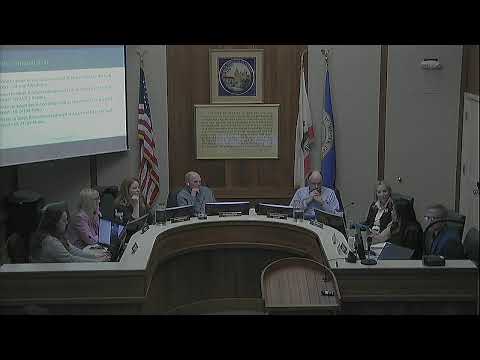
The Carmel‑by‑the‑Sea Planning Commission on May 14 reviewed a draft amendment to the city’s 6th‑cycle housing element that proposes five strategies to disperse affordable housing across private sites in the village rather than concentrate it on two city‑owned parcels.
The Carmel‑by‑the‑Sea Planning Commission on May 14 received a detailed staff presentation and community‑led proposal to amend the city’s recently adopted 6th‑cycle housing element with programs designed to distribute affordable housing more broadly through the village.
The amendment draft, presented by city planning staffer Marnie, lays out five strategies — hotel‑to‑residential conversions, a downtown mixed‑income incentive program, a downtown live‑work conversion program, expanded accessory dwelling unit (ADU) actions, and housing on religious‑facility property under Senate Bill 4 — and a revised sites inventory that excludes the city‑owned Sunset Center and Vista Lobos parcels. “Tonight represents a large milestone amendment,” Marnie told commissioners as she introduced the draft and the community group’s work.
Why it matters: Carmel’s Regional Housing Need Allocation (RHNA) for this cycle is 349 units, with a statutory obligation to show sites that can accommodate a required share of affordable units. The city’s adopted element met that obligation in April 2024 but relied heavily on two city‑owned sites; the amendment aims to demonstrate a credible alternative pathway that scatters affordable units across private sites and incentivized conversions so the community is not reliant on concentrated, city‑owned redevelopment.
What was proposed - Hotel‑to‑residential conversions: Consultant and volunteers modeled a program in which an underperforming hotel is bought and converted to mixed housing, and the developer can sell hotel “keys” (rights to hotel room capacity) to third‑party hotel developers. Presenters estimated an illustrative yield of up to 61 units from this strategy, of which staff expect 20 would be affordable under the proposed income mix; the group cautioned the result depends on market interest and conversion rates. Tim Toomey, who led the hotel conversion subcommittee, summarized the three necessary parties for the program: “a hotel owner, an affordable housing developer, and a hotel developer are all needed to make this program work.” - Downtown mixed‑income incentive program: The commission heard a design for a program to encourage mixed‑income projects in commercial downtown parcels by offering higher density, allocation of water credits for the full project, expedited processing and reduced or waived fees. Hans Bueter described plans based on small 8,000 sq. ft. sites and a tentative income mix that would aim for roughly 30% affordable. Bueter said the team identified three sites with owner interest and is conservatively projecting 27 affordable units and 18 market‑rate units from that strategy for the RHNA table. - Downtown live‑work conversions: Bueter and volunteers cataloged downtown commercial spaces and found a sizable group of underutilized small storefronts where a deed‑restricted live‑work use (commercial in front, affordable residence behind) could be viable. Staff reported 250 candidate live‑work spaces and a conservative RHNA claim of 85 units from properties with demonstrated owner interest. - Accessory dwelling units (ADUs): Nancy Toomey and staff urged maximizing state ADU law, pre‑approved plans and outreach, an amnesty program for unpermitted units, renter‑match services, and consideration of incentives such as priority water credits or discounted fees for deed‑restricted units. Staff reported there are already 45 ADU units permitted or licensed during the sixth‑cycle period and suggested the amendment estimates 77 ADU units in the revised program. - Housing on religious‑facility property (SB 4): Staff described Senate Bill 4 (Affordable Housing on Faith and Higher Education Lands Act of 2023) and outreach to five local churches; three expressed interest and are included in the draft inventory. Staff estimated roughly 65 units if churches pursue SB4‑eligible, deed‑restricted projects; state law offers by‑right approvals, density increases and reduced parking for qualifying proposals.
State review and next steps: Staff said the draft is an early working document and that the Department of Housing and Community Development (HCD) has already reviewed the individual strategies informally. The city will submit a “friendly” consolidated draft for informal HCD review around a target date of May 30 and anticipates roughly a three‑week informal review period before formal submittal refinements.
Unresolved questions and caveats: Presenters repeatedly cautioned the programs’ yields depend on market interest, developer participation, and how water allocation and hotel‑key demand play out. Commissioners pressed for more detail on the hotel‑key economics and whether hotel owners could separate and retain keys independently; presenters said detailed program rules (e.g., whether keys could be sold individually or only in blocks) would be resolved in implementation after the element is approved. Staff and the community group also noted the RHNA unit estimates are conservative and intended to provide a buffer should an identified site or program not realize the projected units.
Public comment and engagement: At the opening public comment period, resident Will Ray asked whether the city would reopen Mills Act applications for historic property tax‑deferral contracts. He asked the planning commission to “open the Mills Act for applications for this year or for next year so that homeowners can apply for a Mills Act contract with the city.” Staff advised Mr. Ray to contact the planning department for details; no action was taken at the meeting.
Context and implementation risks: The draft relies on the city’s ability to negotiate program‑level incentives (water credits, expedited processing, fee waivers) and on state acceptance of program approaches for RHNA credit. Staff warned the site inventory and unit estimates may change during HCD review. In addition, some strategies (hotel keys, sale mechanics) require further legal and market work before implementation.
What commissioners said: Commissioners broadly praised the community committee’s work and the creativity of the strategies. Several members repeated the need for clarity about water availability and for more concrete pro formas for the hotel conversions. One commissioner emphasized continuing to consider city‑owned parcels if viable redevelopment opportunities arise, while staff said removing them from the formal inventory at this stage does not preclude future municipal action.
What to watch next: A joint city council–planning commission meeting on May 20 will provide a second public review before staff submits the consolidated informal package to HCD. The city expects HCD feedback approximately three weeks after that informal filing and will refine the amendment before any formal submittal.