Get Full Government Meeting Transcripts, Videos, & Alerts Forever!
Get email alerts on the Cemetery Operations topic
No spam. Unsubscribe anytime.
Heber cemetery administrator describes staffing, niches, vault and fee practices
Summary
Toni Summers, administrative assistant for Heber City Cemetery, told the Snyderville Basin Cemetery District about staffing levels, niche sales, vault requirements, perpetual-care accounting and burial trends during a district meeting.
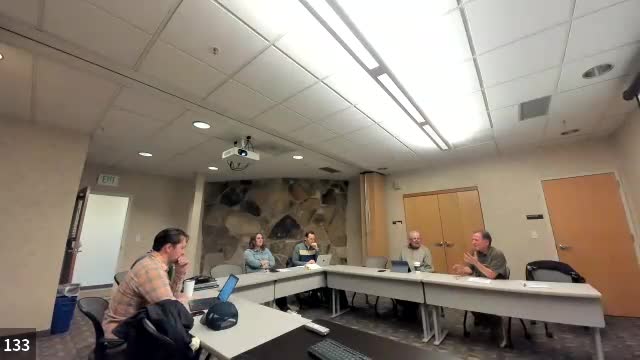
Toni Summers, administrative assistant for Heber City Cemetery, told the Snyderville Basin Cemetery District on a panel discussion that her office has two dedicated cemetery employees plus herself and hires seasonal workers in summer to support mowing and burials.
She said the cemetery offers “full burials and cremations,” operates an on‑site office and is building a columbarium. “Currently, we just have a niche wall in the lawn that holds 48. That's half sold currently,” Summers said. She described a new building that includes offices, a family room and a columbarium designed to hold niches the city expects to open later this year.
The nut graf: Summers’ presentation gave the district operational details the trustees said they wanted to collect before finalizing local cemetery policy and any new district-led cemetery plans. The information included staffing, capacity, pricing and long-term maintenance funds that affect how a new district cemetery might operate.
Summers outlined operations and capacity details the board repeatedly asked about. She told trustees the cemetery typically handles about 85 to 120 interments a year, averaging “maybe about 3 a week,” with seasonal variation and a COVID peak in recent years. On cremation trends, she said, “Our cremation rate is a lot lower than the Utah and national average. Ours is probably only about 14 percent.” She contrasted that with a Utah rate she described as “about 30 to 40 percent” and a national rate near 60 percent.
On vaults and burial practice, Summers said the cemetery requires a vault for burials and that requirement has been in place for decades: “I think this is — I think vaults pretty good. They have a low — a high water table. It's a health” concern, she said, and added the city began requiring vaults around 1960. She also described rules for graves and headstones: the cemetery generally allows two people per grave (often a full burial plus a cremation) and limits most graves to a single headstone for maintenance reasons.
Summers described perpetual‑care accounting and pricing. “When I make a sale, I automatically calculate out 67% for perpetual care,” she said. She listed typical resident lot prices as “$1,200 to $1,400 depending on the location” and said the cemetery does not accept prepayment of opening/closing fees because labor and fuel costs change over time.
On staffing and customer service, Summers said the cemetery has a lead operator and at least one full-time assistant and uses seasonal workers for mowing and trimming. She said on-site office staff make it easier for families to see plots and get maps, and that while some cemeteries operate off-site, on‑site customer service remains valuable.
Summers also discussed common disputes and liability. She said the cemetery treats family disputes over plot ownership as civil matters and keeps notes in records but generally does not litigate disputes. “We just follow our policies. And then beyond that, it's a civil dispute,” she said. She said the cemetery budgets for occasional damaged monuments — “maybe 1 stone a year” — and typically handles replacements when the maintenance crew or equipment is at fault.
Ending: Summers offered to share her cemetery’s policies and headstone rules with the district; trustees asked staff to accept those documents as examples while the district establishes its own policies.