Get Full Government Meeting Transcripts, Videos, & Alerts Forever!
Get email alerts on the Adus Housing Policy topic
No spam. Unsubscribe anytime.
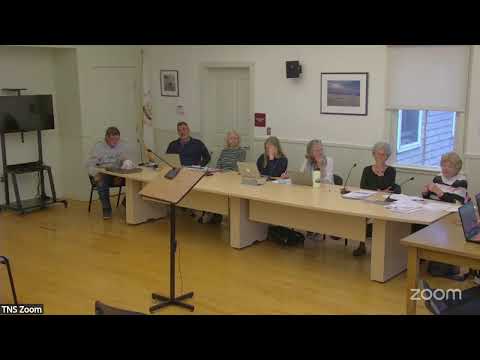
Planning Board continues review of ADU ordinance changes after lengthy discussion on owner‑occupancy, lot size and commercial zones
Summary
The Planning Board on May 14 continued its review of proposed accessory dwelling unit (ADU) ordinance changes that respond to recent state law adjustments, pausing to request revisions on owner‑occupancy, lot‑size thresholds and commercial‑zone treatment.
The Planning Board spent an extended portion of its May 14 meeting reviewing a draft amendment to the ADU (Accessory Dwelling Unit) ordinance designed to align local code with recent state statutory changes. The board did not adopt a final text and directed staff and counsel to return with revisions in June.
What’s in the draft: The draft tracks recent state law changes that (a) permit one ADU in residential zones as a matter of right in certain cases and (b) limit local review for those ADUs to an administrative building permit when they meet specified criteria. The document also updates definitions, occupancy requirements and cross‑references in the zoning appendix and use table.
Key issues discussed: Board members and several residents raised multiple policy questions: - Owner occupancy and main‑house rentals: Members debated a proposed standard that would prevent an owner from occupying an ADU if the primary residence were being offered for transient or tourist rental. Several board members and a resident who owns a seasonal dwelling asked for an exception where the primary house is not capable of year‑round use (for example, non‑winterized houses). The board asked staff to consider language that prevents ADUs from being used as a device to expand transient rentals but that still allows legitimate year‑round occupancy by owners in exceptional cases. - Lot size and detached ADUs: The draft references the state’s 20,000‑square‑foot minimum for certain ADU permissions; staff flagged the statutory origin and suggested the board discuss whether local accessory‑structure setbacks and lot‑coverage rules could be sufficient instead of a specific 20,000‑sf threshold. - Commercial and mixed‑use properties: The board discussed whether ADUs can be added to lots in commercial zones and noted an ADU is an accessory to an existing residential use; if a property’s primary use is commercial with no residential principal use, the ADU definition may not apply and secondary‑dwelling or mixed‑use rules could govern. The board kept the existing secondary dwelling option available for future consideration. - Parking and unit size: The draft gives the town authority to require up to one off‑street parking space per ADU bedroom; board members suggested the town consider less stringent parking (for example one space per unit) as a policy choice.
Board direction and next steps: Members asked staff and counsel to (1) review the owner‑occupancy provision to craft exceptions for non‑winterized primary dwellings and to ensure language is consistent with state law, (2) re‑examine the 20,000‑square‑foot reference and explain statutory constraints, (3) clarify how ADUs interact with mixed‑use and commercial properties and (4) review parking and bedroom limits. The board scheduled further consideration of the ADU amendments at a future meeting, after pending state legislation completes the session.
Why it matters: ADU rules affect the supply of year‑round housing and how property owners may add dwelling units to existing lots. The state’s changes reduce local review for some ADUs; the board is balancing state mandates with local concerns about seasonal rentals and neighborhood impacts.