Get Full Government Meeting Transcripts, Videos, & Alerts Forever!
Get email alerts on the Prevailing Wage topic
No spam. Unsubscribe anytime.
Contractors, state wage office clash over Michigan prevailing-wage rollout; data privacy, penalties and rulemaking top concerns
Summary
Contractors told a House appropriations subcommittee that Michigan’s revived prevailing-wage law and its preregistration, complaint and penalty rules are deterring bids; Wage and Hour Division officials said they favor education-first enforcement, rulemaking and a certified-payroll database to address confusion.
Members of the House Appropriations Subcommittee on Labor and Economic Opportunity heard competing views Friday on Michigan’s recently revived prevailing-wage regime, with contractors warning the law’s enforcement design and data requirements are chilling competition for public projects and state officials describing a workplan to clarify rules, build a payroll database and prioritize education over punishment.
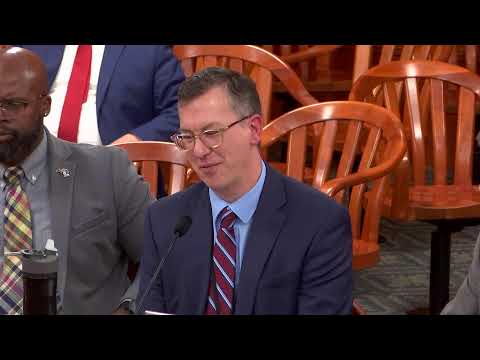
“Prevailing wage is the law,” Shane Hernandez, president of Associated Builders and Contractors of Michigan, told the committee, but he said many nonunion contractors are reluctant to bid on public projects because of “14,150 pages of prevailing wage rates” and uncertainty about how the law will be applied. Hernandez said members worry that preregistration will require extensive personal data and that the combination of anonymous and third‑party complaints and stiff penalties could lead to “frivolous lawsuits” or repeated enforcement actions that effectively bar firms from bidding.
Hernandez and Jeff Toyer, an attorney with Foster Swift who represents ABC members, highlighted several features they say increase compliance risk: a preregistration requirement that asks firms to submit certified payroll and employee details in advance; an ability under the statute for anonymous employee complaints and third‑party complaints; and multiple potential penalty sources. Toyer said the statute allows the LEO (Labor and Economic Opportunity) commissioner to suspend or revoke registrations, gives county prosecutors authority to seek civil fines, and authorizes additional civil penalties under a separate section — “compound and duplicative” remedies that, he said, can multiply risk for technical or inadvertent errors.
Toyer described the stakes with an example from an earlier dispute: an electrical subcontractor was drawn into a two‑year dispute over a $3.9 million contract in which an underpayment to one worker ultimately amounted to $10.56, an outcome Toyer cited as illustrative of the mismatch between administrative burden and the magnitude of some alleged violations. He urged the committee and LEO to use rulemaking and regulation to narrow penalties to willful violations, create de minimis exceptions and treat related infractions arising from the same operative facts as single occurrences.
Contractors also raised data‑privacy concerns tied to certified payroll records. Toyer noted certified payrolls must be kept for three years and said employee names, occupations and phone numbers could be used for unrelated organizing or litigation purposes unless the department imposes record‑retention, access and destruction controls in regulation.
Department officials acknowledged the concerns and described steps the Wage and Hour Division is taking to implement the new statutory duties. Brennan Smith, deputy director of legislative affairs for LEO, and Andrew Noginski, administrator of the Wage and Hour Division, said the division seeks to prioritize education and outreach and to finish a rulemaking process that has already begun. Noginski said the division’s “mission is to oversee, administer the laws that we oversee in a fair, effective, and efficient manner,” and that staff are working to share draft rules and solicit stakeholder input before formal public hearings.
Noginski told lawmakers the department is building a certified‑payroll database using an existing state contract that supports MDOT submissions so contractors will be able to enter payrolls electronically. He said the division intends to publish draft changes to rate schedules and other implementation proposals in advance to give contractors early opportunity for comment. On enforcement, Noginski said LEO’s current approach is to use complaints as opportunities to educate employers; the division resolves roughly 92% of compensation claims without formal enforcement action and aims to shorten its average case resolution time from about 90 days toward a 45‑day target with additional staffing.
Committee members asked whether the penalties in statute are discretionary or mandatory and whether the presence of anonymous and third‑party complaints has produced abuses. Toyer and Hernandez urged clearer statutory or regulatory language limiting enforcement to willful or repeated violations for penalties like the $5,000 civil fine described in the statute and the 10% additional penalty referenced in department guidance. Noginski and Smith said rulemaking and continued stakeholder engagement are the primary ways LEO plans to address those worries, and that the division will work with contracting agencies, labor groups and contractor associations to reduce unintended costs from misclassification, posting technicalities and other administrative issues.
The committee also heard that ABC‑affiliated construction academies have appropriations requests. Hernandez said the Southeast Michigan Construction Academy, West Michigan Construction Institute and Greater Michigan Construction Academy offer apprenticeships and report high job placement at graduation, with “85 to 90%” of graduates having an employer at their ceremony, according to Hernandez.
There was little committee action on policy at the hearing; Rep. Van Werkom moved to approve minutes from the May 7 meeting at the outset, and “there being no objections, the minutes are approved,” the clerk recorded. The committee chair then recognized witnesses for the wage‑and‑hour presentation and the hearing proceeded to questions and discussion before the committee adjourned.
The department said the prevailing‑wage rulemaking process is ongoing, that drafts will be circulated for public input, and that technical fixes — including de minimis exceptions, clarified standards for willfulness and records‑management limits — are possible either through administrative rules or statutory amendment. Contractors urged lawmakers to act quickly to reduce perceived legal exposure so smaller firms will continue to bid on public projects.
The hearing record contains detailed exchanges on preregistration timing, posting requirements for job‑site rate notices, and the interaction of state rules with the federal Davis‑Bacon framework; committee members asked LEO to continue outreach and to provide additional detail on how the certified‑payroll database will protect employee information.